Phone Addiction Has a Cure — It's Just Not What You Think
The clinical research on behavioral addiction recovery, Dr. Anna Lembke's dopamine reset framework, and the realistic timeline for actually getting free.
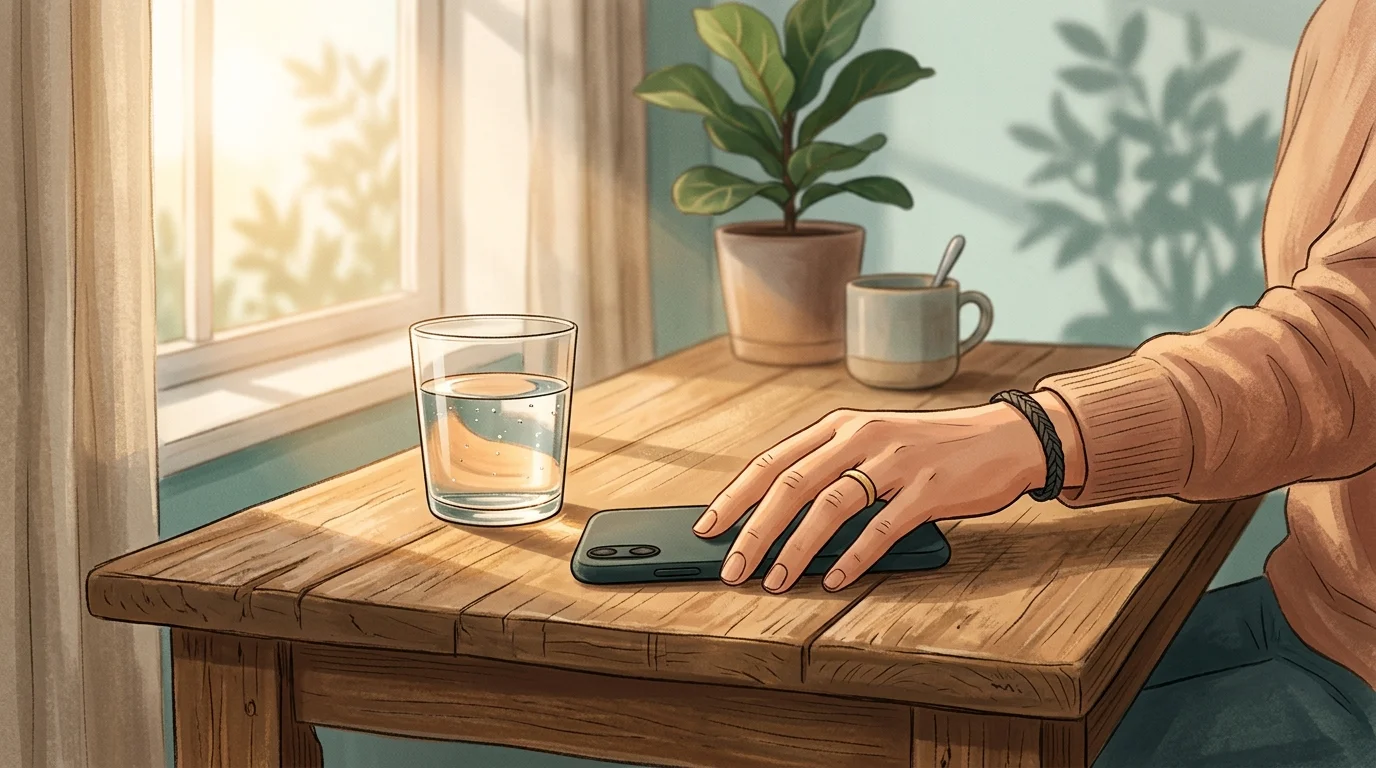
"I could stop if I really wanted to. I just don't want to right now." Most people who use their phone more than they'd like have said something like this — to themselves, quietly, after closing an app they meant to open for two minutes. It sounds reasonable when there's no pressure on it. Then you notice that "right now" keeps arriving, and the wanting-to doesn't.
If you're reading this article, the wanting-to has arrived. You're not here to be convinced you have a problem. You already know. You're here because you want to know whether there's actually a clinical path out of this — and what it realistically looks like, stripped of the productivity-content optimism.
There is. But the path is specific, and it's probably not what you've been told.
What Phone Addiction Actually Is (Clinically)
Phone addiction — more formally called problematic smartphone use or compulsive smartphone use — is classified in research as a behavioral addiction, operating on the same neurological circuitry as gambling disorder and compulsive eating. A peer-reviewed analysis of digital technology's effects on brain health confirms that excessive smartphone use shares features with substance-use disorders and pathological gambling, with global prevalence of internet addiction estimated at 6%. The clinical threshold is a cluster of signs of phone addiction: daily life disruption, loss of control over use, withdrawal symptoms when the phone is absent, and continued use despite negative consequences.
That last criterion matters. The word "addiction" is overused, but the clinical threshold is precise: you recognize the harm and you continue anyway. That gap between insight and behavior is not a character flaw. It's the hallmark of a hijacked reward system.
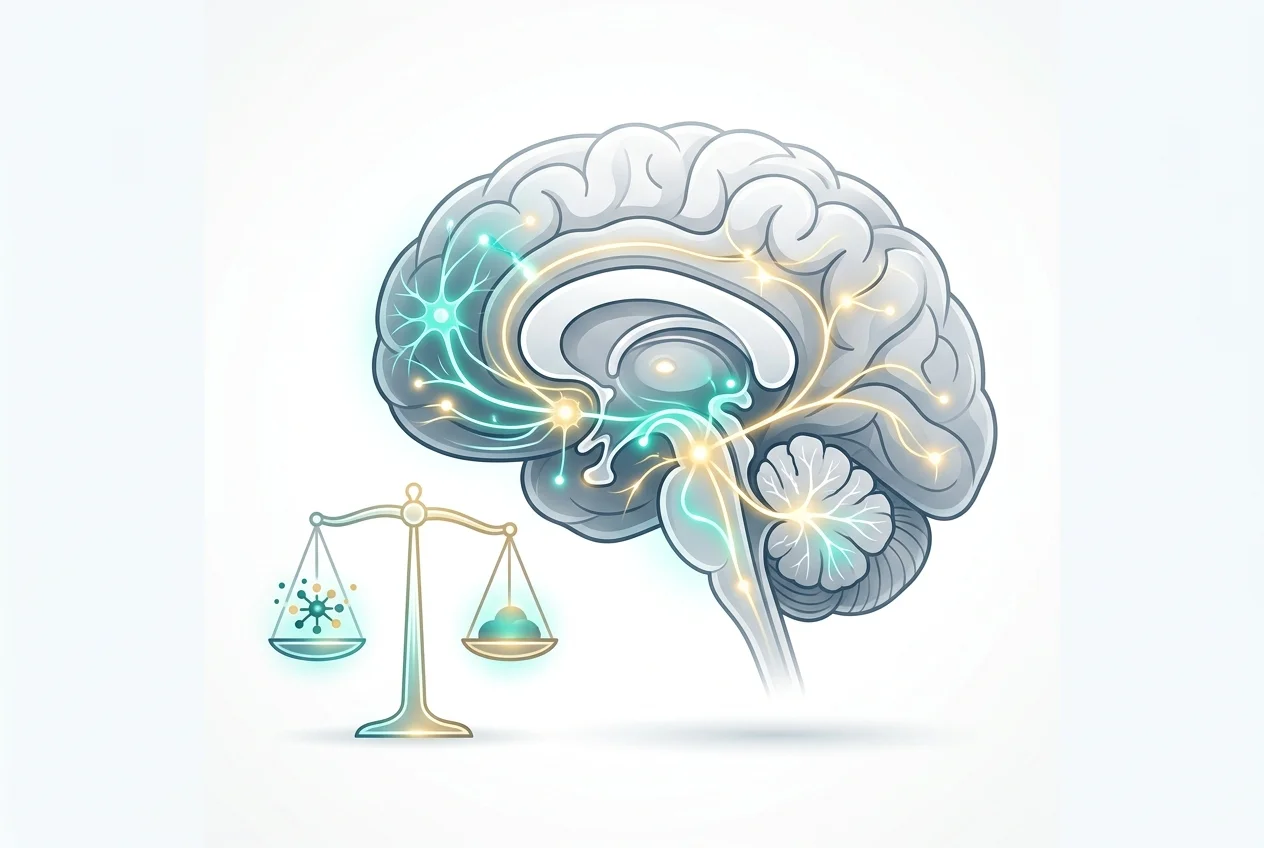
Dr. Anna Lembke, Chief of Addiction Medicine at Stanford University and author of Dopamine Nation, describes what happens in the brain as a pleasure-pain imbalance. Your dopamine system — the reward circuitry that motivates behavior — operates like a balance scale. Every time you experience pleasure, the scale tips toward pleasure; the brain immediately compensates by tipping back toward pain. In ordinary life, this rebalancing happens gently. But chronic overstimulation from social media and short-form content tips the scale so hard and so often that the brain's compensatory mechanism becomes permanently weighted toward the pain side — a condition called anhedonia. Plain language: you need more stimulation to feel anything, and you feel less satisfied between doses.
This is why cutting back feels so difficult. You're not fighting a bad habit. You're fighting a recalibrated nervous system that has reclassified "ordinary" as insufficient.
Curing phone addiction, clinically speaking, means restructuring this pleasure-pain balance — not eliminating your phone. The path is specific, research-backed, and takes longer than a weekend but shorter than years. Here's what it actually involves.
The Stages of Change: Where Recovery Actually Starts
The most clinically validated framework for understanding behavioral change is Prochaska and DiClemente's transtheoretical model — commonly called the stages of change. Understanding which stage you're in predicts what will and won't work right now. Most recovery advice skips straight to action-stage strategies and wonders why they don't stick on people who aren't ready for them.
The five stages:
Precontemplation. You don't see it as a problem yet, or you've rationalized it sufficiently that addressing it doesn't feel urgent. If someone sent you this article, you might be here.
Contemplation. You know something is off. You've noticed the costs — the scattered attention, the morning anxiety, the evenings that dissolved. You're ambivalent: you want to change, but you also genuinely enjoy scrolling, and you're not sure the tradeoff is worth the difficulty. This is where most people spend an uncomfortable amount of time. The research on addiction recovery finds that the contemplation stage has an average duration of two years for substance addictions — shorter for behavioral addictions, but still measured in months, not days.
Preparation. The ambivalence is resolving. You're researching approaches, maybe downloading an app, maybe setting new rules for yourself. You haven't fully changed yet, but you're architecting change. Reading this article is a preparation-stage activity.
Action. You're actively implementing something — a screen time limit, an app blocker, leaving your phone in another room overnight, a structured dopamine reset. The action stage is intense and requires the most support. It's also when most people relapse the first time and mistakenly conclude that they "can't" do it.
Maintenance. The new pattern is your default. Reaching for your phone compulsively still happens occasionally, but it no longer defines your days. This stage is ongoing — behavioral addiction research treats maintenance as an active process, not a destination you arrive at and stop tending.
The important insight from the stages of change model is that relapse is not failure — it's a standard part of the cycle. Most people move from action back to contemplation two or three times before reaching stable maintenance. Knowing this prevents the common cognitive trap of treating one slip as evidence that recovery is impossible.
The Dopamine Reset: What Dr. Lembke's Research Actually Recommends

Lembke's clinical recommendation — consistent with behavioral neuroscience research on reward recalibration — is a 30-day period of significant reduction or abstinence from the primary dopaminergic trigger. For phone addiction, that means the specific apps and behaviors that produce compulsive use: social media feeds, short-form video, and any content consumed without a specific end goal.
The 30-day number is not arbitrary. Neuroimaging studies on behavioral addiction recovery show that dopamine receptor sensitivity begins to normalize within two to four weeks of reduced stimulation. By day 30, most people report what Lembke calls the "first experience of relief" — a window of genuine calm and satisfaction in ordinary activities that was absent before. This is the pleasure-pain balance beginning to restore.
What happens in the meantime is uncomfortable. The first two weeks involve what Lembke describes as the "pain side" of the balance: restlessness, low mood, difficulty concentrating on anything slow, and a persistent sense that something is missing. This is not a personality trait. It's a neurochemical state. The key is knowing it's temporary — and that it ends, reliably, around the 14-day mark for most people.
Weeks three and four are different. The restlessness quiets. Boredom stops feeling intolerable. People start noticing that they're enjoying things they forgot they liked — reading, cooking, conversations that don't feel like they need to be optimized for speed. The hedonic floor rises.
The NIH Data on Behavioral Addiction Treatment
Research on problematic smartphone use consistently finds that it correlates strongly with anxiety disorders — and that this relationship is bidirectional. The phone causes anxiety; anxiety drives more phone use as a coping mechanism. The APA's research on cognitive switching costs documents how compulsive task-switching — including constant phone checking — depletes cognitive control resources, making the anxiety-scroll loop even harder to interrupt. This feedback loop is why willpower-based approaches consistently fail: the very stress of trying to reduce use increases the urge to use.
NIH-funded research on behavioral addiction treatment consistently finds that environmental design outperforms motivational interventions. What this means practically: rearranging your environment to make the behavior harder is more effective than deciding to be more disciplined. The distance between your hand and your phone is a more reliable predictor of use than your level of commitment to reducing it.
This has a name in behavioral science: friction. Small barriers — a phone in another room, an app that requires a physical ritual before opening, a lock screen with a reminder — interrupt the automatic behavior long enough for the prefrontal cortex to catch up with what the limbic system is already doing. The prefrontal cortex is where deliberate decision-making lives. The limbic system is where habit lives. Phone addiction is a limbic system phenomenon. Willpower is a prefrontal cortex resource applied to a problem it didn't cause and can't sustain.
Structural friction gives the prefrontal cortex a fighting chance — not because you're suddenly more disciplined, but because the behavioral loop is interrupted before it completes.
What a Realistic Recovery Timeline Looks Like
Recovery from phone addiction doesn't happen in a weekend. But it also doesn't require years of psychotherapy. Based on the clinical literature on behavioral addiction, here's what the evidence-based timeline looks like:
Days 1–14: The difficult window. Dopamine baseline is lowest. Boredom tolerance is at its floor. You will reach for your phone reflexively dozens of times per day. This is expected and does not indicate failure. The withdrawal period is real and documented — treat it like a physical recovery, not a moral one.
Days 15–30: The recalibration window. The restlessness begins to quiet. The first experiences of genuine satisfaction in non-digital activities emerge. This is the window Lembke identifies as clinically meaningful — the pleasure-pain balance is shifting back.
Months 2–3: The pattern establishment phase. New defaults are forming. The compulsive reach is less automatic. You're starting to use your phone with more intention — checking it because you chose to, not because your hand went there on its own. This is the action stage solidifying.
Months 4–6: Maintenance begins. The new pattern is your default. Relapses still happen — a stressful week, a social media algorithm that catches you at the right moment — but they're exceptions rather than the rule. The key maintenance behavior, per behavioral addiction research, is noticing relapses early and returning to structure quickly, without self-punishment. The recovery isn't destroyed by a slip. It's practiced through how you respond to one.
The Role of Architectural Solutions
Everything above is what the research says. Here's what the research also says: information alone does not change behavior. You can understand every mechanism described in this article and still find yourself scrolling at 11pm. Knowing why something happens is not the same as having the structural conditions that make stopping possible.
This is where the architecture of your environment becomes more important than your level of understanding or motivation. The most effective phone addiction interventions share a common feature: they remove the moment of choice from the point of maximum temptation and move it upstream, to a moment when your prefrontal cortex is still online.
Practical examples from the research: phone chargers outside the bedroom reduce nighttime use more reliably than screen time limits. App blockers that require a physical ritual before opening reduce compulsive opens by interrupting the automatic behavior before it completes. Scheduled access windows — designating specific times for social media rather than allowing ambient use throughout the day — reduce total consumption while preserving the enjoyment of intentional use.
None of these require exceptional willpower. They require a decision made once, in advance, that replaces hundreds of individual decisions made in moments of vulnerability. That's what behavioral addiction research means by "environmental design."
Sip & Scroll is built on exactly this principle. When you try to open TikTok, Instagram, or YouTube Shorts, you're prompted to take a sip of water and snap a quick selfie before you get access. It's not a hard lockout — it's a friction layer. That two-second pause, that small physical ritual, is enough to interrupt the limbic system loop and give your prefrontal cortex a chance to make a real choice. After that, you get 45 minutes of unblocked access — enough to scroll with intention, not compulsion. The selfie ensures you actually pause; the water makes the pause feel like self-care rather than restriction.
It's the architectural friction the research recommends, built into the moment where the decision actually happens.
You Don't Have to Quit. You Have to Change the Structure.
The most common misconception about phone addiction recovery is that "cured" means you stop enjoying your phone, stop using social media, and become someone who prefers hiking to Instagram. The clinical evidence doesn't support that framing — and it's not a realistic goal for most people.
What recovery actually looks like is more modest and more sustainable: you use your phone when you choose to, for reasons you'd endorse when you're thinking clearly, for amounts of time that don't crowd out the other things you value. The phone becomes a tool again, rather than a nervous system override.
You cannot out-willpower a platform engineered by teams of behavioral scientists whose singular metric is your engagement. The fix was never going to be discipline. It was always going to be structure — friction placed at the moment of maximum vulnerability, before the scroll starts, when the choice is still available.
That's what the research says. That's also where you are right now: in the preparation stage, which means the action stage is next. The architecture is ready when you are.
This article is part of our series on phone addiction and doomscrolling. For the full picture, see our guide: What is Doomscrolling?.
Add friction before the scroll starts.
One sip, one selfie, then 45 minutes of intentional access. The architectural pause the research recommends.
Download Sip & Scroll Free