The 5 Stages of Smartphone Addiction Withdrawal
Why quitting your phone feels like withdrawal — and what to expect, stage by stage.
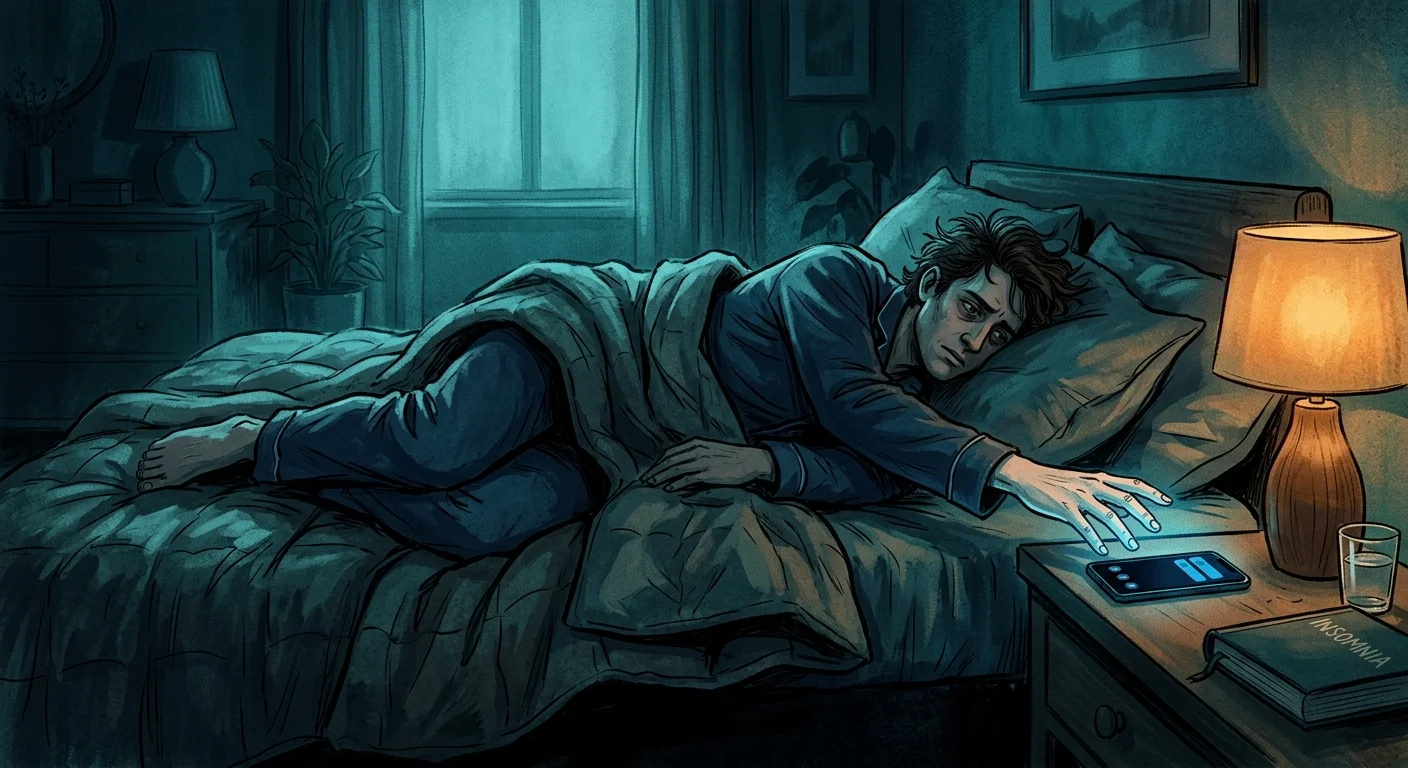
"I could put it down whenever I want." Most people who use their phone more than they'd like have said this — out loud or to themselves. It has the ring of truth when there's no pressure on it. Of course you can put your phone down. You're not addicted to anything. You just use it a lot.
So try it. Leave your phone in another room for a morning. No emergency exception, no just-checking-this-one-thing.
Notice what happens — not in an hour, but in the first twenty minutes. The low pull toward it. The sense of something unresolved. The way silence develops a texture it didn't used to have. It's not dramatic. It's quiet and persistent, like a sound you can't quite locate. And it's telling you something true about how deeply the habit has been wired into you.
Smartphone withdrawal symptoms are real, documented, and far more common than most people admit. When heavy phone users abruptly reduce their screen time, they experience a predictable cluster of psychological and physiological responses — restlessness, irritability, difficulty concentrating, and a persistent low-level anxiety that researchers have confirmed in clinical settings. A 2018 study published in Frontiers in Psychology restricted participants from their smartphones for 72 hours and found significantly elevated withdrawal scores compared to unrestricted controls. Understanding what's happening neurologically, and knowing what to expect, is the difference between white-knuckling through it and actually recalibrating.
What's Actually Happening in Your Brain

The mechanism isn't metaphorical. Smartphones activate the same dopamine reward pathways involved in gambling, food, and other behavioral dependencies. Each notification, like, or feed refresh is a variable-ratio reinforcement event — you don't know if the next tap will be a throwaway or something genuinely satisfying, so your brain keeps reaching for the lever. It's the same mechanism that makes slot machines the most addictive form of gambling: unpredictable rewards are neurologically more compelling than predictable ones.
Over time, this produces tolerance. Your baseline dopamine stimulation rises, and ordinary activities start to feel underwhelming by comparison. A meal without a screen feels flat. A quiet evening feels anxious. Waiting in line without anything to scroll through feels like a minor emergency. These aren't personality quirks — they're the predictable consequences of a reward system that has been conditioned to expect constant low-level stimulation.
When you remove the stimulation source, your reward system registers a deficit. The brain isn't processing a philosophical inconvenience — it's running routines that have been encoded into its circuitry, coming up empty, and generating a stress response. A comprehensive review of cell-phone addiction research documented that users separated from their phones report irritability, a sense of being lost, anxiety about missing messages, and physical restlessness — symptoms neurologically analogous to those seen in behavioral addiction more broadly. This is why morning screen time raises your anxiety baseline for the rest of the day: the cortisol system gets involved whenever your reward loop is activated and then interrupted.
This isn't weakness. This is exactly what happens when any well-established reward loop is interrupted.
The 5 Stages of Smartphone Withdrawal
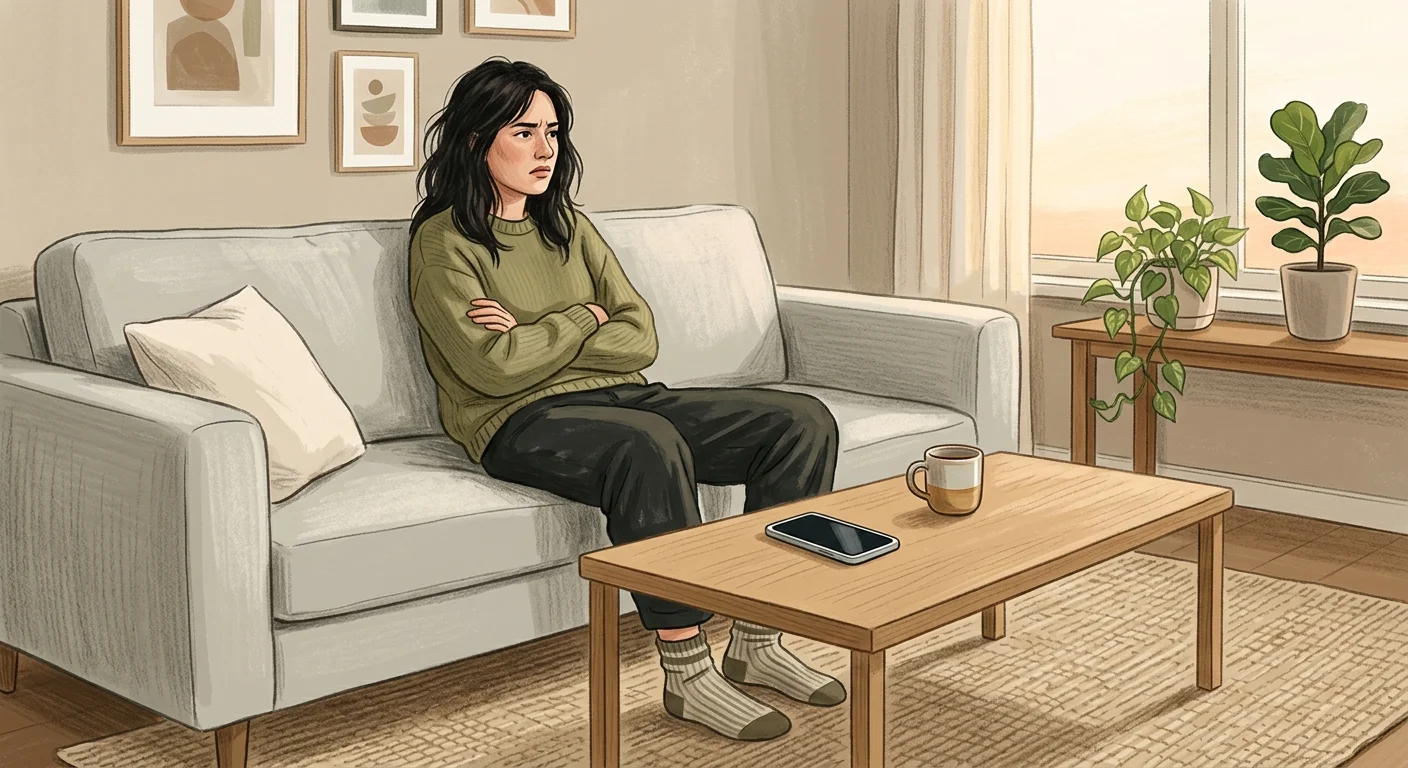
Research on behavioral addiction and phone restriction maps to five recognizable phases. They don't hit everyone on the same timeline, but the sequence is consistent enough to use as a roadmap — and knowing what's coming makes each stage significantly more manageable.
Stage 1: The Phantom Reach (Hours 0–4)
Your hand moves before your conscious mind does. You put the phone in the other room, and within an hour you've reached for it in your pocket — twice — without any memory of deciding to. This isn't a lapse in willpower; it's motor conditioning. You've reached for this device thousands of times a day for years. The gesture has been encoded below conscious awareness, as automatic as adjusting your position in a chair.
The phantom reach isn't distressing, just revealing. It shows you how deeply the behavior has been wired — which is useful information. For a first-person account of what these stages actually feel like hour by hour, read our 48-hour smartphone withdrawal survival story.
Stage 2: The Irritability Window (Hours 4–24)
The restlessness intensifies. Small things become mildly annoying. You feel an unspecified urge to check something without being sure what. Your focus skips around. Waiting — for coffee to brew, for a meeting to start, for a video to buffer — suddenly feels intolerable when it didn't before.
What's happening: your brain is running its dopamine-seeking routines and coming up empty. This is the stage researchers have called a "withdrawal-like state" — not clinical in the way substance withdrawal is, but neurologically analogous. The irritability is your stress-hormone regulation under pressure. The urge to check is your reward circuitry running a loop with no payoff attached to the end of it.
Stage 3: The Boredom Abyss (Days 1–2)
The acute agitation softens into something flatter: a grey, featureless boredom. You sit down to read and notice that the first chapter requires effort. You try to watch a film and feel the urge to pick up your phone by minute ten. Silence in a room now has texture where it didn't before.
This is the phase where most people give up — and understandably. But this discomfort is not a sign that something is wrong. It's your default mode network activating: the mental state associated with creativity, long-form thinking, and memory consolidation. Neuroscientists increasingly argue that boredom is a signal, not an emergency — the brain's way of clearing out accumulated noise and running background processes that high-stimulation environments crowd out. The boredom is the medicine. Sitting inside it, rather than escaping it, is the actual neurological work. This is also the core mechanism behind a dopamine detox: you can't reset the baseline if you keep reaching for the rescue.
Stage 4: The Clarity Window (Days 3–5)
Something shifts. It doesn't announce itself dramatically. You finish a meal without the impulse to open anything. A conversation holds your attention past the point where you'd normally drift. You read three chapters of a book before checking the time — and when you check it, you're surprised by how much has passed.
These small moments of absorption are your dopamine baseline beginning to recalibrate. The gap between stimulus and response — the fraction of a second in which your brain registers an urge before acting on it — has widened slightly. That gap is where agency lives. The phone still exists. The apps are still there. But the pull has softened to something you can observe rather than something that observes you.
Stage 5: The New Baseline (Week 2+)
By the second week of significantly reduced use, most people report a qualitative shift in their relationship with compulsive scrolling. It's still present — the algorithms haven't changed, and the conditioning doesn't vanish overnight. But the physiological urgency eases. You can see the notification and decide not to check it. The pull is weaker, and the quiet feels less like deprivation and more like something you chose.
This isn't a permanent cure. It requires maintenance. But it's evidence that the recalibration is real, and that the discomfort of the earlier stages was not a permanent condition — it was the process. For a deeper look at the clinical recovery framework — the stages of change model, Dr. Anna Lembke's dopamine reset protocol, and what a realistic 3–6 month timeline looks like — see our guide on how to cure phone addiction.
How Long Does Smartphone Withdrawal Last?
The acute phase — stages one through three — typically runs 48 to 72 hours for heavy users. This tracks with the restriction window used in controlled research. The more significant the prior usage (four or more hours per day of social media and entertainment), the more pronounced the withdrawal curve tends to be.
The recalibration phase is longer and nonlinear. Individual variation is high, depending on how compulsive the prior use was, what replaces the time previously spent scrolling, and whether the environment has been restructured to reduce trigger exposure. Nomophobia — the clinical term for anxiety specifically triggered by phone separation — research suggests the underlying vulnerability can persist even after active withdrawal passes, particularly in younger users and in situations where phones have served as the primary coping mechanism for stress, loneliness, or boredom.
The honest answer: two to three days for the worst of it, and two to four weeks for meaningful recalibration. Neither requires suffering through it entirely alone.
Why Cold Turkey Backfires — And What Actually Works
The instinct when you recognize a dependency is to do the hard thing: delete the apps, leave the phone in a drawer, go cold turkey and power through the discomfort. For some people, some of the time, that works. More often, it produces the rebound effect documented in behavior-change research — restriction triggers resistance, defiance builds, and the banned behavior returns within days or weeks, often more intensely than before.
The problem isn't the person. It's the mechanism. Hard restriction treats phone use as a moral failing requiring punishment. But the behavior isn't moral — it's architectural. The apps you're trying to stop using were engineered through billions of A/B tests, specifically optimized to override your prefrontal cortex's ability to evaluate choices at its most depleted moments: late at night, first thing in the morning, during any unresolved pocket of stress. You aren't fighting a bad habit. You're fighting a behavioral engineering system built by thousands of engineers whose job was to make stopping feel impossible.
What behavior-change research consistently supports instead is friction: small, tolerable obstacles placed between the impulse and the action. Friction interrupts automaticity without triggering defiance. It gives your prefrontal cortex enough time — five seconds, sometimes less — to register a choice before the reflex fires and you're already inside the feed. This is why doomscrolling is so hard to stop mid-session: by the time you realize you're doing it, the choice architecture has already been bypassed.
This is exactly the architecture behind Sip & Scroll. Rather than locking you out of TikTok or Instagram entirely, it introduces a brief mandatory pause before each session: you take a sip of water and snap a quick selfie confirming it. Ten seconds of physical action. That's enough. The pause interrupts the phantom reach, hydrates you, and gives your dopamine-seeking routine a moment to register that a choice is being made. You then get 45 minutes of unblocked access — because the point was never punishment. It was consciousness. When the session ends, you take another sip to continue, or you stop. Either way, you decided.
That structure won't eliminate withdrawal. The first 48 hours are still uncomfortable. But it makes the recalibration sustainable by converting white-knuckle willpower sprints into something your nervous system can maintain past the first bad afternoon — a consistent, gentle friction layer that persists precisely because it doesn't feel like a punishment.
Your brain built these habits one automatic reach at a time. It rebuilds differently the same way: one conscious pause at a time.
Make the pause automatic.
A sip of water before every session. Gentle friction, not a lockout — and 45 minutes of guilt-free access after.
Download Sip & Scroll