Smartphone Withdrawal: Surviving the First 48 Hours Without Your Phone
The phantom reaches, the hollow anxiety, and the moment you realize your phone was doing more work than you thought.
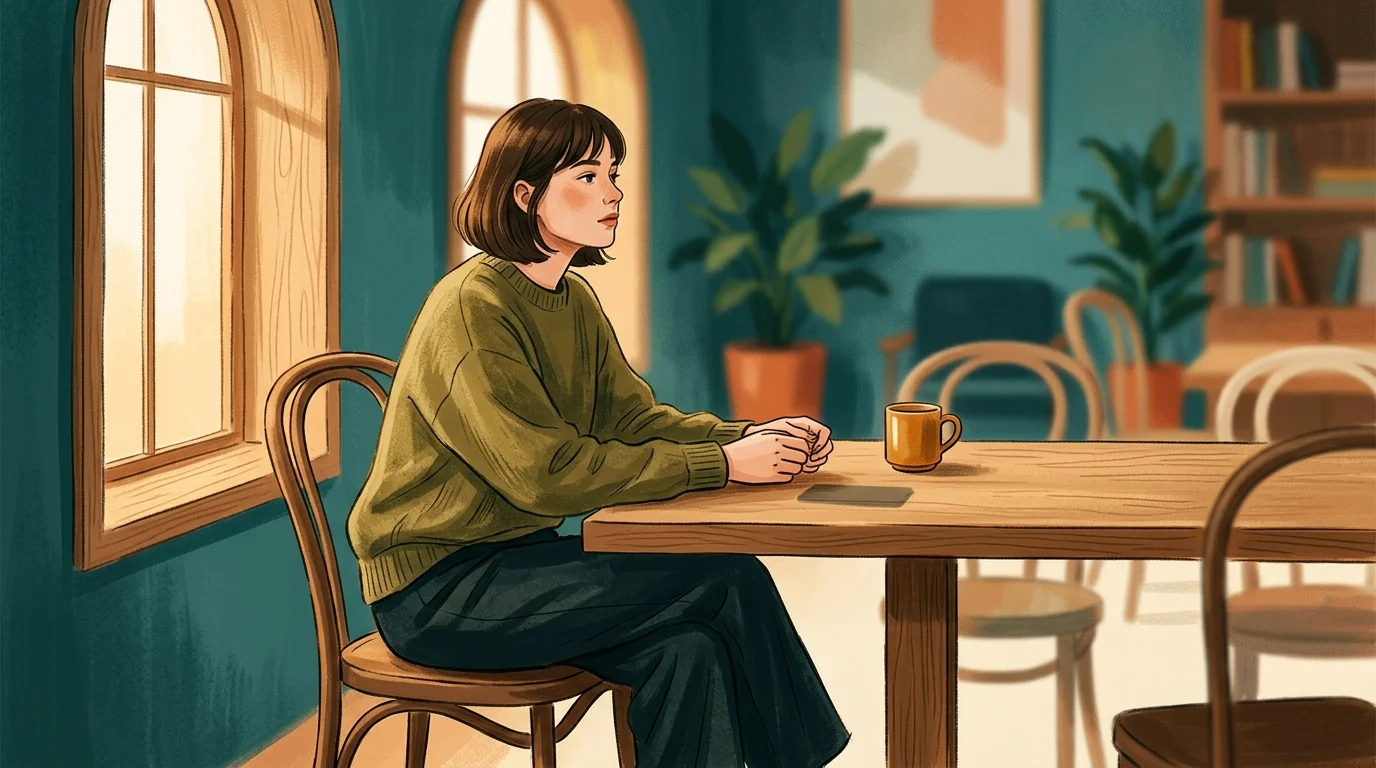
Notice what your hand does in the silence. You're sitting at your desk, or waiting for water to boil, or lying on the couch with a book open in your lap — and your fingers drift toward your pocket. The phone isn't there. You put it in the other room on purpose, or handed it to a friend, or simply decided: 48 hours, no smartphone. Your hand hasn't accepted this yet. It reaches anyway.
That reach is the first thing you notice. What comes next is harder to describe.
Smartphone withdrawal is real — clinically documented as a cluster of anxiety, irritability, restlessness, and compulsive phantom-checking behaviors that emerge when regular smartphone access is removed. Researchers who study behavioral addiction describe the symptoms using the same framework as substance withdrawal: craving, tension, failed attempts to resist, relief upon return to the behavior. You are not being dramatic. You are experiencing your nervous system's predictable response to the removal of a learned stimulation source.
The Phantom Reach — The First Few Hours
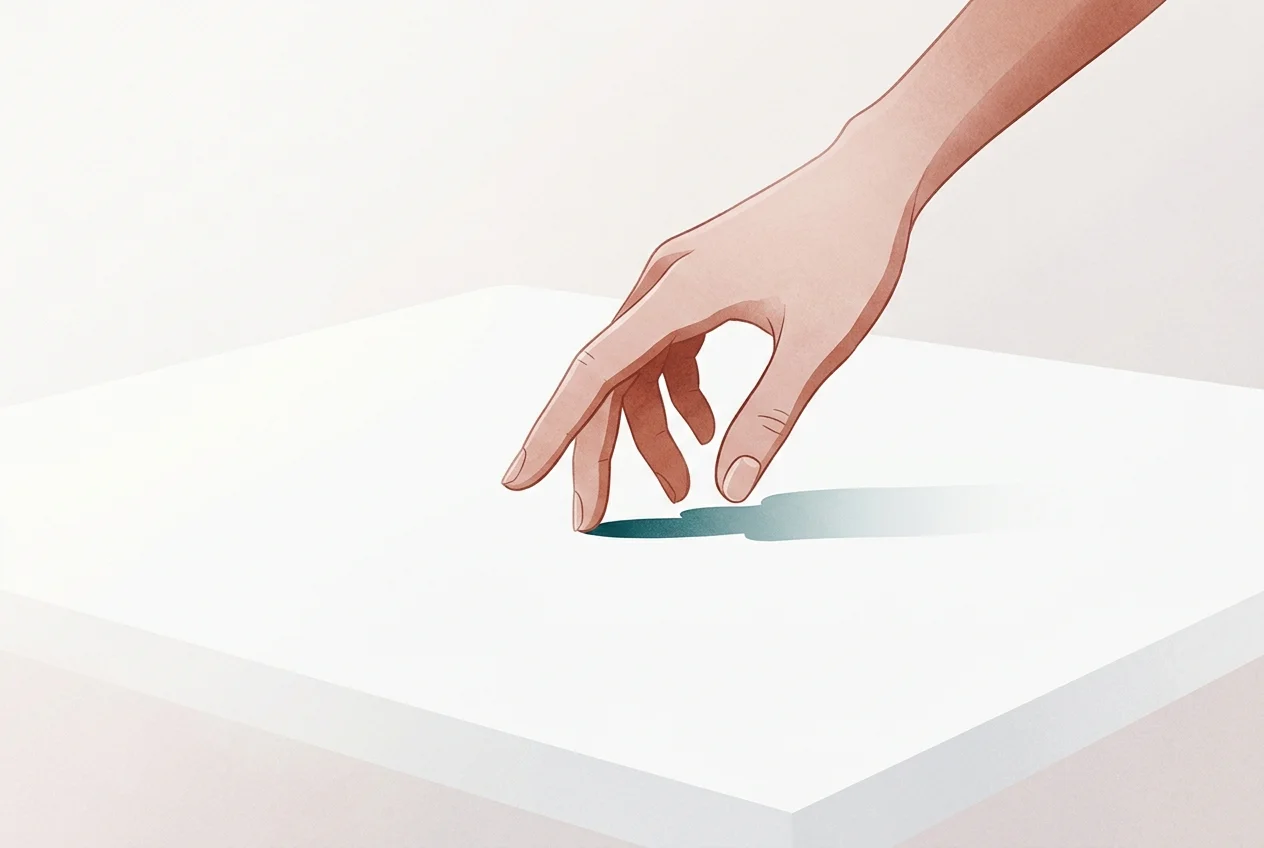
Within the first hour, the phantom reach happens somewhere between five and fifteen times. You know the phone is in the other room. You reach anyway. You're bored, you're waiting, you've finished a thought and your hand moves before your mind has chosen anything.
Behavioral scientists call this a habit loop: cue → routine → reward. The cue might be silence, a pause, or the feeling of waiting. The routine is the reach. The reward — dopamine, novelty, the small satisfaction of having something to look at — trained your nervous system to run this sequence automatically, hundreds of times per day, until the routine became invisible. You don't decide to check your phone. You find yourself already checking it.
Without the phone, the loop runs anyway. The cue fires. The routine initiates. And then there's nothing there. Your hand closes on empty air and your brain logs a small, unsatisfying non-event.
It does this again in four minutes.
What you're feeling is nomophobia in its mildest form — the low-grade discomfort of phone absence that most people experience but rarely notice, because the phone is almost always available to neutralize it before it registers. When you take the phone away, you finally feel what it was covering up. The five stages of smartphone addiction withdrawal have a clinical name for this first phase: phantom reach. And once you can see it clearly, it loses some of its power.
When Anxiety Arrives Without a Source
By the twelve-hour mark, something changes. The phantom reaches slow, but a diffuse anxiety takes their place — formless, directionless, with no obvious cause.
This is the part most people aren't prepared for. You'd expect to miss specific things: the group chat, the news cycle, whatever you were in the middle of watching. But the anxiety isn't about anything in particular. It's ambient. It sits in your chest, slightly raises your heart rate, and doesn't resolve when you remind yourself that nothing is actually wrong.
Here's what's happening underneath: your phone had become a near-constant source of stimulation and micro-reward throughout the day. Not the big rewards — not the viral video you send to three friends — but the dozens of small ones: a like, a notification, a new message, the low-level novelty of one more scroll. Your brain doesn't fire dopamine in response to reward itself. It fires in anticipation of reward — the gap between what you expected and what you got. Social media is a prediction-error machine, and your nervous system has been running on it.
Research on social media algorithms and behavioral addiction describes this in neurophysiological terms: regular exposure to algorithmically curated content alters dopamine release patterns in the brain, and removal creates a compensatory deficit in mood regulation. In plain terms: your brain got used to an above-baseline stimulation level. Without it, baseline feels like depletion.
This is not weakness. It is an expected biological response to the removal of a learned stimulation source. Knowing that doesn't make the twelve-hour mark comfortable. But it makes it legible.
The 48-Hour Turn

Somewhere in the second 24 hours — for many people it's around hour 34 — something shifts.
The phantom reaches diminish. Not because the habit loop has been broken; habits built over years don't dissolve in two days. But something else happens: attention begins to land differently. You notice things — not because they became more interesting, but because nothing is competing with them. A conversation holds your full concentration. A meal actually tastes like what it is. The waiting rooms and transitions that your phone colonized — the three minutes between tasks, the walk between rooms — have texture again.
The acute discomfort of phone withdrawal peaks in the first 24 hours and begins to taper as the nervous system finds its natural baseline. By hour 48, most people report something between relief and clarity — a sense that the background noise has dropped and they can hear themselves again.
There's also a subtle reckoning that arrives around this time. You start to reconstruct where the phone hours actually went. The waiting rooms you never experienced because you were scrolling through them. The meals you ate with one eye on a screen. The conversations where you were present in body and absent in attention.
The long-term cognitive case for reducing screen time is well documented. NIH-funded research tracking children's brain development found that higher screen time correlated with reduced white matter integrity in tracts supporting language and executive function — effects that compound over time and are not immediately obvious to the person experiencing them. The 48-hour experiment doesn't reverse anything. But it shows you the shape of what you've been doing.
Once you can see the water, it's harder to pretend you weren't swimming in it.
What Actually Helps: Architecture Over Willpower
Here's what the first 48 hours taught me that I didn't expect: willpower had almost nothing to do with it.
Getting through the first day wasn't about deciding not to check the phone. It was about removing the phone from the environment where the cue fired. No phone on the desk → fewer phantom reaches. No phone in the bedroom → no 11pm scroll session. No phone in my pocket → the loop runs without a reward until it gradually weakens.
This is the key insight that most advice about phone habits ignores. You cannot out-decide a cue-routine-reward loop that has been running for years. The prefrontal cortex — the part of your brain responsible for deliberate decision-making — loses to the habit loop almost every time the cue fires, because the habit loop operates faster, below the level of conscious thought. You can read that you should put the phone down. You can want to put it down. And your hand still moves.
This is exactly what the dopamine detox approach gets right: it's not about wanting differently. It's about restructuring your environment so that wanting differently becomes easier. The phone doesn't have to disappear. It just needs friction — a small moment of resistance between the cue and the automatic routine, long enough for your prefrontal cortex to catch up and make an actual choice.
Two days without a smartphone will not break the habit. But it will show you the shape of it. And once you've felt the phantom reach, and the hollow anxiety, and then the unexpected quiet of hour 48 — you stop pretending the loop doesn't exist. That's the real value of the experiment. Not the 48 hours. The knowledge you carry out of them.
The Structural Solution
The goal isn't to stop scrolling. It's to stop scrolling automatically — without registering that you're doing it.
Most phone habits don't need elimination. They need a pause. A break in the loop just long enough for the part of your brain that makes real choices to wake up and participate. The phantom reach fires, you feel it, you have a moment to decide — and that moment changes everything.
That's what Sip & Scroll is built around. When you try to open TikTok, Instagram, or whatever your particular loop runs on, the app prompts you to take a sip of water and snap a quick selfie to verify it. Then you get 45 minutes of unblocked access — guilt-free, restriction-free. The ritual isn't a lockout or a punishment. It's a break in the automaticity: just enough friction to give your prefrontal cortex a beat to catch up, to register that you're making a choice rather than running a reflex.
After 48 hours without your phone, that beat is exactly what you were looking for. You don't have to go cold turkey to find it.
This article is part of our series on personal screen time journeys. For the full picture, see our guide: My Journey from 8 Hours of Screen Time to Just 2.
Break the loop without breaking your phone
A sip of water before you scroll. A pause, not a prison. That's the whole idea.
Download Sip & Scroll — Free