The MP3 Player Revival: Why Your Phone Is the Worst Music Player You Own
A dedicated music device costs $30 and carries zero social media. That's the whole pitch — and a lot of people are buying it.
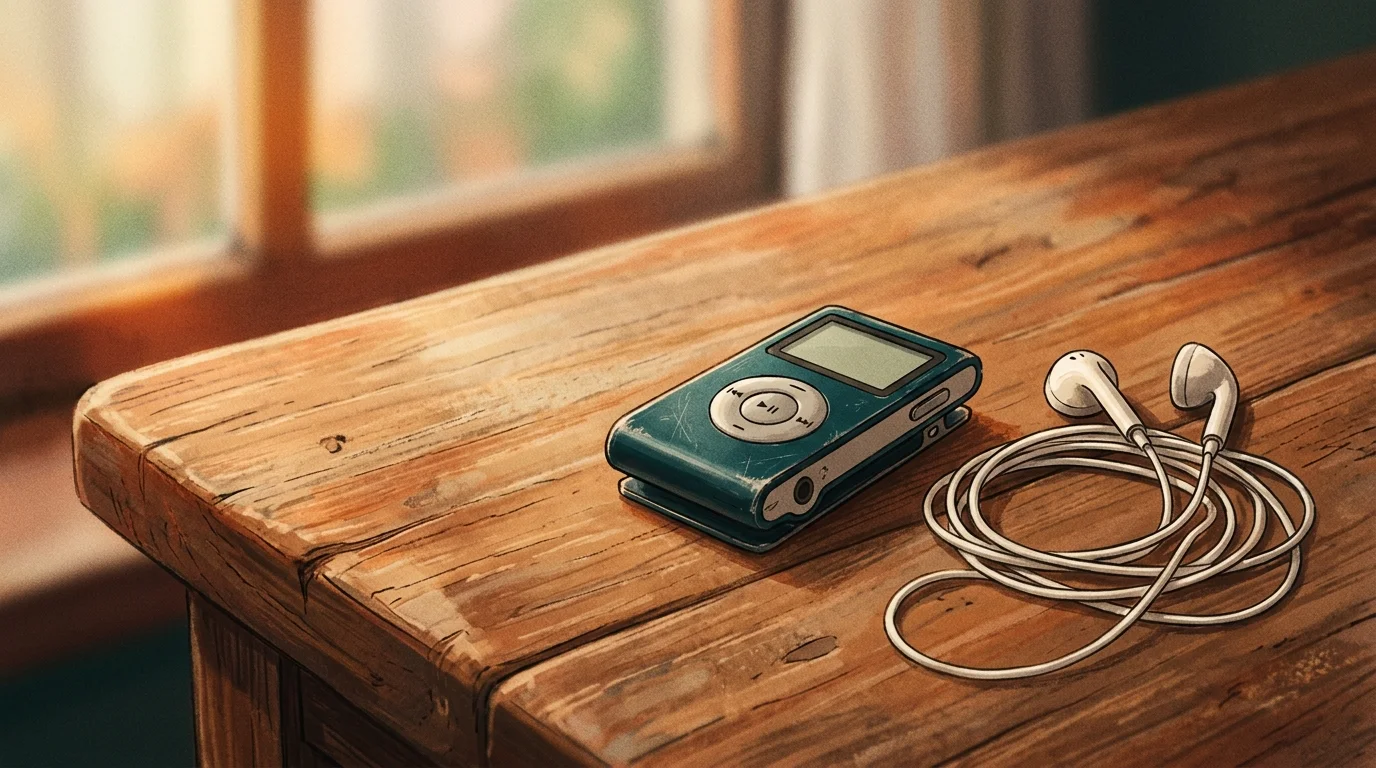
Notice what happens when you want to change a song. Your hand finds the phone, thumb unlocks it, and for a half-second the feed is right there — Instagram, the group chat, the email you've been avoiding. Most of the time you navigate away. But not always. Sometimes the song stays the same for another twenty minutes because somewhere between skipping the track and opening the app, the intention dissolved.
That's not a failure of attention. It's an architectural problem. The device you use to listen to music is the same device engineered by some of the smartest behavioral scientists on earth to keep you scrolling. Asking them to coexist peacefully is optimistic.
An MP3 player is a single-purpose device that plays audio — and nothing else. No notifications. No social media. No on-ramp to a feed. That's the entire case for the revival, and in 2026 it's gaining real traction: communities like r/digitalminimalism are full of people who bought a $30 SanDisk Clip or dug out an old iPod Nano, and they will not shut up about how much they like it. The question worth asking honestly is whether the fix works — or whether it just moves the problem around.
The Phone's Hidden Cost as a Music Player
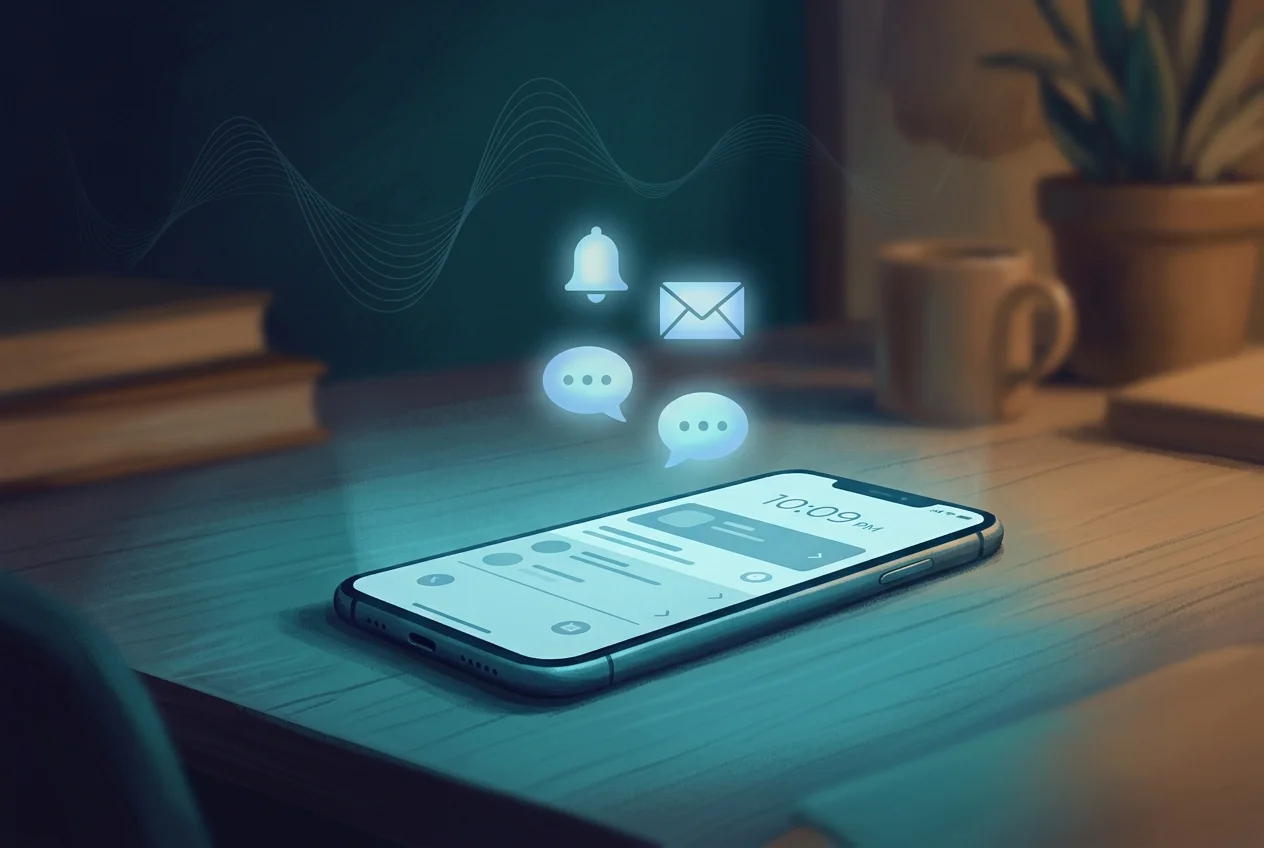
You pick up your phone about 96 times a day on average. Most of those pickups aren't intentional decisions — they're reflexes, triggered by a pocket buzz or a flash of boredom. The music you came to adjust is usually just the excuse.
Researchers at the University of Texas at Austin found something uncomfortable: merely having your smartphone on your desk — face-down, silent, not in use — measurably reduces working memory and fluid intelligence. Your brain allocates cognitive resources to suppressing the urge to check it. The device doesn't have to be on. Its presence is enough.
Now imagine that device is also your music player. Every song change is a direct invitation to engage. Every shuffle tap is a portal. The muscle memory for "unlock → swipe to feed" is deeply grooved — you've done it thousands of times — and it activates faster than conscious intention. This isn't a willpower gap. It's what psychologists call behavioral entrainment — the way repeated stimulus-response pairs become automatic, running below the level of deliberate thought. Farnam Street puts the cognitive standard plainly: genuine thinking requires concentrating on one thing long enough to develop an idea about it. A music player that doubles as a social feed is structurally incompatible with that standard.
The consequence isn't always a 30-minute scroll spiral. Sometimes it's subtler: a quick peek that costs two minutes, a distracted mind that takes five more to return to what you were doing. Research on digital technology and brain function shows that frequent interruptions — even brief ones — degrade attention, memory consolidation, and the kind of sustained focus needed for complex tasks. Music is supposed to support focus. The delivery mechanism keeps undermining it.
The Honest Case for Going Full Analog
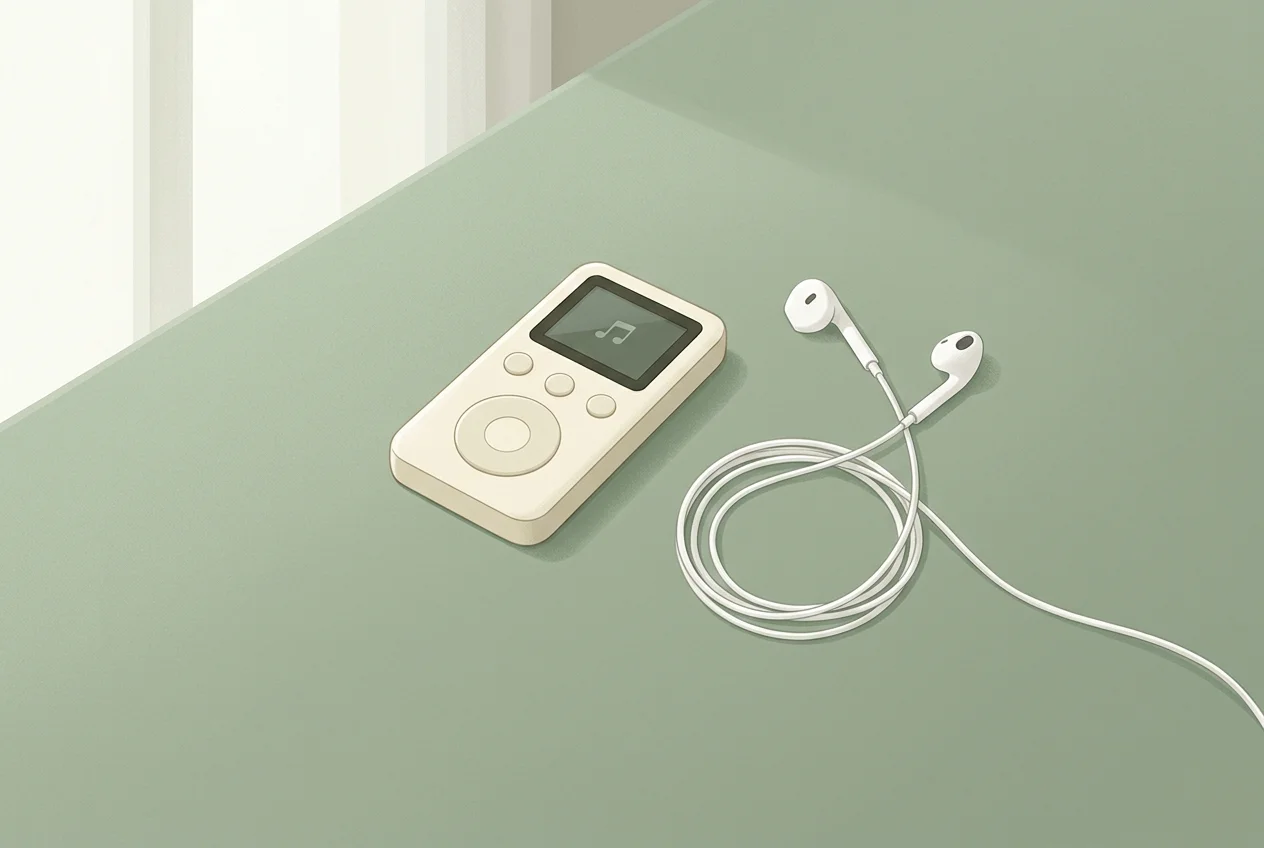
A dedicated music device solves the problem at the hardware level. There is nothing to check. The feed doesn't exist on this device. When you reach for it to skip a track, that's all that happens — you skip the track. No redirects, no dopamine bait, no notification counter waiting in the corner of the screen.
The practical advantages compound from there. Physical playback controls mean you never have to look at a screen — you can skip songs through a jacket pocket on a run without unlocking anything. Battery life on dedicated MP3 players routinely stretches to 20–40 hours of playback, versus the 6–8 you might get with heavy smartphone use. Offline music storage means no dead zones during flights, commutes, or runs in areas with spotty signal.
There's also something less quantifiable happening. People who make the switch consistently describe a different quality of listening — more absorbed, less divided. That's not nostalgia. It's what happens when the device asking for your attention is genuinely incapable of providing infinite content. The constraint becomes the feature.
This fits squarely within the digital minimalism philosophy — the idea that intentional, single-purpose tool use beats the Swiss Army knife phone for almost every individual task. Your phone is many things at once, and that multiplicity is exactly what makes it so difficult to use for just one of them.
The Honest Case Against MP3 Players
Here's what the enthusiasts tend to gloss over. Most people who buy an MP3 player for this reason stop using it within a few weeks. Not because the idea is wrong, but because the friction of a second device compounds in ways that aren't obvious at purchase time.
Your Spotify playlists don't sync to a standalone MP3 player. Your podcasts don't either, unless you're using a dedicated podcast player with its own workflow. Your phone is still in your pocket — it has to be, for navigation, 2FA, calls, and the dozen other things a phone actually does. So now you're carrying two devices, and when the MP3 player runs low on battery or gets left at home, you reach for the phone anyway. The workaround you built evaporates.
There's a deeper issue too. The abstinence approach to behavioral change has a poor track record. Studies consistently show that complete removal of a habit trigger tends to work while the removal is total and novel — and collapse once the novelty fades or the trigger reappears. The MP3 player addresses the trigger for music listening. It doesn't do anything about the phone you're still carrying, which has its own triggers and its own pull.
None of this means an MP3 player is a bad idea. It means it's a good tool for a specific person: someone committed enough to maintain two-device friction indefinitely, with a music library that can actually live on local storage. For everyone else, the real bottleneck isn't the music player. It's what happens in the two seconds after you unlock the phone.
Sip & Scroll: The Third Option
If the MP3 player is Option A — full hardware separation — then Option B is learning to use your phone intentionally without removing it from the equation entirely.
Sip & Scroll is an iPhone app built on a simple behavioral premise: the compulsive scroll doesn't start when you decide to scroll. It starts the moment the phone is in your hand, unlocked, with a feed one tap away. The fix isn't blocking music or navigation. The fix is installing friction at the exact moment the reflex fires.
Here's how it works: you select the apps you want to slow down — TikTok, Instagram, YouTube Shorts, whatever pulls you in. When you try to open one, Sip & Scroll pauses you with a prompt. Take a sip of water. Snap a quick selfie to verify. Then you get up to 45 minutes of unblocked access. That two-second pause is enough for your prefrontal cortex to register that a choice is happening — to ask "do I actually want this?" rather than opening the app on autopilot.
Your music stays completely unaffected. Your podcasts, navigation, and messages work as normal. Only the apps you've identified as attention traps require the ritual. It's the behavioral equivalent of what the MP3 player achieves at the hardware level: separation between the tool you're using and the feed that's waiting.
Who's it best for? Anyone who wants to spend less time in the feed without carrying a second device, maintaining a separate music library, or going cold turkey on apps they actually enjoy. The goal isn't deprivation — it's making the choice conscious rather than reflexive. That's a different target than the MP3 player, and for most people it's a more sustainable one.
Which One Is Right for You?
The MP3 player and Sip & Scroll are solving versions of the same problem from opposite ends. One removes the context entirely. The other changes what happens inside it.
If you have a local music library, don't mind carrying a second device, and want total separation from your phone during workouts or focus sessions — the analog route is a genuine upgrade. A Sony NW-A series or a $30 SanDisk Clip will serve you well. The 30-day dumb phone experiment many people have run suggests that hardware constraints, when maintained, do change behavior — the phone becomes a less reflexive target when it's not also your music player.
If you're on Spotify, rely on your phone for podcasts and navigation, and aren't ready to maintain a separate device ecosystem — then the problem isn't the music app. It's the architecture around the unlock. Friction at that moment, not hardware separation, is the more practical intervention.
Either way, the diagnosis is the same: your phone is not a neutral music player. It's a portal designed to redirect every interaction toward infinite content. You cannot out-willpower that design. What you can do is change the conditions — either by leaving the portal at home, or by installing a gate at the entrance. Both work. Neither requires you to be a different kind of person than you already are.
Keep the music. Lose the scroll.
Sip & Scroll adds friction before the apps that pull you in — without touching your music, podcasts, or navigation.
Download Sip & Scroll Free