The Phone Foyer Method: Why Physical Distance Beats Willpower
You can't out-willpower a reflex. But you can redesign the room it lives in.
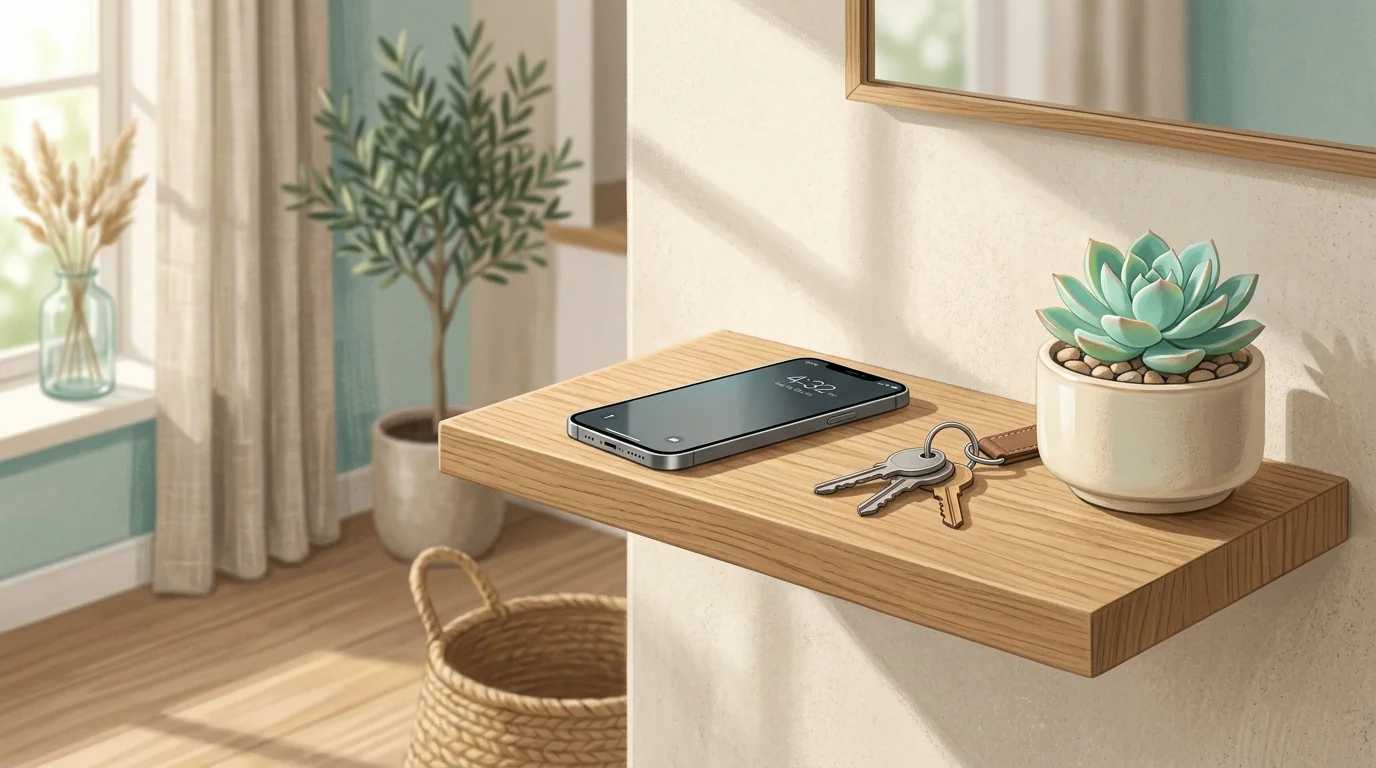
It starts before you notice it starting. The alarm goes off, and before you've formed a thought about the day ahead — before you've decided anything — the phone is already in your hand. Your arm did that while your brain was still waking up. You didn't reach for it so much as it was already there, the way a habit occupies space before you've consciously invited it.
That moment, before the app opens, before the scroll begins — that's the window the phone foyer method is designed to interrupt.
The phone foyer method is a behavioral design strategy: you store your phone in a designated spot outside your bedroom and primary work area, treating it like your keys or wallet — something you retrieve when you need it, not something that rides in your pocket all day. Coined by Georgetown computer science professor Cal Newport, the method is built on a deceptively simple premise: you cannot mindlessly grab something that isn't within arm's reach. And the research behind why that matters is more compelling than most people expect.
Why Willpower Can't Win
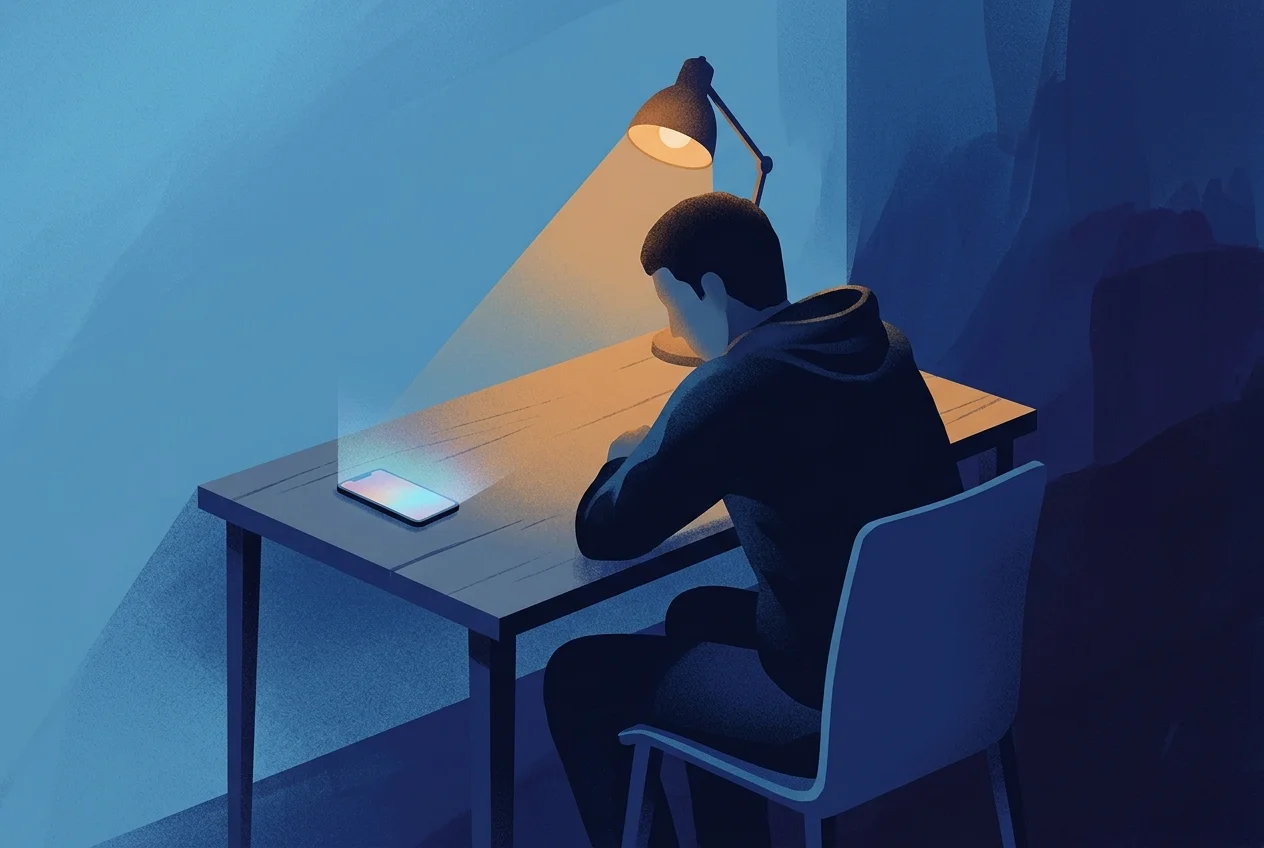
The standard advice goes like this: just be more disciplined. Notice the urge. Pause. Choose not to act on it. This is reasonable advice. It also fails most people, most of the time — not because they lack discipline, but because they're fighting on the wrong terrain.
Willpower is a finite resource that depletes with use — psychologists call this ego depletion, the phenomenon where each act of self-control draws from the same cognitive reserve. By midday, after dozens of small decisions and micro-resistances, that reserve is lower than it was at 7 a.m. And your phone? It's still there. Still glowing. Still full of variable-ratio reward signals your nervous system has learned to anticipate.
The asymmetry is built in. Every time you successfully resist checking, you drain a resource. The phone's pull costs you nothing to resist — until it finally doesn't.
What digital minimalism practitioners figured out — and what the research now confirms — is that the winning move isn't better resistance. It's eliminating the need to resist in the first place.
The Evidence: Distance Changes Your Brain
In 2017, researchers at the University of Texas at Austin ran an experiment that should permanently change how you think about phone proximity. Nearly 800 participants were given cognitive tasks requiring working memory and fluid intelligence. Some participants had phones on their desks. Some had phones in their pockets or bags. Some had phones in another room entirely.
The phones were off, or face-down, in all conditions. Nobody was actively checking anything.
The result was unambiguous. Participants whose phones were in another room outperformed everyone else on every cognitive measure — working memory capacity, problem-solving, fluid thinking. The desk group performed worst. The pocket group landed in between.
The explanation, from lead researcher Adrian Ward: the brain is continuously allocating a small portion of its cognitive capacity toward suppressing the urge to check the phone. You don't notice doing this. It feels like focus. But the effort of suppression is real, and it costs you. When the phone is out of the room, there is no urge to suppress. That cognitive budget goes back to what you're actually trying to do. Farnam Street's coverage of attentional research describes this as "sticky attention" — the brain's tendency to remain locked onto a nearby stimulus even when you're trying to ignore it. Physical removal is what breaks the lock.
This is the science behind "out of sight, out of mind" — not a platitude, but a measurable effect. Distance doesn't just reduce checking behavior. It literally frees up your brain. It's why people who keep phones in a separate room report feeling less distracted even when they're not tempted. The absence of the object removes the low-level maintenance cost of not acting on it.
How to Set Up Your Phone Foyer
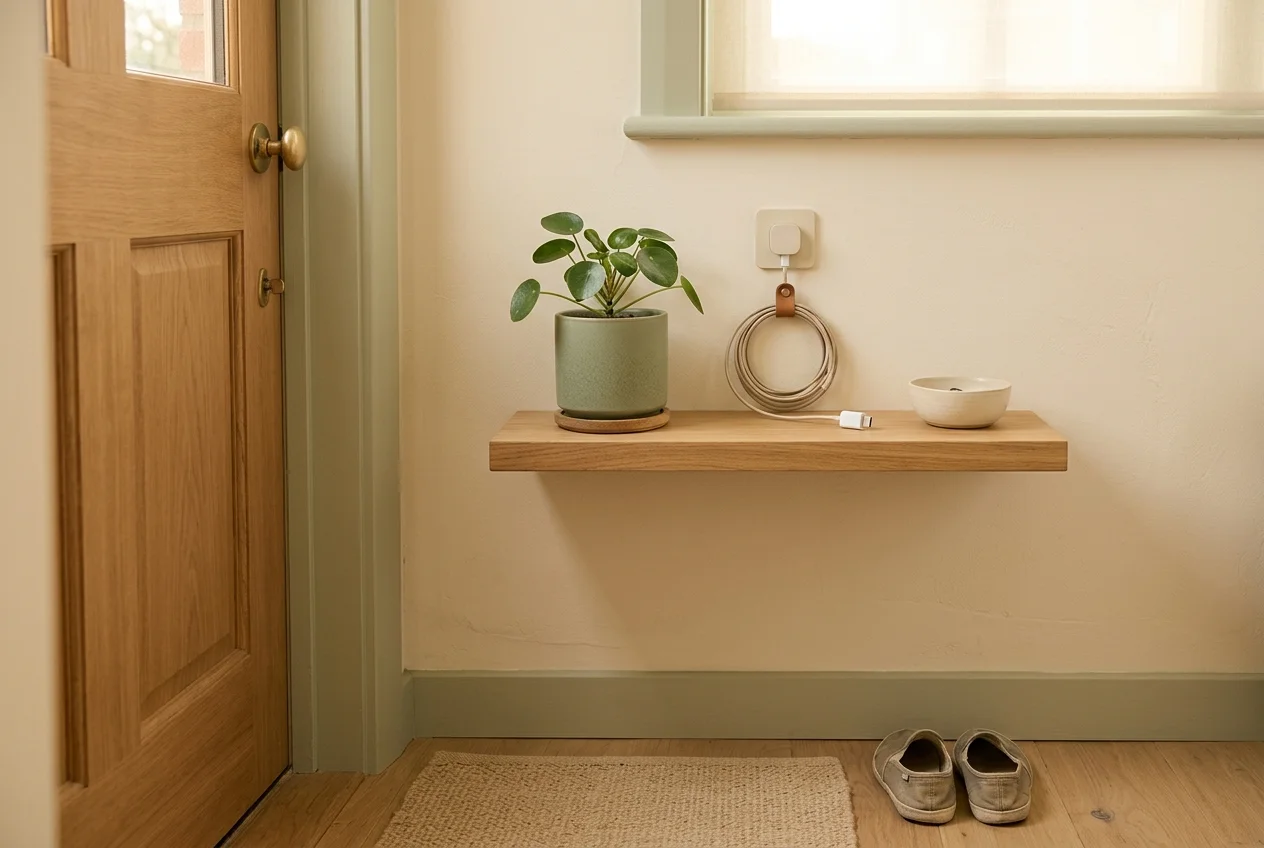
The setup is intentionally simple. That's the point. Any friction in the setup itself becomes an excuse to skip the habit.
Pick a spot outside your bedroom. A hallway shelf, entryway table, or kitchen counter all work. The rule Newport describes: when you arrive home in the evening, your phone goes there — alongside your keys, the way it's always been with your wallet. If you need to look something up, you walk to the foyer to use it. You don't carry it to the couch. You don't bring it to the bedroom. You treat it like the appliance it technically is.
Place a charging cable at the spot, so the setup reinforces the habit. A phone that needs charging is one you're already more likely to set down — the foyer just gives that instinct a designated landing zone.
For mornings, the logic extends: your phone charges overnight in the foyer, not on your nightstand. Your alarm moves to a cheap standalone clock. This single change — removing the phone from your bedroom entirely — eliminates the pre-sleep and post-alarm scroll window that research links directly to elevated morning anxiety. You wake up without the feed waiting for you. The first fifteen minutes of your day belong to you.
The common objection is two-factor authentication. Many people rely on their phone for 2FA codes, banking apps, or work messages that arrive after hours. These are real constraints, not excuses. The foyer method doesn't require you to be unreachable — it requires the phone to not be an appendage. Keep it in the foyer with the ringer on if you need to receive urgent calls. Check it intentionally, at intervals you've chosen. The foyer is a location, not a vault.
The First Week Feels Weird — Then It Doesn't
Most people who try the phone foyer method for the first time describe the same experience: a low-level, ambient itchiness that they can't quite place. Not anxiety, exactly. More like something that keeps almost surfacing, a prompt that reaches for a response and finds nothing.
That sensation is the reflex looking for its object. It has fired hundreds of times a day, every day, for years — and now the object isn't there to receive it.
Notice it. Don't fight it. It's the reflex pattern itself becoming visible, which is a different experience than acting on it invisibly. After a few days, the itchiness quiets. The reflex doesn't disappear, but it stops dominating. You find yourself in the middle of an evening at home and realize — with something close to surprise — that you haven't checked your phone in two hours. Not because you resisted. Because you forgot it was an option.
That's what people who go further with phone reduction consistently report: the first days are the hardest, and then the baseline shifts. Your nervous system recalibrates. The constant background availability anxiety — "what am I missing?" — softens because it no longer has an on-ramp. The answer to "what am I missing?" becomes, simply, whatever it is. It'll be there when you check.
When the Foyer Isn't Enough
The phone foyer method works best as a home boundary. It's harder to implement during a workday, where your phone may be a necessary tool, and harder still on commutes or in social spaces where the pull is ambient and universal. Physical distance isn't always an option.
This is where behavioral friction comes in as a complement rather than a replacement. The foyer works by inserting distance between impulse and access. When distance isn't available, what you need is a pause — something brief and physical that gives your prefrontal cortex enough time to register a choice rather than simply follow a reflex.
That's the principle behind Sip & Scroll. When you try to open an addictive app — Instagram, TikTok, YouTube Shorts — the app prompts a brief pause: take a sip of water, snap a quick selfie to confirm it, and then you get up to 45 minutes of unblocked access. It's not a lockout. It's not a wall. It's the digital equivalent of putting the phone in another room — a moment of intentional friction that converts a reflex into a choice. The behavior that follows is still up to you. But now you're actually choosing it.
The foyer method and Sip & Scroll operate on the same underlying logic: willpower is the wrong lever. Architecture is the right one. Design your environment so that the automatic behavior requires one more step — and that step is enough time for intention to catch up with impulse.
You don't have to become a different person to use your phone differently. You just have to put it somewhere else.
Add friction where distance isn't an option
Sip & Scroll pauses addictive apps with a sip of water — so you choose every session, instead of falling into one.
Download Sip & Scroll — Free