My Journey from 8 Hours of Screen Time to Just 2
What actually worked — and what failed spectacularly — when I tried to reclaim my attention.

The decision had already happened before I reached for the phone. Not a conscious one — more like gravity. Something in my nervous system had already decided, and by the time any aware part of me caught up, I was lying in bed, twenty minutes deep into TikTok, watching my brain pull the same lever it had pulled ten thousand times before.
I could observe it and still not stop it. That was the uncomfortable part.
My Screen Time average at that point was 7 hours and 42 minutes a day. Not work — personal consumption. When I finally looked at the weekly breakdown, I sat with it for a minute before accepting that the numbers were accurate: TikTok alone was eating 2.5 hours. Instagram another hour and a half. The rest scattered across YouTube, Reddit, a browser history I'd rather not revisit.
I'm writing this six months later, averaging 1 hour 55 minutes a day. Here's what actually moved the needle — and what failed completely before I got there.
Reducing screen time means redesigning the conditions under which your behavior happens, not summoning the willpower to override those conditions. The apps on your phone aren't passive content delivery systems — they're engineered attention machines, optimized by behavioral scientists to hold you exactly as long as they can. Research shows these platforms exploit your brain's reward circuitry using the same variable-ratio reinforcement that makes slot machines so hard to walk away from. Willpower was never going to win that fight. What works is structural: change the environment, add friction at the right moment, give boredom somewhere better to go — and the number drops not through gritting your teeth, but because the path of least resistance is different.
The Number That Made It Real
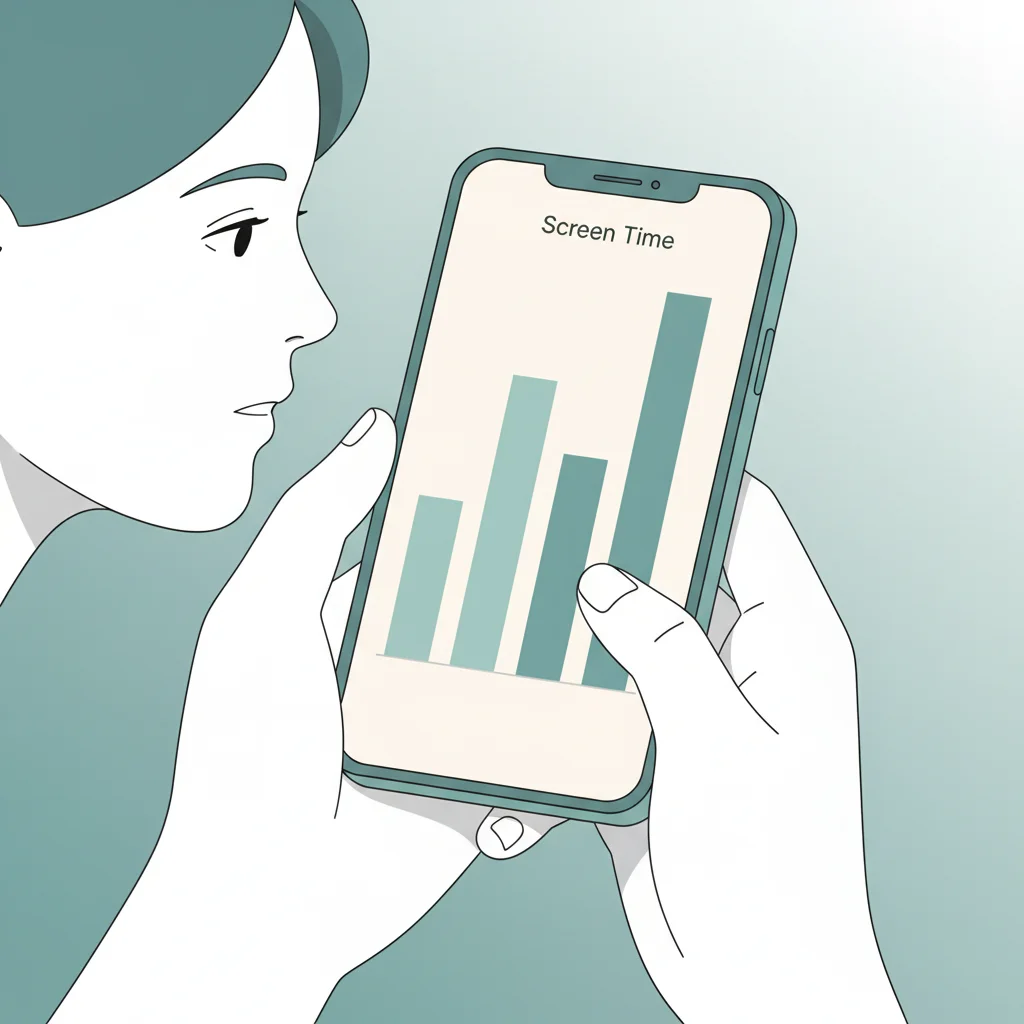
Most people have a vague sense that they use their phone "a lot." What they don't have is data. The gap between felt sense and reality is staggering: research comparing self-reported vs. actual phone use finds people underestimate how often they check their phone by more than half. When I went into iPhone Settings → Screen Time and looked at the weekly report for the first time, I sat with the numbers until I accepted they were real.
7 hours 42 minutes. Daily average. That's close to a full waking day — every other day — spent on a small glowing screen held in my hand.
The Screen Time app has one feature that does more psychological work than anything else it offers: the graph. Not just the daily total — the stacked visual showing when the hours accumulate. Watching the bar rise from 6am through midnight, with distinct spikes at breakfast and late at night, is like watching a receipt print for time you thought you were spending differently.
I gave myself one week to just observe without trying to change anything. I wanted to see the pattern before I tried to alter it. What I found: 68 minutes in the first 30 minutes of waking up. A big spike between 9pm and midnight. And a low-grade baseline hum throughout the day — 8-minute grabs every 20 or 25 minutes, the kind that don't feel like screen time because each one is so short. That chronic micro-use was harder to spot and, it turned out, harder to change than the obvious large chunks.
Have you ever looked at your own breakdown? Not the overall number — the app-by-app, hour-by-hour data? Most people find it lands differently than they expected.
Everything I Tried That Didn't Work
This section deserves its full weight, because most advice on reducing screen time skips past the failures. The failures taught me something the successes didn't.
Deleting apps. I deleted TikTok on a Monday. By Thursday it was back. Not because I made a deliberate decision to reinstall it — I just found myself holding the App Store open, thumb already positioned over the Install button, at which point the decision had already been made somewhere below conscious awareness. The app had been gone, but the habit remained. And a habit without its target app will wander until it finds a substitute.
Hard app blockers. I tried a couple of nuclear-option blockers — the kind that lock you out entirely and require a waiting period or a passcode from someone else to unlock. I bypassed them, deleted them, or found workarounds within the first week. This taught me something important: these tools are built on the assumption that desire is the problem. It isn't. Automaticity is. The reach for the phone happens before desire even registers — in the motor system, below the level where blocking apps operate. By the time I was thinking about whether I wanted to open Instagram, I was already opening it.
"I'll just use it less." No mechanism. No result. This is the wishful-thinking approach, and I tried it twice.
The pattern across all three failures: I was treating a behavioral architecture problem as a moral one. Scrolling isn't a character flaw. It's a dopamine loop that has been reinforced thousands of times until it lives in the automatic layer of behavior — the same layer where reaching for a glass of water when you're thirsty lives. You don't think about it. You just do it. And you can't think your way out of it.
The Three Systems That Actually Worked
I want to be precise about what "worked" means here, because it's easy to misread it as "was easy." None of this was easy in the first month. But unlike willpower, these approaches didn't exhaust themselves.
1. Environmental Design — Phone Out of the Bedroom
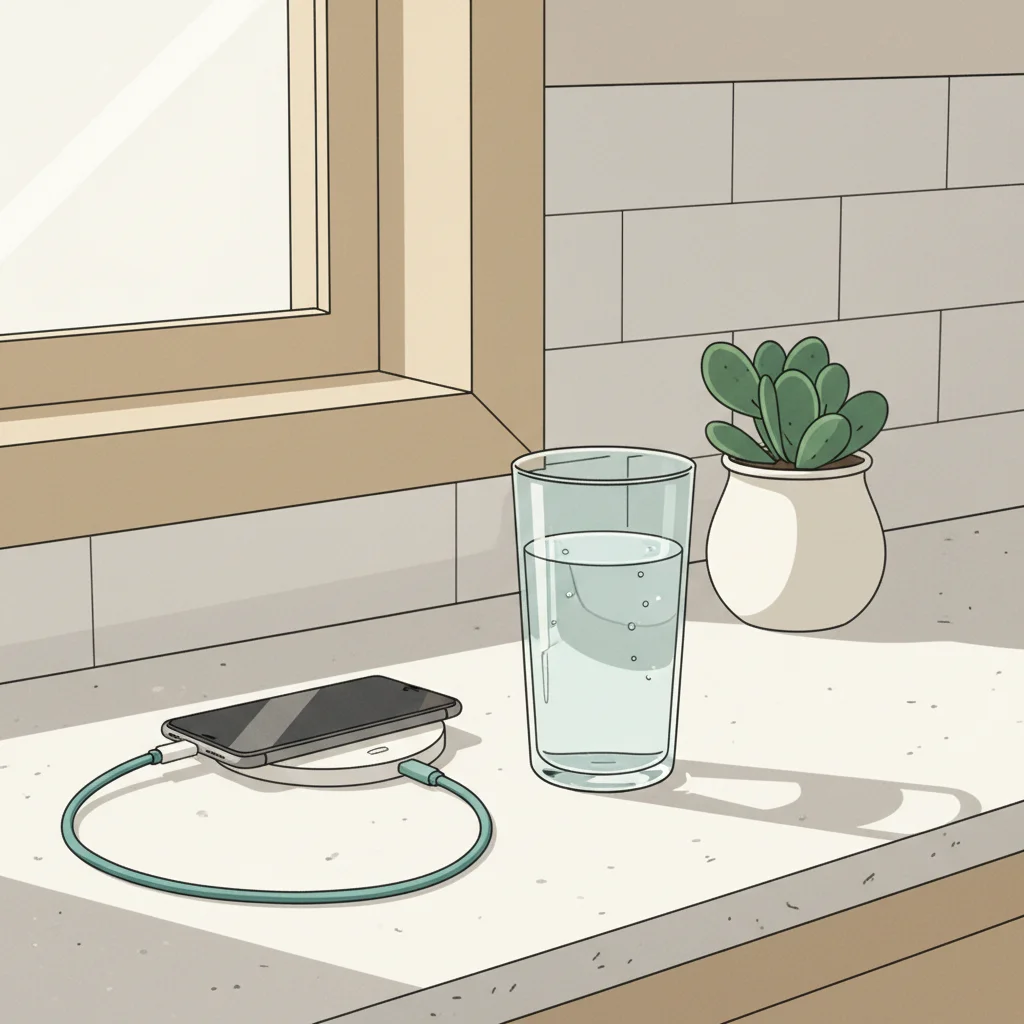
This single change had the highest return on effort of anything I tried. When your phone charges in another room, the 68-minute morning scroll disappears almost entirely — not because you've developed stronger self-control, but because the lag between waking and reaching has grown long enough for a different behavior to fill it. The brain reaches for what's closest. Change what's closest.
The specific implementation: phone charges in the kitchen, not the nightstand. Alarm clock on the nightstand instead. A plug-in clock costs about $12. It's possibly the best $12 I've ever spent.
Proximity is one of the strongest predictors of behavior across almost every domain of behavioral science — what's physically near you gets used, what's out of reach doesn't. This isn't a metaphor for willpower. It's mechanics. And eliminating my morning spike knocked roughly 45 minutes off my daily average without any conscious effort whatsoever.
Some people take this instinct further — all the way to a dumb phone experiment, swapping their smartphone for a basic phone entirely for 30 days. The impulse is sound, and the attention gains are real. Whether it's sustainable long-term depends on how much of your daily infrastructure runs through that device. But as a reset, it's one of the most effective.
The night spike was trickier. The bedroom ban helped — without a phone on the nightstand, the midnight scroll got harder. But the couch problem remained.
2. Friction Before the Apps That Pulled Hardest
Deleting apps removes the behavior, but the habit looks for a new host. What I needed wasn't removal — it was a pause. A brief, physical interruption between the automatic reach and the actual opening: just enough friction to let a conscious choice register before the feed loaded.
I started using Sip & Scroll for TikTok and Instagram. Before either app opens, I take a sip of water and snap a quick selfie. It sounds small. But it interrupts the motor automaticity at exactly the right moment — the fraction of a second between the tap and the feed opening. Instead of the app appearing instantly (invisible, frictionless, already inside it before I've noticed), there's a pause, a physical act, a brief reset.
It doesn't block me. I still get 45 minutes of unblocked access after the sip. The point isn't restriction — it's the moment of choice. That distinction turns out to change everything about the experience. Scrolling when I chose to felt different from scrolling because my thumb moved. The guilt evaporated. The time felt used rather than consumed.
After the first month, the water ritual started to feel like something I did for myself rather than something I did to myself. That reframe is not small.
3. Replacement, Not Removal
I tried to delete TikTok and failed. What I hadn't done was give my boredom somewhere better to go.
The uncomfortable reality is that boredom doesn't stop when the phone goes away. It becomes louder, heavier, more insistent — which makes the phone feel even more necessary. If you remove a habit without installing a replacement that serves the same need (the need for stimulation, for transition, for a moment of checked-out relief), the original habit wins by default. There's nothing competing with it.
I started keeping a book on the couch cushion where I'd usually sit and scroll — not on the shelf, not in the bedroom, but right there, in the same physical space as the habit I was trying to redirect. When I reached for something in those transitional moments between tasks, the book was physically as available as my phone. Within three weeks, I was reading for an hour most days without making any effort to do so. The habit just found the nearest available target.
This is the core of what behavioral scientists call environment design: you don't change behavior by changing your mind about it. You change behavior by changing what the behavior bumps into. The digital minimalism framework gets at this — the goal isn't to use less technology through discipline, it's to use it only when it genuinely serves you, by making the alternatives easier to reach than the default.
What 2-Hour Days Actually Feel Like
Six months in, I want to tell you it feels clean and light and free. Sometimes it does. But the honest account is more nuanced.
The first month was strange in ways I didn't expect. I started with Instagram Reels — the single highest-pull app in my phone — and what happened to my morning anxiety after quitting it surprised me. Boredom felt heavier — a mild, pervasive discomfort during moments that used to be filled. Waiting in line. The three minutes between finishing a task and starting the next one. The gap before sleep arrived. I'd developed a neurological intolerance for empty time without realizing it, and I had to unlearn it gradually, through the discomfort rather than around it.
What I didn't anticipate was the grief. When you stop scrolling, you lose the emotional hit parade too — the funny videos, the moments of connection, the brief dopamine spikes. It's not neutral. There's a withdrawal period, and it genuinely feels like loss. The five stages of smartphone withdrawal are real, and I moved through most of them. Phantom reaches were the strangest — I'd find my hand on my phone before I'd consciously decided to pick it up, check nothing in particular, set it back down. The first 48 hours without a smartphone captures this disorientation well — you're not bored, exactly. You're between identities.
What came back instead was quieter and harder to notice. Sleep first — not dramatically improved, but the low-grade background anxiety I'd been carrying into mornings started to recede. The connection between early phone use and elevated morning anxiety runs deeper than most people realize; when the stimulus goes away, the cortisol pattern starts to normalize within a few weeks.
Then attention. I could read for 45 minutes without an itch to check something. I could watch a film without having my phone in my hand. Conversations felt different — longer, less interrupted by the specific kind of half-presence that comes from keeping one mental tab open on whatever might be waiting on the feed. If you want to systematically work through this recovery, the Focus Diet protocol breaks it into a week-by-week framework for rebuilding your attention span.
And then, slowly, the ordinary things started registering again — the specific quality of afternoon light, the texture of a long conversation, the satisfaction of finishing something. These aren't dramatic claims. They're quiet ones. But quiet is not the same as empty.
The Structure That Made It Last
The through-line across everything that worked: none of it demanded willpower. All of it reduced the need for it.
You cannot out-discipline an attention machine that has had more time and money invested in capturing your behavior than you've had invested in your own. The behavioral scientists who designed your feed are not your enemies — but they are not playing the same game you think you're playing, and "just deciding to use it less" is not how that game ends.
What ends it is friction — physical, environmental, architectural. Move the phone out of the room where you're most vulnerable. Add a brief pause before the apps that pull hardest. Put something you actually want to do in the physical space where you usually scroll — the hobbies that surface when the scroll stops are often the ones you forgot you had. Let the structure carry the weight your discipline can't.
If you're starting this process, skip the willpower experiments. They exhaust themselves. Start with the one environmental change that requires the least ongoing effort: the phone out of the bedroom. Add one source of friction for your highest-use app. Find one replacement habit that lives in the same physical space as your biggest scroll location.
You don't need perfect discipline for six weeks. You need three system changes and a sip of water. And if you want a harder version of the same process — full immersion rather than gradual reduction — the 7-day digital detox compresses it considerably. What you'll gain and what you'll actually lose when you cut social media is also worth understanding honestly before you start; we covered whether quitting social media is worth it without the usual evangelism.
Add friction before the apps that pull hardest.
Sip & Scroll pauses TikTok, Instagram, and YouTube with a water sip and selfie — then gives you 45 minutes of unblocked access. The pause you actually need.
Download Sip & Scroll Free