The Algorithm Isn't Reading Your Mind — It's Writing It
AI recommendation engines don't just track your behavior. They build a model of your psychological vulnerabilities — and it gets more accurate every session.

Your thumb knows something your conscious mind hasn't registered yet. There are videos you glide past in half a second and posts you hover over for two or three — and you couldn't say, if asked, what the difference was. You didn't decide to stop longer. You just did.
The algorithm noticed. It recorded the hesitation. It filed which category, which format, which emotional register earned that extra beat of your attention — and added the signal to a model built from billions of similar micro-pauses from millions of similar users.
Tomorrow's feed will be different. Not dramatically. Just marginally more calibrated to exactly the texture of what makes you slow down. You won't notice the change. That's the point.
AI attention algorithms are machine learning systems trained to predict which content will keep you engaged longest — not which content is most valuable, most accurate, or most likely to improve your day. They track every scroll, every pause, every replay, every abandoned video, feeding that behavioral data back into a model that gets incrementally smarter with each session. Over millions of users and billions of interactions, these systems develop an uncanny ability to serve exactly the content that makes stopping feel harder than continuing. That is not an accident of design. It is the design.
This is what the attention economy looks like at the algorithmic level — and in 2026, the systems doing this are more sophisticated than most people realize.
The Machine That Learned You
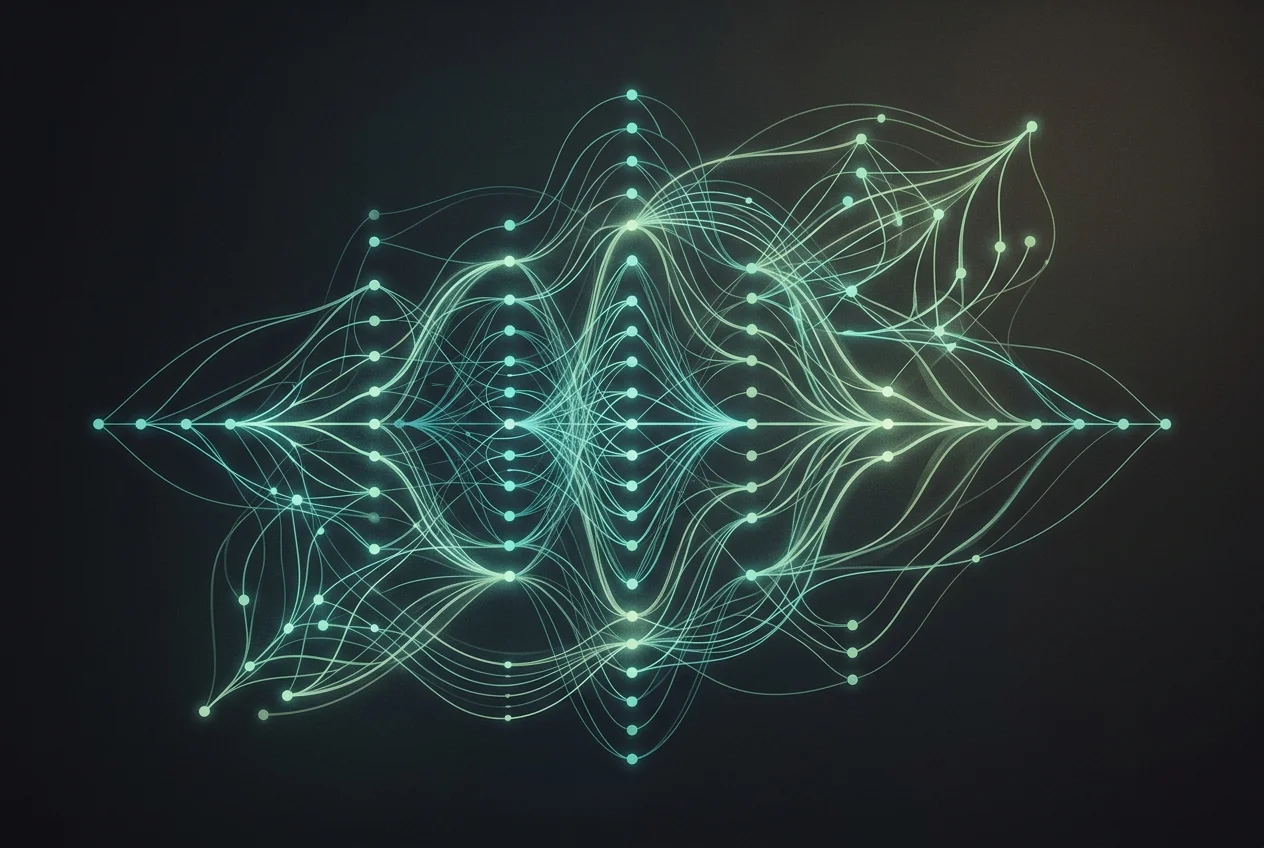
Most people assume recommendation algorithms work from a content catalog — they have a library of videos or posts, and they match content to users based on stated preferences or explicit searches. That model is about twenty years out of date.
Modern recommendation engines don't match content to preferences. They build behavioral profiles and predict engagement. Every action you take on the platform is a signal: how long you paused on a post, whether you watched a video to the end or exited at three seconds, what you shared versus what you liked without sharing, which accounts you follow but never actually engage with, what you return to after closing the app. None of this goes to a human editor. It feeds a model that learns to predict, with increasing precision, what will keep you on the platform.
The technical foundation is a combination of collaborative filtering and reinforcement learning. In plain language: the system observes that people with similar behavioral histories to yours tended to stay longer when shown certain content, so it shows you that content. Then it observes how long you stay, updates the model, and tries a slightly different version next time. No one programs what appears in your feed. The system figures it out by watching what you do — and what ten million people with profiles similar to yours did before you.
Research on AI-driven social media algorithms documents how these systems are specifically designed to exploit neurological reward pathways — activating dopamine responses through unpredictable content delivery — and notes that platforms collect extensive personal behavioral data without meaningful transparency about how it shapes what users see. The model isn't neutral. It has one objective. And your psychology is the material it's working with.
The Emotion Multiplier
Here's the part that changes how you read your feed: the algorithm isn't optimizing for content you'd consciously choose. It's optimizing for content that generates reaction.
Platforms measure engagement through watch time, comments, shares, and return visits. These metrics correlate most strongly with content that triggers emotional arousal — specifically the emotions that extend sessions: outrage, anxiety, envy, validation, compulsive curiosity. A calm, measured take generates fewer behavioral signals than a provocative one. An aspirational photo generates less friction than one that makes you feel slightly inadequate. A video that makes you mildly angry is more likely to be shared than one that makes you quietly satisfied.
The algorithm doesn't know this intellectually. It discovered it empirically — by running trillions of micro-experiments and observing which content produced the most sustained engagement. Emotionally charged content won. So emotionally charged content gets surfaced more often.
Psychologists call the underlying mechanism variable-ratio reinforcement — the same mechanism that makes slot machines the most addictive form of gambling. You never know if the next pull will hit or miss, so you keep pulling. In the feed, you never know if the next post will be throwaway or the most interesting thing you've seen all week. The uncertainty is the feature. The algorithm amplifies it by making sure the occasional hit is well-calibrated to your specific emotional profile — not generic outrage or generic envy, but the precise flavor of each that your behavioral history suggests will keep you in place.
What you experience as a personalized feed is a precision instrument tuned to your specific psychological vulnerabilities. That's not a metaphor. That's a description of how the engineering works.
Every Session Makes It Smarter
The uncomfortable part isn't that these systems exist. It's that you've been training yours for years.
Every session is a training run. The model updates based on what kept you and what didn't. It learns which emotional registers work on you specifically — which topics make you pause, which formats pull you back for a second watch, which types of accounts you orbit without following. Over time, it doesn't just predict what you'll watch. It develops a functional model of your particular psychological profile — the exact anxiety, the exact aspiration, the exact tribalism that keeps you in the loop longest.
And the algorithm itself gets better. Not in a sudden, visible way. Incrementally, invisibly. A/B tests run constantly at scale — tens of millions of users tested in parallel, different versions of the recommendation logic running simultaneously, each producing slightly different engagement metrics. The version that wins is the one that generated the most sustained attention. That version gets deployed. The cycle repeats.
The gap between the system that existed two years ago and the one running today is significant. The one running today is better at catching the moment you're about to disengage and surfacing something just interesting enough to prevent it. Better at timing the occasional genuinely rewarding hit to arrive at the moment your willpower is lowest. Better at knowing — based on the behavior of everyone who has ever used the platform — what keeps someone like you from putting the phone down.
Your attention is the training data. And you've been providing it for free, in every session, since the day you created your account.
What This Is Costing Your Attention
The human brain was not designed to make rapid attention decisions at the speed an algorithmic feed demands. Every piece of content is a micro-decision: stay or move on. Do this dozens of times per minute and you are not just consuming content — you are depleting the cognitive infrastructure you need to think clearly, focus intentionally, and disengage voluntarily.
Research on attention and task switching shows that even brief shifts between cognitive targets — the kind that happen every few seconds in a scroll session — impose measurable overhead on your prefrontal cortex. The cost accumulates. One researcher estimated that frequent attention switching can cost as much as 40 percent of productive mental capacity across a workday. The feed doesn't feel like work. But your brain is running hard the entire time.
This is the mechanism behind what researchers now call the popcorn brain effect — a brain that has been calibrated to rapid-fire stimulus cycles and loses the capacity to engage with slower, quieter experiences. A chapter of a book. A conversation without a second screen. A thought that requires more than four seconds to develop. The algorithm optimizes for sustained engagement per session and, in doing so, quietly degrades the attentional architecture that sustained engagement actually requires.
Have you noticed that long-form content feels harder than it used to? That a ten-minute video feels like a commitment? That silence has started to feel uncomfortable in a way it didn't before? That's not you getting lazier. That's a trained response — and the system doing the training is still running.
What You Can Actually Do About It
Understanding the mechanism doesn't make you immune to it. The system isn't operating on your conscious reasoning; it's operating below it, in the gap between impulse and awareness where behavioral conditioning lives.
This is why digital minimalism emphasizes structural changes over willpower-based ones. Willpower is a finite resource that depletes over the course of a day. The algorithm is most aggressive at exactly the moments when your resistance is lowest — late at night when you're tired, first thing in the morning when you're anxious, during any unstructured gap in your schedule. Resolve doesn't win against a system that has been specifically engineered to outlast it.
What interrupts the loop is architecture. Turn off push notifications so the platform can't initiate the session — you have to choose it. Keep your phone physically outside the bedroom so the first and last ten minutes of your day aren't spent feeding the model. Use grayscale mode, which reduces the visual reward signal that makes the interface itself compelling. These aren't hacks. They're structural adjustments that change the conditions of engagement before you engage.
The most effective intervention is friction — a brief physical pause between the impulse to open an app and the act of opening it. Ten seconds is enough. That's approximately how long it takes for your prefrontal cortex to catch up to your thumb and register a conscious choice rather than an automatic reflex.
That's exactly the mechanic behind Sip & Scroll. Before you open TikTok or Instagram, there's a moment: take a sip of water, take a quick selfie proving it. It's not a lockout. It's not a lecture. It's ten seconds of gentle friction that gives your brain enough time to ask: is this what I actually want right now? For a lot of people, the answer changes. Not always. But often enough.
The algorithm will keep improving. Each iteration will be more sophisticated at capturing the specific texture of your attention than the last. You cannot out-engineer a trillion-parameter model through discipline alone. But you can change the conditions under which it gets to operate — and a ten-second pause before each session is a structural change, not a willpower test.
That's a different kind of power. And it's one the algorithm can't take away.
Add friction before the algorithm gets you.
A sip of water and a selfie. Ten seconds of pause before 45 minutes of scroll — on your terms.
Download Sip & Scroll