Confessions of a Screen Addict: What 7 Days Without My Phone Actually Taught Me
I went in expecting peace and quiet. What I found instead was something more useful — and considerably more uncomfortable.
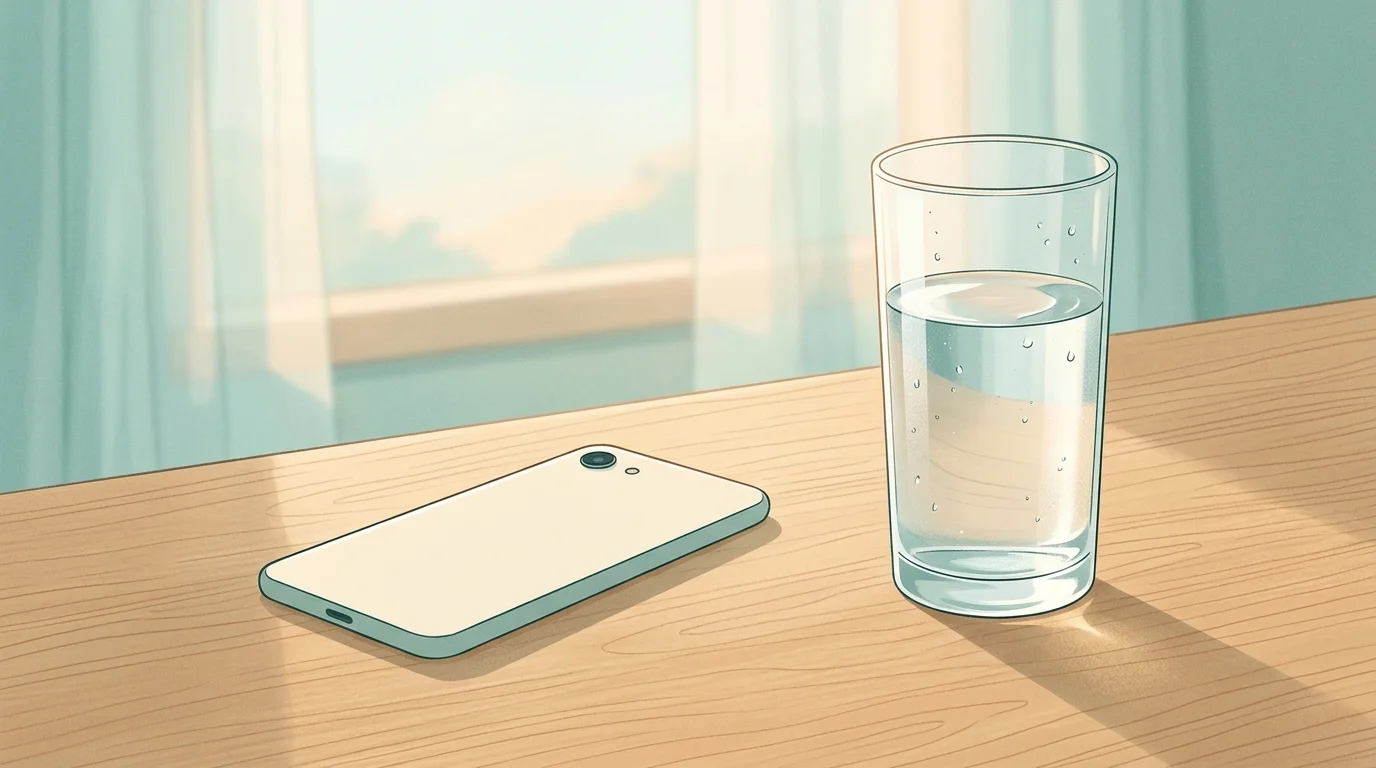
Have you ever had the experience of being bored in a way that was almost pleasant? Not the agitated, I-need-to-check-something boredom, but a slower, softer kind — the kind where you're sitting somewhere and a thought arrives that you don't immediately push away. Where the quiet feels like room rather than absence.
That's what day four of a digital detox feels like. I'm telling you now because days one, two, and three don't feel like that at all.
Suppose you decided to try something. Seven days without social media — not because something went wrong, not because a doctor ordered it, but as a deliberate experiment. You tell yourself it'll be manageable. Maybe even pleasant. You've done harder things than not looking at your phone.
You probably haven't.
By the end of day two, your hand is moving toward where your phone usually sits before you've consciously registered why. Unlocking and locking the screen without a destination. Reaching for something to fill a three-second gap between tasks and finding nothing there — just the gap, wider and stranger than expected. By day three, a pattern becomes visible that was invisible before: the phone wasn't just entertainment. It was filling a dozen small moments you'd never noticed as moments at all. Remove it, and all those pauses are suddenly just — there. Open, quiet, and more revealing than you anticipated.
A digital detox experience is a deliberate break from screen-based consumption — particularly social media feeds, short-form video, and algorithmic news apps — for a defined stretch of time. It's not about productivity metrics or asceticism. It's about observing, at close range, how deeply the phone habit has threaded itself into the texture of an ordinary day — and discovering what's underneath when it isn't. This is what seven days of that observation actually looked like.
The Setup: Why I Finally Did It
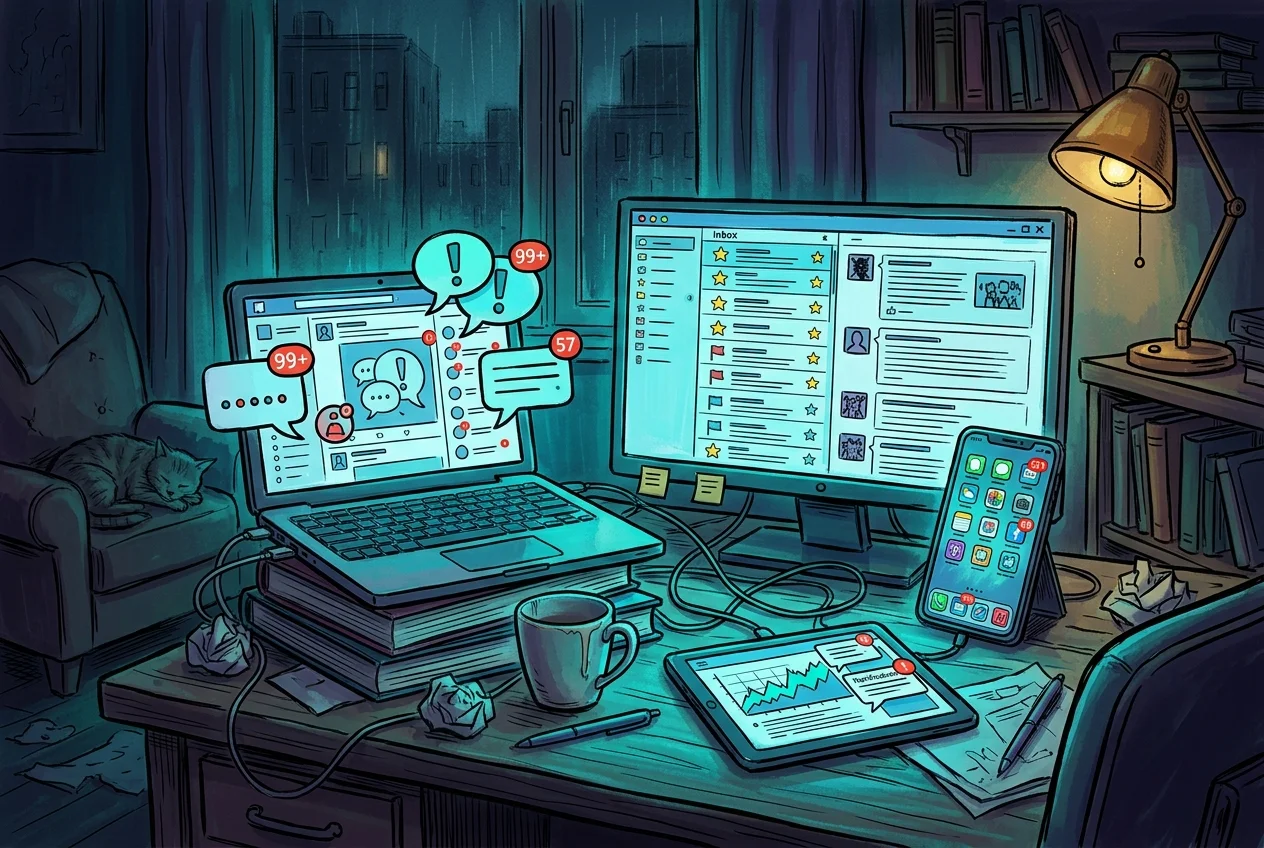
There wasn't a dramatic moment. No relationship destroyed, no job threatened, no intervention from a concerned friend. It was quieter than that: the creeping awareness that most of my evenings had stopped being evenings — they'd become one long, low-grade scrolling session interrupted occasionally by sleep. That I was reaching for my phone in the middle of conversations, not because anything was urgent, but because the habit had gotten that automatic.
The average person now spends roughly two and a half hours a day on social media alone — and that figure has been climbing steadily, research on media consumption shows the pace of increase accelerated sharply after 2020. For many people, total recreational screen time runs well above that when you add news, YouTube, and ambient browsing. I didn't need a study to recognize I was somewhere in that range. The evidence was in my screen time report, sitting there like a quiet indictment every Monday morning.
So I set a start date. Seven days: no Instagram, no Twitter, no TikTok, no news apps, no Reddit. Texts and calls were fine. Podcasts were fine. I wasn't trying to become a monk — I was trying to run an experiment on myself. The rules were simple enough that there was no room to negotiate my way out of them.
I told one person, which turned out to be essential. Not for accountability exactly, but because the act of saying it out loud made it real in a way the internal decision hadn't.
Day One — The Phantom Reach
The first day was fine, mostly because I was alert to the challenge and still running on novelty. I noticed the reaches — the automatic hands-toward-phone whenever a moment went quiet — but I caught them easily and redirected. Read instead. Made tea. Looked out a window longer than I'd looked out a window in months.
What surprised me was the volume. By the end of the first day, I counted somewhere around fifteen to twenty distinct moments when I'd reached for my phone without a specific reason. Not because I was bored, not because something needed checking — just because the habit fired. The phone as nervous system filler. The phone as the thing you do in the small spaces between other things.
Psychologists call the mechanism behind this variable-ratio reinforcement — the same schedule that makes slot machines so difficult to walk away from. You check your phone because sometimes there's something interesting. You never know which check will hit and which will be empty. That uncertainty is exactly what keeps the behavior on its hair trigger, ready to fire the moment there's a pause in stimulation. By the end of day one, I was genuinely startled by how many times that trigger had fired without my awareness.
I went to bed earlier than usual. There was nothing much else to do.
Days Two and Three — The Part Nobody Mentions
Here's what the wellness content doesn't usually say about digital detoxes: days two and three are genuinely uncomfortable. Not painful — nothing is actually wrong. But there's a restlessness that isn't boredom and isn't anxiety exactly, though it borrows from both. A low-grade agitation. An awareness that something is missing from the normal rhythm of the day, combined with a slight irritability when ordinary things don't compensate for it.
What's happening under the surface is your brain's dopamine system noticing the absence of its usual stimulation pattern and registering the gap as a problem. This is the same process described in smartphone addiction withdrawal — not dramatic, not clinical, but real. Your reward system is calibrated to expect a certain frequency of novel, mildly interesting input throughout the day. Remove that input and the system signals discomfort, which surfaces as restlessness, shortened attention span, and an oddly low tolerance for anything that moves slowly.
I noticed this most clearly on day two when I tried to read a book I'd been "meaning to read" for two years. I made it about four pages before my attention started pulling elsewhere. Not because the book was bad — it wasn't — but because my brain had been trained to expect something more rapid than four hundred words per page and a chapter that didn't end with a dopamine hit. The doomscrolling loop had recalibrated my expectations of what engagement was supposed to feel like.
I pushed through. The book got easier on day three. Not because I became more disciplined — because the restlessness started to settle.
Sleep on night two was noticeably different. Faster to arrive, and I woke up without that specific foggy quality that I'd been dismissing as "just not being a morning person." Blue light from screens suppresses melatonin production and delays sleep onset, a process that had been running every night for years. Without a phone in the hour before bed, my nervous system apparently had more time to do its actual pre-sleep wind-down work.
Something Shifted Around Day Four
I don't know exactly when it happened, but by day four the quality of the quiet had changed. What arrived — quietly, without announcement — was the thing I mentioned at the top: that softer boredom, a thought landing and staying without being immediately chased away. The first three days, quiet had felt like absence. By day four it felt like room. It had been so long since I'd experienced it that I almost didn't recognize it for what it was.
Conversations were different too. I was more present in them, not in a forced, performing-attentiveness way, but genuinely — more interested in what the other person was saying, more likely to follow a tangent rather than route back to the main point and close the loop quickly. There was something less efficient and considerably more satisfying about the interactions. That unhurried attentiveness — unfamiliar at first, then recognizable — is exactly what people describe when they talk about missing life before smartphones. Not the flip phones. The cognitive state.
I also started sleeping deeper — the kind of sleep where you don't remember waking up during the night. The combination of no pre-sleep stimulation and several days of a normalized dopamine baseline was doing something. The link between reduced screen time and lower morning anxiety that I'd read about was showing up, measurably, in how I felt at 7am.
The Back Half of the Week

Days five through seven were genuinely good. The restlessness was gone. The automatic reaches still happened occasionally, but they'd changed texture — less urgent, more like a muscle memory with no particular drive behind it. I noticed them, I redirected, and the redirect no longer required effort.
What surprised me most in the back half was how much time there actually was. Not in some abstract "you have 168 hours in a week" motivational-poster sense, but in the specific, concrete sense of evenings that didn't evaporate. I read seventy pages of that book in a single sitting on day five, something I hadn't done in years — not because I suddenly had more willpower, but because there was nothing competing for the slot.
I also noticed something that's harder to describe: a different quality to what I found interesting. When you're in a regular heavy-scroll period, your standard for "interesting" gets calibrated up toward algorithmic peak engagement — content that provokes a reaction, creates mild anxiety, generates outrage, or delivers a clear punchline in under fifteen seconds. Slow things stop registering as interesting at all.
By day six, a slow thing — a long walk, a conversation about something with no stakes, a cooking project that took ninety minutes — registered as genuinely satisfying in a way it wouldn't have the week before. The baseline had moved. What counted as rewarding had expanded.
That recalibration is what the research on dopamine detox actually points toward — not a neurological reset in some dramatic clinical sense, but a practical shift in what your brain considers worth registering. It happened more quickly than I expected.
What Changed After the Seven Days Ended
When I turned the apps back on after seven days, the first thing I noticed was how loud they felt. The feed had the quality of someone talking at you very quickly about a dozen unrelated things simultaneously. Not good-loud. Loud like a shopping mall, after you've been outside.
I didn't delete everything. But I changed my relationship to the apps in ways that have mostly stuck. The phone charges in a different room. I don't open anything before breakfast. The gap before opening an app — the brief pause to ask whether I actually want to be doing this right now — happens more often, and more genuinely, than it did before.
The specific behavioral change that surprised me most: I stopped opening apps as a reflex response to discomfort. Before the detox, any small emotional friction — mild anxiety, a moment of social awkwardness, the first few seconds of a boring task — would reliably trigger a phone reach. Seven days of not doing that had interrupted the loop enough that the automatic association loosened. Discomfort became, very slightly, more tolerable as just discomfort — not a signal to immediately open Instagram.
That's not a permanent cure for anything. But it's a different architecture than the one I was running before.
What I'd Tell Someone About to Start
A few things I wished I'd known:
The first two days are the hardest and they pass quickly. The restlessness that peaks around day two is the dopamine system complaining about the change in its schedule. It is real, it is mild, and it is temporary. If you can get through days two and three without caving, the back half of the week largely takes care of itself.
Have something to do with your hands. Not a replacement activity that takes as much willpower as the detox itself — something easy, physical, and low-stakes. Cooking, walking, a Rubik's cube, any hobby you can pick up without needing to be good at it. The automatic reaches are partly muscular — your hands need somewhere to go when the trigger fires.
Don't make the rules so strict that they feel punitive. Texts are fine. A podcast on a walk is fine. What you're targeting is the algorithmic infinite scroll — the feed, the Reels tab, the For You page. These are the mechanisms that keep you far past any conscious intention. Everything else is negotiable.
And: tell someone. Not to perform it for an audience, but because accountability is one of the clearest behavioral variables in whether people actually complete detoxes. One person knowing, one person who might ask about it, is often enough.
The Harder Lesson
The thing I took away from seven days without my phone wasn't a habit stack or a morning routine or a set of productivity tricks. It was simpler: I'd been using the phone to avoid being present in my own life — not dramatically, not in any way that would look dramatic from the outside, but consistently. Every moment of minor discomfort, every stretch of quiet that didn't have a clear purpose, every social interaction that might be slightly awkward — all of it had been getting preemptively filled with something from the feed.
Seven days of not doing that revealed the pattern clearly enough that it became harder to unsee.
The phone itself wasn't the problem. The relationship was the problem — specifically the part of the relationship that had become automatic, where the behavior happened before the decision. Architecture beats intention every time: it's not that I lacked the desire to be more present, it was that the phone was always already there, already open, the habit already fired, before desire had any say in the matter.
If you want to change the pattern, the question isn't how to want it more. It's how to build a small amount of friction between the impulse and the act — a pause long enough for the part of you that actually prefers a different outcome to register a vote. That's what Sip & Scroll is: a brief, low-stakes interruption before the habit fires. A sip of water, a quick selfie, and then 45 minutes of unblocked access. Not a lockout. Not a lecture. Just enough delay for the choice to exist — which is, it turns out, most of what the seven days gave me anyway.
This article is part of our series on personal screen time journeys. For the full picture, see our guide: My Journey from 8 Hours of Screen Time to Just 2.
Make every scroll a choice, not a reflex.
A sip of water before you open the feed. That's the pause. That's the reset.
Download Sip & Scroll Free