Flip Phones Won't Fix Your Screen Time Problem. Here's Why People Keep Buying Them.
Dumb phone sales are rising, TikTok is full of people showing off their Nokia 3310s, and the backlash against smartphones is going mainstream. Here's what's actually driving it — and whether it works.
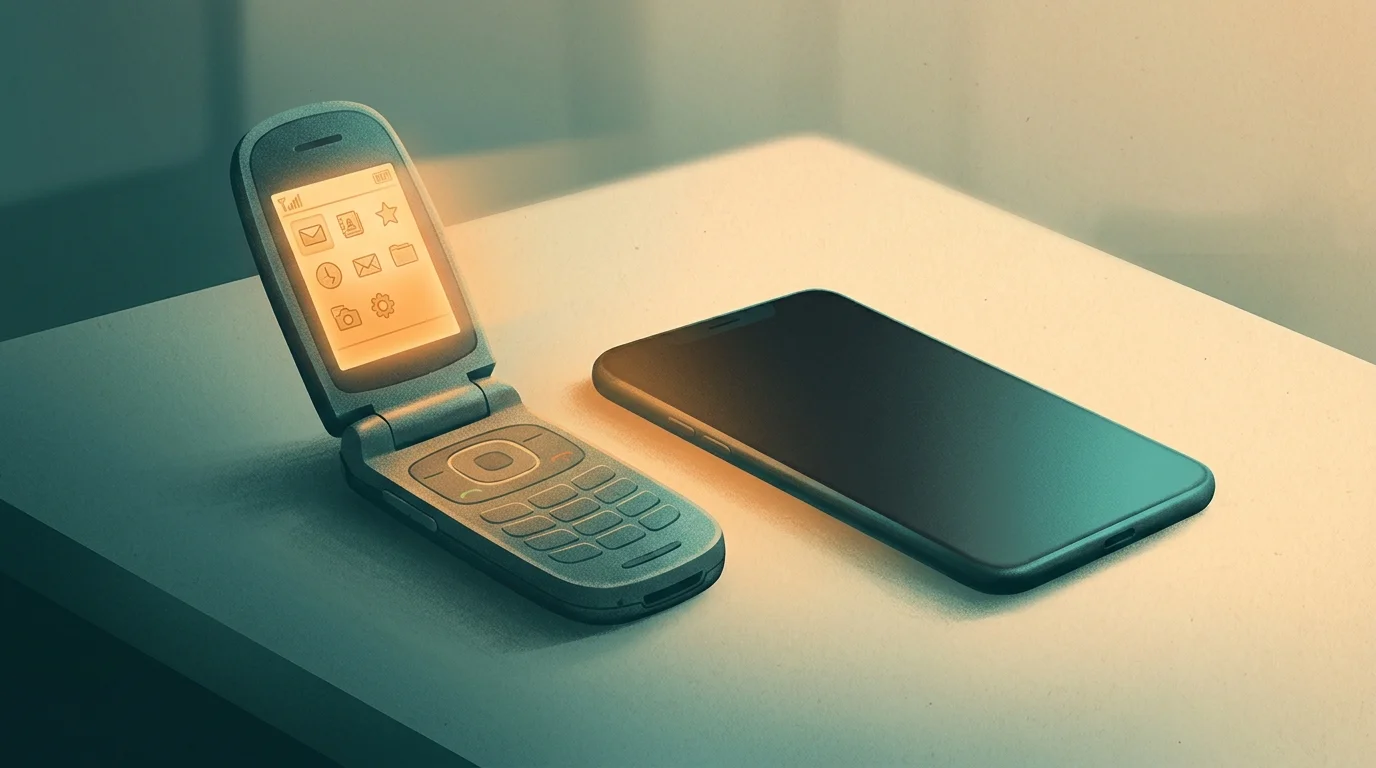
Suppose you woke up tomorrow and your iPhone had been replaced overnight with a Nokia 3310. Same contacts, same number. Just calls and texts — nothing else. No Instagram to reach for in the first thirty seconds of the morning. No TikTok during the commute. No email checking between every conversation. Just a phone, doing phone things, then sitting quietly in your pocket.
How long before the phantom phone habit kicked in? How many times would you reach for an app that wasn't there? And — the more interesting question — after the irritation passed, would anything change about how your days felt?
A growing number of people are running this experiment for real. The flip phone comeback — what the tech press is calling the "dumb phone renaissance" — is one of the more surprising cultural trends of the mid-2020s. Sales of basic phones have been climbing steadily since 2022, and brands like Light Phone, Punkt, and even Nokia are experiencing genuine demand from people who aren't retirees, aren't Luddites, and aren't making a statement. They just want a device that doesn't eat their attention for breakfast.
Who's Actually Buying Dumb Phones
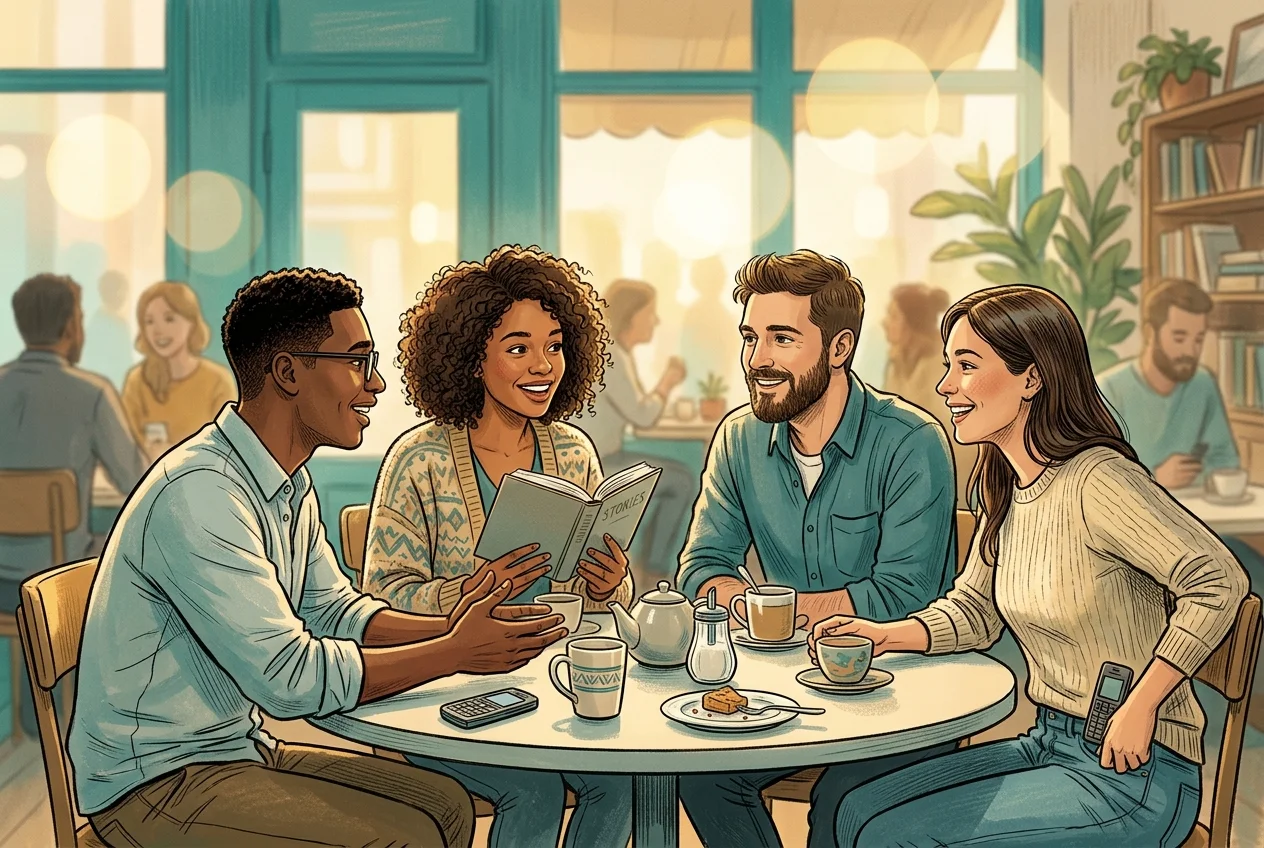
The demographics of the dumb phone revival are not what you'd expect. The fastest-growing segment isn't older adults unfamiliar with smartphones — it's people in their twenties and early thirties who grew up with iPhones and are now choosing to downgrade deliberately. This is the generation that experienced the full-blast version of smartphone adolescence and is now, in adulthood, quietly deciding they don't want the full-blast version anymore — the same impulse driving the rejection of hustle culture across workplaces. Common Sense Media research found that teens now spend roughly nine hours a day on screens — a number that's only climbed since then — and it's the people who logged those hours as kids who are now most actively seeking the off switch.
This isn't fringe behavior. Searches for "best dumb phone" and "flip phone 2026" have been rising consistently. Reddit communities dedicated to dumb phone experiments have grown substantially, with members documenting everything from their first week without Instagram to the practical challenges of banking apps and two-factor authentication. The most common report: the first three days are uncomfortable. Then something shifts.
The trend sits squarely within the broader digital minimalism movement — the idea that you should be deliberate about which technologies you allow into your life and on what terms. The flip phone is the most extreme version of that deliberateness. It's an opt-out from the attention economy by changing the hardware.
What Research Says About the Dumb Phone Switch
The research on reducing smartphone access consistently points in the same direction: less access produces real, measurable improvements in focus, sleep, and mood — at least in the short term.
A study from the University of Texas at Austin found that the mere presence of a smartphone on your desk — even face-down, even switched off — measurably reduces working memory capacity and the ability to focus on demanding tasks. The cognitive overhead of having a device available that you might check isn't zero, even when you're not checking it. A phone that can't run social media apps doesn't just remove the apps. It removes the ambient cognitive cost of the apps being accessible.
Separately, people who've documented dumb phone experiments — including the many detailed accounts on r/nosurf and r/digitalminimalism — report a consistent arc: the first phase involves restlessness, compulsive reaching for a device that isn't capable of delivering what they're reaching for, and a surprising confrontation with boredom. The second phase, typically emerging around day three to five, involves something that feels like relief. Boredom becomes tolerable. Idle moments become idle rather than filled. The brain's default mode network — the mental processing state that requires genuine quiet — gets time to run again.
The Practical Problem Nobody Talks About Enough
Here's what the TikTok dumb phone content usually skips: the operational friction is real, and it isn't small.
Two-factor authentication is the most common stumbling block. Most banking apps, work systems, and secure accounts rely on SMS or app-based verification — and while SMS 2FA works on a dumb phone, app-based authentication (Google Authenticator, Authy) does not. Banking apps that require biometric login on a smartphone become inaccessible. Navigation relies on printed maps or asking for directions. Boarding passes need to be printed. The list of "modern infrastructure that assumes a smartphone" is longer than most people anticipate.
This doesn't make the switch impossible. Plenty of people manage it. But the most sustainable version of the dumb phone experiment isn't cold turkey — it's a graduated system. Some people use a smartphone for work during the day and a basic phone on evenings and weekends. Others keep the smartphone for navigation and banking while removing all social media apps. The goal isn't the device. The goal is the attentional architecture the device creates.
Whether You Switch Devices or Not, the Architecture Is the Point
The flip phone trend is interesting not because everyone should switch, but because of what it reveals about the problem. People aren't buying Nokia 3310s because they miss T9 texting. They're buying them because they've tried every app-based solution — screen time limits, app timers, willpower — and found them insufficient against the pull of a feed that was engineered specifically to be insufficiently resistible.
The dumb phone is a hardware-level fix for a software-level problem. It works because it removes access entirely rather than relying on willpower in the moment. The limitation is that it removes access to everything, including the useful parts of having a smartphone — which is why most people eventually compromise their way back to a smartphone, usually within six months.
The more durable solution is structural friction on the smartphone itself: interventions that interrupt the specific behaviors that cause harm without eliminating the device's utility. Phone-free mornings. Removing social apps from the home screen. Using grayscale mode to reduce visual appeal. And friction-based apps that pause you before opening Instagram or TikTok — long enough for the decision to feel like a decision. The WHO's guidance on sedentary behavior frames the issue in terms of displacement: it's not just the screen time itself, but what it crowds out — movement, face-to-face interaction, and the unstructured mental downtime that keeps a nervous system regulated.
That's what Sip & Scroll does. Before you open any protected app, it prompts you to take a sip of water and snap a quick selfie — fifteen seconds of non-automatic behavior that interrupts the automatic reflex. You still get your 45 minutes of unblocked access. But you arrive there by choice rather than by momentum. The dumb phone solves the problem by removing the app. Sip & Scroll solves it by restoring the gap between the impulse and the app — which is what the dumb phone is actually achieving, just through more drastic means.
The flip phone trend is the market's way of saying it wants that gap back. You don't have to downgrade your phone to get it.
This article is part of our series on digital culture and screen time trends. For the full picture, see our guide: The Impact of Infinite Scroll on Gen Z Mental Health.
The gap between impulse and scroll
Get the attentional architecture of a dumb phone without giving up your iPhone.
Download Sip & Scroll