Focus Music Apps Work. They Just Won't Fix Your Focus Problem.
Endel, Brain.fm, Noisli, and the research — the honest verdict on what audio can and can't do for your focus.

It starts before you sit down to work. You open the app first — not to procrastinate, but to prepare. Headphones go on. The soundscape loads. The do-not-disturb switch flips. By the time the document is open, you've already spent ninety seconds constructing ideal conditions for focus. You're ready. You've done everything right.
Fifteen minutes pass. The music is playing. The cursor hasn't moved much. Somewhere beneath the gentle adaptive audio, your mind is still doing exactly what it always does.
Focus music apps — dedicated tools like Endel, Brain.fm, and Focus@Will — are one of the fastest-growing productivity app categories. The promise: engineered audio that puts your brain in a concentration state on demand. The question: does the science actually hold up, or are we paying for expensive ambient noise with a neuroscience coat of paint?
A focus music app is a subscription service that delivers audio specifically designed to improve concentration during work or study — distinct from ordinary playlists or silence. The category includes AI-adaptive soundscapes (Endel), proprietary "functional music" built around neural frequency targeting (Brain.fm), structured libraries curated by neuroscientists (Focus@Will), and ambient noise generators (Noisli). Most charge $5–$15 per month. All claim research support. The research itself tells a more nuanced story.
What the Science Actually Says About Music and Focus
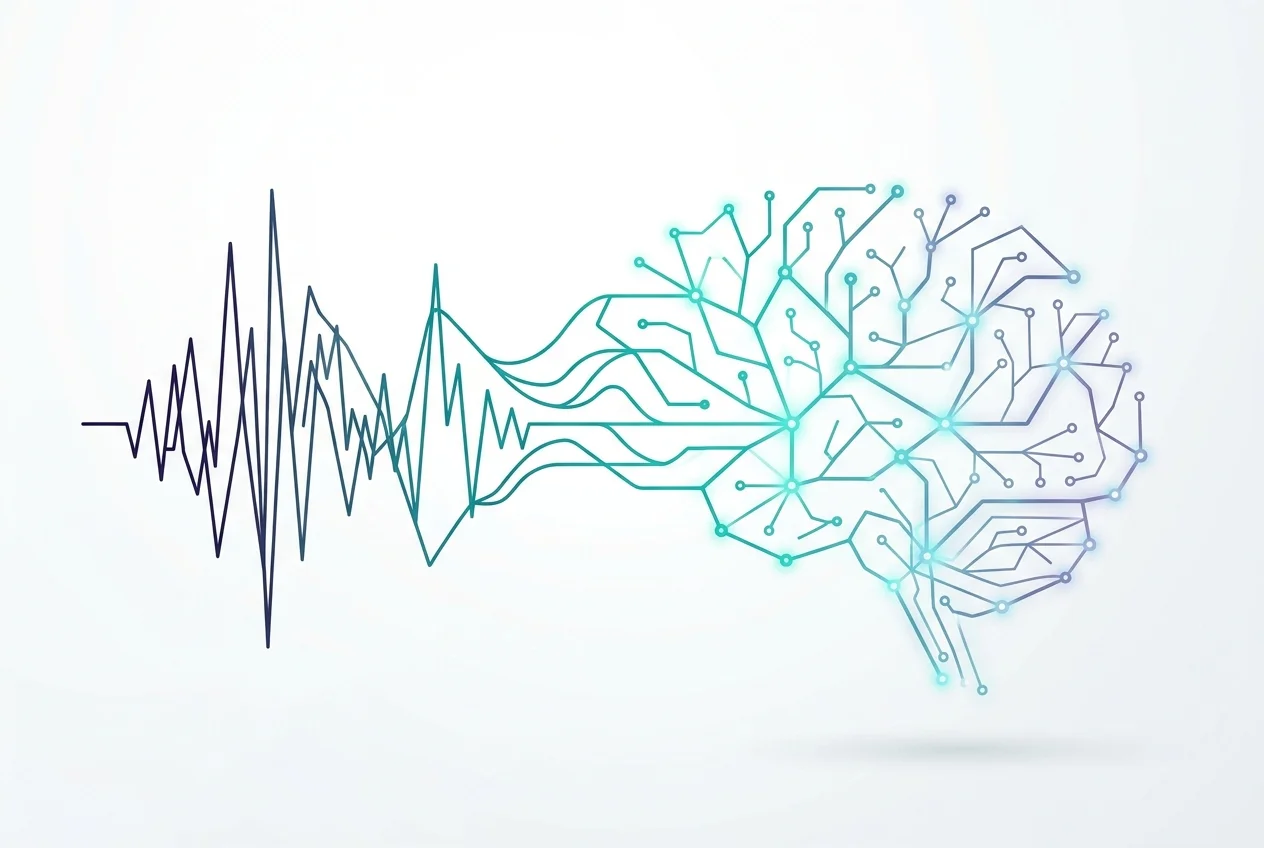
The honest answer is that it depends — on the task, the music, the person, and what you mean by "focus."
A 2021 study in Psychological Research found that preferred background music reduced mind-wandering during sustained attention tasks, increasing participants' self-reported states of task focus. That sounds promising. But — critically — the same study found no measurable improvement in reaction time or actual error reduction. Feeling more focused and performing better are two different things, and music reliably delivers the first without guaranteeing the second.
Separate research from Frontiers in Psychology found that instrumental music produced selective attention performance nearly identical to silence — while disruptive or unpleasant noise significantly impaired it. Translation: if you're working in a noisy open office or café, any consistent audio buffer helps. If you're already in silence, adding engineered music may not give you much of an edge.
Then there's the task complexity problem. Research across multiple studies shows a consistent pattern: background music helps with low-demand, repetitive tasks and hinders complex cognitive work requiring deep working memory — exactly the kind of work most people use focus apps for. Writing, analysis, coding, and strategic thinking all compete with music for the same limited cognitive bandwidth. The benefit narrows precisely where you most want it.
What the science tells you, in aggregate: music reduces mind-wandering and makes distraction less likely. It won't make you smarter or faster. And for demanding intellectual tasks, it might quietly slow you down more than it helps. With that baseline established, here's how the apps stack up.
The Apps, Reviewed
Endel: AI-Adaptive Soundscapes
Endel generates real-time soundscapes that adapt based on your time of day, heart rate (if you share it via Apple Health), and environmental inputs. There's no library to browse — it builds the sound as you listen. The experience is genuinely distinctive: less like music, more like being inside a carefully engineered room that adjusts to you.
Endel cites internal research showing a "7x increase in focus" versus traditional playlists. That data comes from a proprietary study, not independent peer review — a meaningful distinction if you're evaluating scientific claims. What can be said fairly: the soundscapes are well-designed for their purpose. They're calming, unobtrusive, and effective at preventing music-specific distractions — you won't suddenly start mentally singing along mid-paragraph.
Best for: People who get distracted by lyrics, familiar songs, or overly structured music — and those who work across irregular environments where real-time adaptivity adds value. The iOS and macOS apps integrate cleanly with Apple Health and Focus modes.
Pricing: ~$7/month or $50/year. Free trial available.
Brain.fm: Frequency-Based Functional Music
Brain.fm takes a different approach. Rather than ambient soundscapes, it uses actual music compositions overlaid with audio patterns the company calls "neural phase locking" — volume modulations designed to entrain your brain toward focus-associated frequencies. Brain.fm is careful to distinguish this from binaural beats (which require headphones and have inconsistent research support); their technology is a separate, patented method with some independent research support behind it.
The music library is substantial: you select your activity mode (Deep Work, Meditation, Sleep, Learning) and intensity level, and the app delivers structured compositions — not generated audio. The listening experience is more conventionally musical than Endel, which helps if you find the blank-slate soundscape approach alienating. The Deep Work mode in particular is easy to sustain for multi-hour sessions without the music becoming intrusive.
Best for: People who want something that sounds like music rather than ambient sound design, and those who respond well to consistent rituals — the same Brain.fm track at the start of every work session can become a genuine behavioral cue over time. If you're trying to rebuild your attention span with structured daily habits, the activity-specific modes make Brain.fm easy to wire into a consistent routine.
Pricing: ~$7/month or $50/year. Free trial available.
Noisli and the Free Alternatives
Before spending anything, acknowledge the free tier. Noisli (free plan available, ~$2/month premium) generates customizable background sounds — rain, coffee shop ambience, white noise, forest — without any neuroscience claims. For many people, it works just as well as the premium options, because the benefit of ambient audio doesn't require an algorithm. It requires consistency and low cognitive interference.
YouTube's lo-fi streams, rain sounds, and brown noise videos are free and widely effective for the same reason. The research doesn't clearly support paying more for adaptive audio over simple ambient sound. If an unremarkable background hum is what keeps you anchored to the task, it's doing exactly what the $7/month apps are doing — just without the patent.
The Problem Music Alone Cannot Fix
Every app in this category shares the same ceiling: they work on your ears, not on your phone.
If you're sitting down to work with TikTok three swipes away, a focus soundscape won't stop you from opening it. The distraction isn't the audio environment — it's the access architecture of the device in your hand. And the attention economy has spent billions of dollars optimizing that access architecture to be frictionless. Music doesn't add friction. It just changes the soundtrack to the same behavior.
Your prefrontal cortex can override one thing at a time. Music might suppress mind-wandering in a sustained attention task. But it won't override the pull of a habit loop, a notification, or the bored-thumb reach that happens before you've consciously decided anything. These are behavioral architecture problems. Audio doesn't touch them.
Sip & Scroll: The Layer Focus Music Doesn't Cover
Sip & Scroll addresses the problem from the other direction — not the audio environment, but the app access point itself.
When you try to open one of your designated distraction apps (TikTok, Instagram, Reddit, YouTube Shorts), Sip & Scroll pauses you with a single prompt: take a sip of water and snap a quick selfie. It's not a lockout. You're not blocked. But that ten-second physical pause is enough to interrupt the automatic behavior before it fully runs — and it transforms a reflex into a choice. After that brief ritual, you get 45 minutes of unblocked access. Another sip to continue, or you close the app and stay in focus mode.
The two tools occupy entirely different layers of the focus problem. A focus music app creates the right audio conditions for concentration. Sip & Scroll introduces structural friction at the exact moment the habit loop is most likely to derail you. Neither alone is sufficient for most people. Music handles the ears. Sip & Scroll handles the phone. Together, they're covering the two distinct ways focus breaks: environmental pull and behavioral reflex.
You cannot out-willpower an app that was built to capture your attention. What you need is structural change — friction that gives your brain enough time to register a choice rather than execute a reflex. That's what Sip & Scroll is, and it's the layer that no soundscape can provide.
So Are They Worth the Subscription?
Here's the honest verdict:
Focus music apps are worth the cost if you work in consistently noisy environments, find total silence agitating rather than helpful, or want a reliable ritual that signals "work mode" to your brain — the same track, same time, same task, every day. That conditioning effect is real and underrated. Endel and Brain.fm are both well-engineered products that deliver on what audio can actually do.
They're not worth it if you're doing heavy cognitive work where music adds interference rather than support, if you're already in a quiet space where silence is free, or — most importantly — if you think audio will solve a distraction problem rooted in phone habits rather than audio environment. That's a different problem, and it needs a different tool.
Start with what's free. Brown noise, Noisli's free tier, a lo-fi stream. If you notice a real improvement in your ability to sustain attention, the upgrade to Brain.fm or Endel is a reasonable $7/month experiment. If the free version works the same, save the money and spend the mental energy solving the phone-access problem instead.
This article is part of our series on app blockers and screen time tools. For the full picture, see our guide: 7 Best App Blockers for iPhone.
The missing piece focus music can't provide
Music changes your audio environment. Sip & Scroll adds friction at the point where focus actually breaks — the reflex reach for your phone. Take a sip, snap a selfie, get 45 minutes of intentional scrolling.
Download Sip & Scroll — Free