The 'Focus Diet': How I Rebuilt My Attention Span in 6 Weeks
Your attention span isn't ruined. It's just trained the wrong way — and that training can be undone.
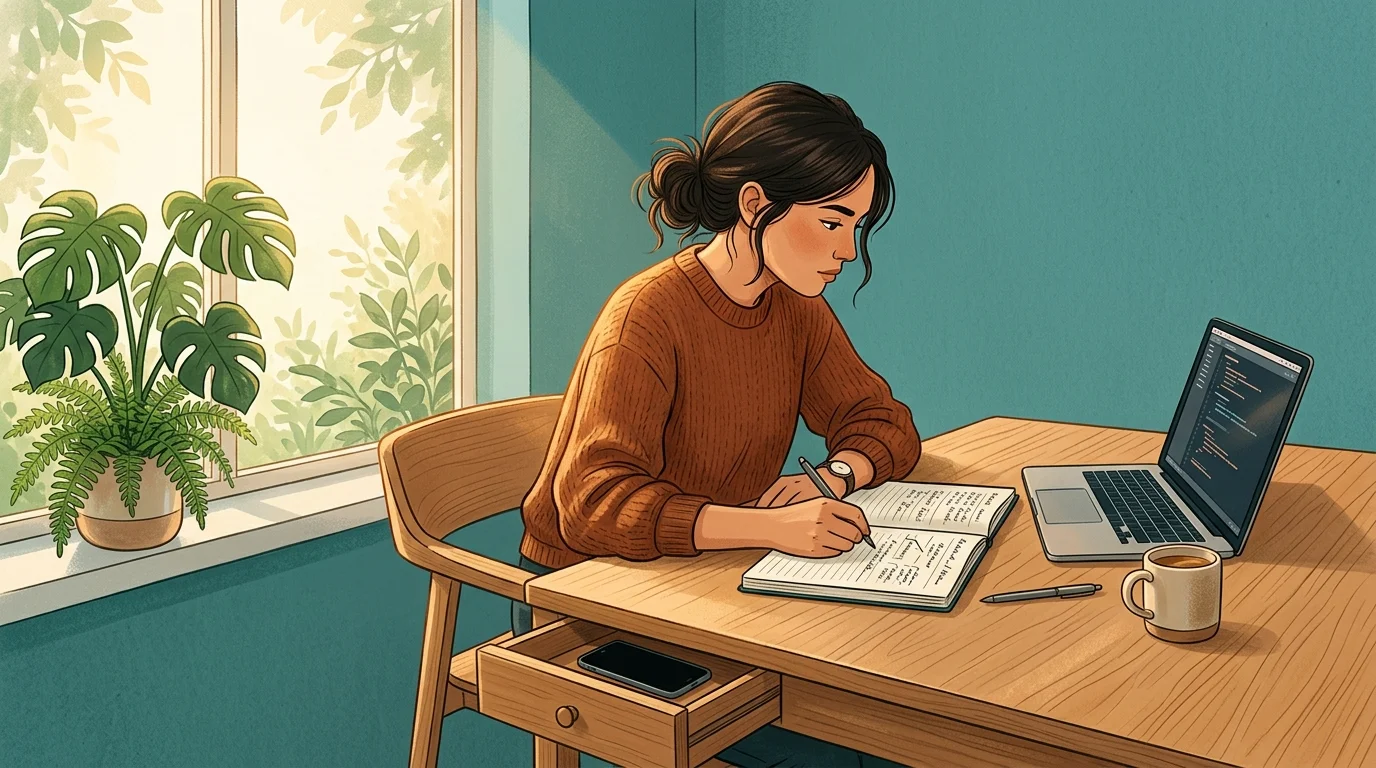
"My attention span is ruined." It's a thing people say like it's weather — something that happened to them, beyond their control, probably permanent. I said it for two years. I said it while trying to watch a film and ending up reading Reddit instead, the movie still running in the background, technically. I said it while sitting down to write something and spending forty minutes opening tabs. I said it as an explanation and a resignation at the same time.
What I didn't say — what I didn't really look at — was what I was actually doing with my phone every day. Not the big sessions. The dozens of small ones. The grab between paragraphs. The check at a red light. The reach for the nightstand before I'd even fully woken up. Each one maybe ninety seconds. Each one a small vote for the part of my brain that expects novelty every few minutes and gets restless without it.
Here's the thing about doomscrolling and the attention problems that come with it: they don't feel like addiction. They feel like who you are now. Like your brain just changed. Like you're one of those people who "can't really focus anymore." It takes a while to realize that's not a personality trait — it's a learned behavior. And learned behaviors can be unlearned.
I rebuilt my attention span in six weeks. Not because I'm disciplined. Because I changed the environment.
Week 1–2: Breaking the Reflex
The first thing I tried was apps. Timers, blockers, screen-time limits with a passcode my girlfriend set so I couldn't override it at 11pm. All of them lasted about four days before I found a workaround or just stopped caring about the limit. The problem with software solutions is that you're using the same brain that wants to check the phone to stop yourself from checking the phone. It's a willpower loop, and willpower runs out.
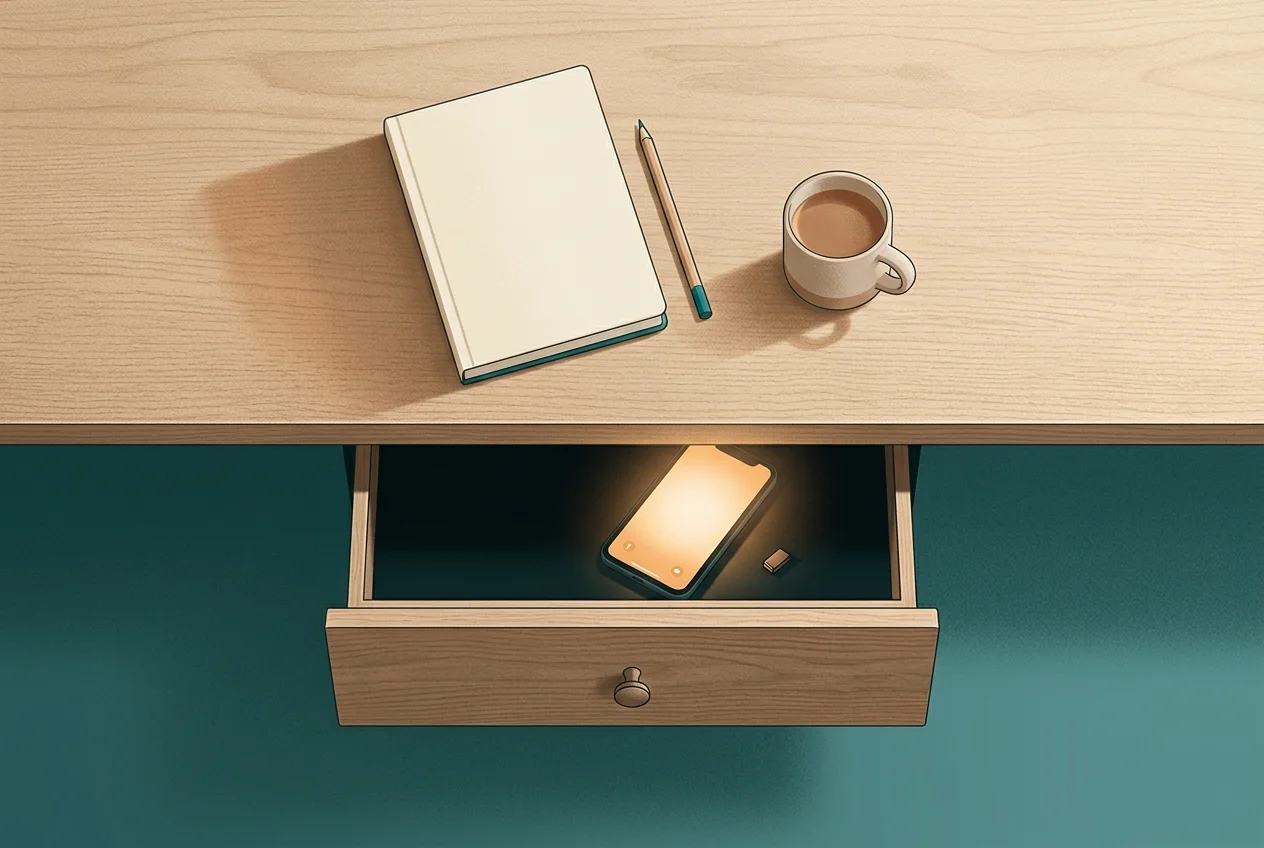
So I went physical. Phone in the desk drawer, face down, on silent. Not off — I needed it for calls — just not reachable without a deliberate act of opening a drawer. That sounds trivial. It isn't. The first morning, I reached for my pocket maybe fifteen times in two hours. Phantom reach. My hand would move toward where the phone usually lives before I'd formed any conscious intention. The reflex was completely decoupled from thought.
This is the thing physical distance does that software can't: it makes the reflex visible. Every time your hand moves toward a drawer that requires effort to open, you catch yourself. You notice the impulse. You make, however briefly, an actual choice. That noticing is the beginning of rebuilding. It's not focus yet. It's just awareness that the reach is happening at all.
By day 5, I was sitting through Zoom calls without once glancing at my phone — something I hadn't done in probably two years — and feeling absurdly proud of it, like a kid who sat through dinner without incident. By day 10, the phantom reaches had dropped off. My hand stopped volunteering without my consent.
Week 2 was stranger. The absence of the reflex left something else in its place: actual boredom. The kind that has no reach for relief. I'd sit at my desk waiting for a file to render and just... sit there. It felt wrong at first. Then it started feeling normal.
Week 3–4: Building Sustained Attention
The reflex fading doesn't mean your focus is suddenly back. It means the noise has stopped long enough for you to take stock of what's there. What was there, in week 3, was about 18 minutes of it. That's how long I could hold a single thread before my mind started pulling toward something else. Not the phone — I'd broken that loop — but the ambient restlessness of a brain that had spent years training on novelty and was now in withdrawal from it.
Research by Gloria Mark at UC Irvine found that after a work interruption, it takes roughly 23 minutes to fully regain the same depth of focus you had before — a figure at the center of what researchers call the cost of context switching. Twenty-three minutes to get back to where you were. Which means if you interrupt yourself every fifteen — the average for most knowledge workers — you're never actually at depth at all. You're just skimming the surface of every task, convincing yourself you're working.
So I started timing it. 25-minute blocks, phone in the drawer, door closed, one tab open. The first few sessions I'd get to minute 20 and feel like I was going to crawl out of my skin. Not dramatic — just a low hum of restlessness, the sense that I was missing something, that I should just quickly check one thing. I didn't. By the end of week 3, 25 minutes felt short.
Some people pair this structure with focus music apps like Endel or Brain.fm — consistent audio that signals "this is work mode" and reduces ambient distraction. The research on whether they improve actual performance is mixed, but the ritual effect is real: the same audio at the start of every session becomes a behavioral cue. Worth trying during this phase if silence feels agitating.
Week 4, I started stacking sessions. Two back-to-back with a five-minute break, no phone during the break. Fifty minutes of work where I actually remembered, at the end, what I'd been working on. The specific relief of finishing a thing and knowing you'd finished it — not just suspecting you had while also half-watching Reels — was something I hadn't felt in a long time.
Week 5–6: The Return of Deep Work
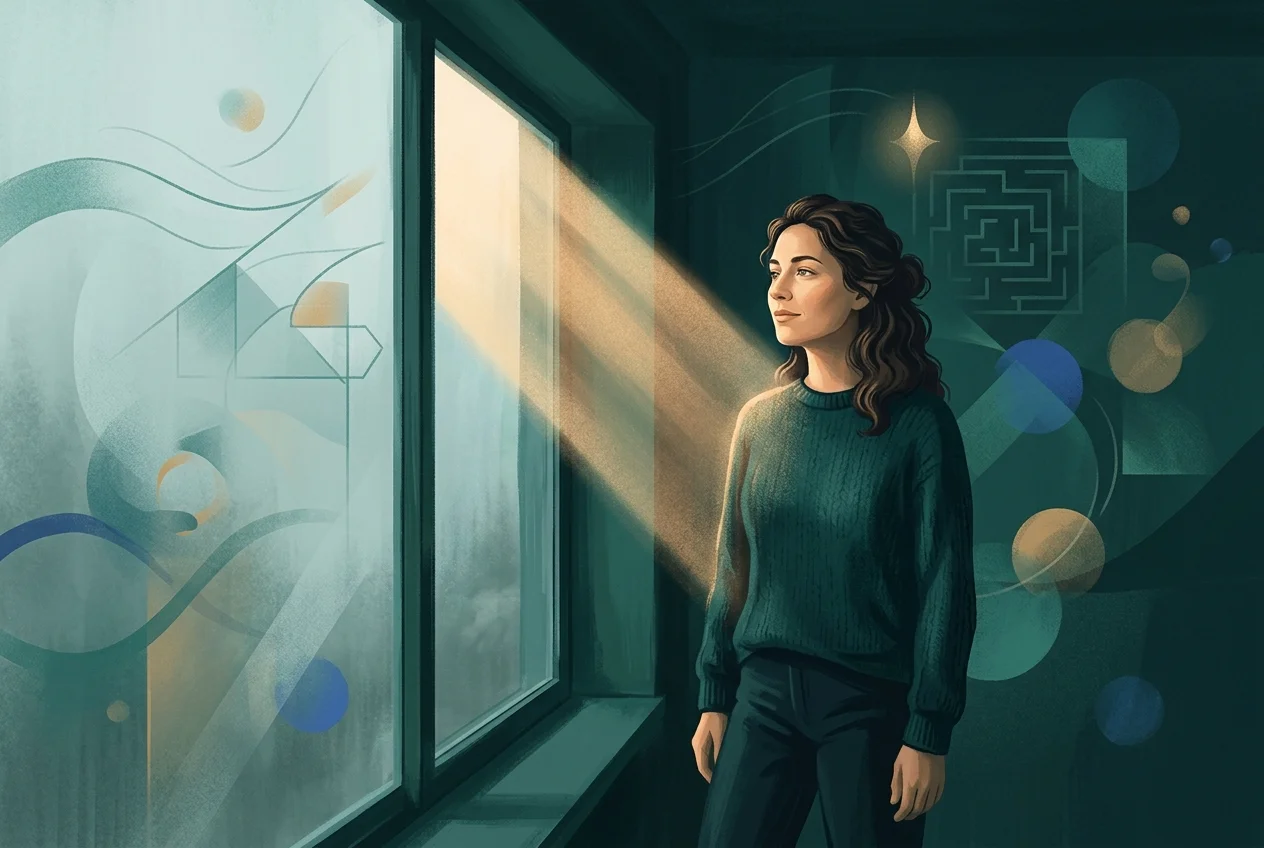
Something changed around day 32. I sat down to write a piece I'd been procrastinating on for three weeks — the kind of task I'd been building mental scaffolding around for so long that starting felt like jumping off something. I wrote for 90 minutes. Uninterrupted. No phone, no new tabs, no getting up to make tea as an excuse to check something. Just thinking and writing and the strange thing that happens when both are happening at the same time without static in between.
It felt odd. Not in a bad way — in the way that anything feels odd when you haven't done it in a while and you'd forgotten it was possible. Like remembering you can swim when you haven't been in water in years.
By week 6, the 90-minute block was normal. Work that had been taking me three fragmented sessions — thirty minutes here, twenty there, an hour of not-quite-focused effort strung across a day — was getting done in one. Not because I was faster. Because I wasn't paying the interruption tax every fifteen minutes, the cognitive cost of pulling yourself back to where you were every time you'd drifted.
What the Recovery Actually Feels Like
People always ask about the phone — whether you have to give it up, whether the gains disappear the moment you start using Instagram again. The honest answer is: if you go back to checking constantly, the reflex returns. The brain is plastic in both directions. But something is different after six weeks. You know what the cost is now. You've felt the difference between work with static and work without it, and the static is no longer invisible.
The subtler changes are harder to describe. Conversations feel longer. Not in duration — in depth. You're not half-present, keeping one mental tab open on what might be waiting on your phone. Books become readable again, not just something you carry around feeling vaguely guilty about. The ordinary texture of an afternoon — light through a window, the actual arc of a thought rather than the stub of one — starts registering again. A lot of people also notice, around week five or six, that they're reaching for hobbies they'd forgotten they had — the sketchbook, the instrument, the recipe they'd been meaning to try. The default mode network comes back online, and it turns out it had things to say.
None of this is dramatic. It's quiet. But quiet is not the same as small. The thing you've been blaming on your brain, on the news cycle, on getting older, on stress — a lot of it was architecture. Recommendation algorithms are deliberately engineered to exploit exactly the psychological vulnerabilities that make sustained focus feel impossible. You were not imagining the resistance. It is real, and it is designed.
The Only Thing That Actually Works
All of this — the drawer, the timed blocks, the stacked sessions — is a version of the same thing: making the default harder. The automatic reach is trained. It can be retrained. Farnam Street's research on attentional training shows that attention capacity isn't fixed — after sustained practice, people measurably improve their ability to let go of one stimulus and direct focus to the next. But you can't retrain it with willpower alone, because willpower is the resource the reflex is competing with, and the reflex has a head start. You have to change the environment so the reflex runs into friction before it completes.
Physical distance is the strongest form of that friction. Phone in another room while you work, every time, without exception. The problem is it doesn't scale. If you have a job, a family, a life that runs through your phone, you can't exile it. You need something that stays with you and still creates the pause — a brief, deliberate interruption between impulse and action, long enough for intention to register.
That's exactly what Sip & Scroll does. Before you open TikTok or Instagram or YouTube Shorts, it asks you to do one small thing: take a sip of water and snap a selfie. Not a punishment. A pause. Long enough that the reflex runs into something other than an open app. Then you get 45 minutes of unblocked access if you still want it — which you often do. But you decided. That's the whole difference. The digital minimalism research is consistent: the goal isn't abstinence. It's intention. And intention requires a gap between impulse and action. Even a small one is enough.
Your attention span isn't ruined. It's just been trained on a diet of four-second novelty hits for long enough that depth feels hard. Stop the diet. Add the friction. Give it six weeks. The capacity is still there — it's just been quiet for a while.
This article is part of our series on personal screen time journeys. For the full picture, see our guide: My Journey from 8 Hours of Screen Time to Just 2.
Ready to reclaim your focus?
Rebuild your attention span with gentle friction, not punishment.
Download Sip & Scroll