Why 'Oddly Satisfying' Videos Feel Like Medicine — And Why You Never Stop at Just One
Your stressed brain is self-medicating with kinetic sand. The neuroscience is real. So is the catch.
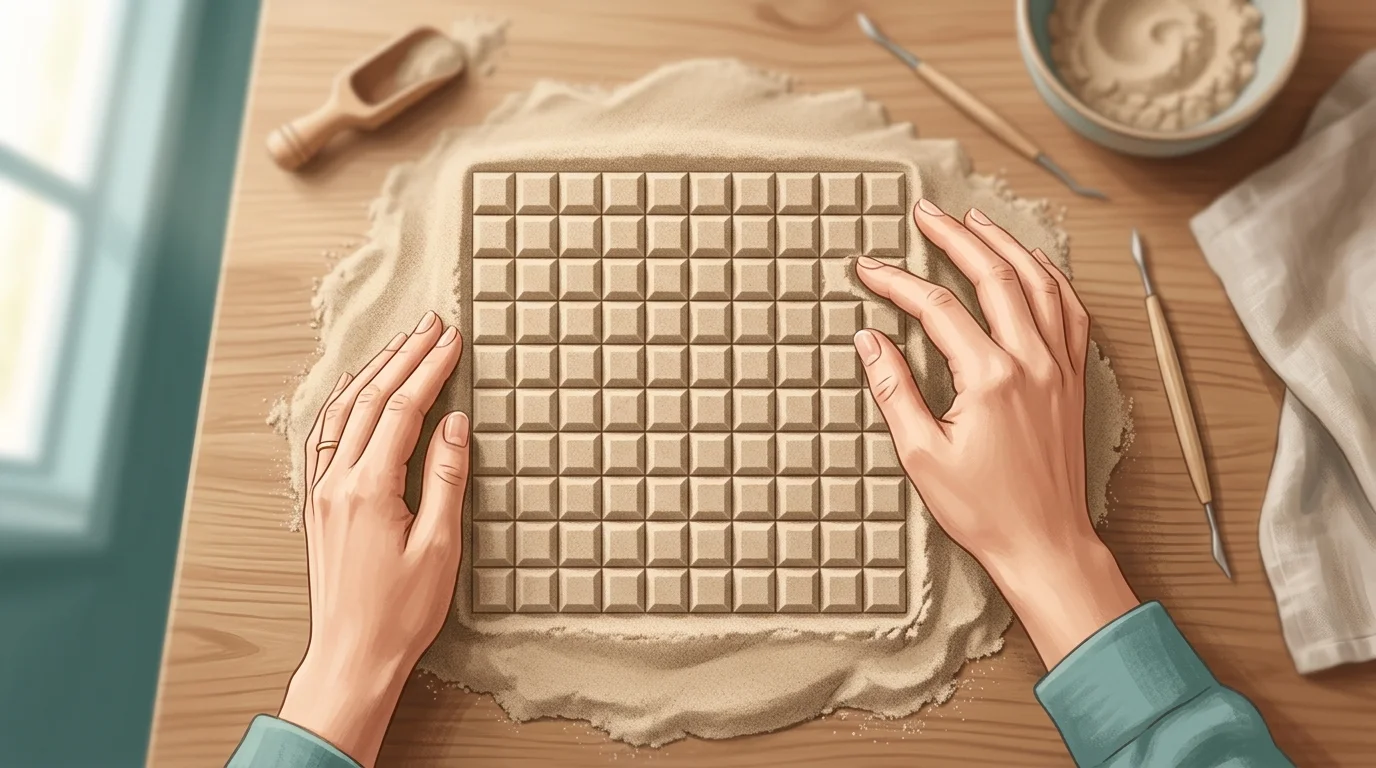
Suppose you're three hours into a day that has already been too much. A stressful meeting, a news alert you couldn't ignore, an email sitting unanswered in the back of your mind. You open your phone — not for anything specific, just somewhere to put your eyes. And somehow, without quite deciding to, you find yourself watching a video of someone smoothing sand into a perfect grid with a tiny rake. Your shoulders drop. Your breathing slows. You feel, for the first time in hours, almost okay.
The strange part isn't that it worked. The strange part is that you never consciously asked for it.
Oddly satisfying videos — clips of kinetic sand being carved, soap being cut, slime being pressed, or powder being sifted into a perfect surface — are genuinely calming. Not in a "nice to watch" way. In a measurable, neurological way. A 2025 study published in Neuroscience of Consciousness found that ASMR-style audiovisual content reduced heart rate more significantly than nature videos — demonstrating real parasympathetic nervous system activation, the body's physiological counterweight to stress. Your shoulders didn't just feel like they dropped. They did.
Why Your Brain Calms Down
The mechanism starts with something called processing fluency — the brain's built-in reward for handling information that is easy to predict and process. Symmetrical shapes, repetitive patterns, and cleanly completed sequences require less cognitive effort than random or complex stimuli. When your visual cortex can "see ahead" to what happens next, it releases a small but reliable dopamine signal — not the agitated anticipation dopamine of a slot machine, but the quiet satisfaction dopamine of a sentence landing exactly right.
Researchers also point to mirror neurons. When you watch someone execute a smooth, satisfying physical task — pressing slime flat, running a squeegee across a fogged window — your motor system runs a faint echo of those movements. You don't just observe the task being completed. You vicariously complete it. The sense of resolution belongs, in a small way, to you.
This is why you feel measurably less agitated after watching three minutes of kinetic sand than after three minutes of political commentary — even if the commentary didn't upset you in any obvious way. One kept triggering your prediction-error systems. The other kept resolving them, cleanly and repeatedly, at exactly the pace your nervous system needed.
The Stress-Seeking Mechanism
Here's what most people don't realize: you didn't accidentally land on those videos. Your stressed brain was actively looking for them.
When cortisol is elevated — which, if you've read about how morning screen use hijacks your cortisol awakening response, happens earlier in the day than most people expect — your nervous system begins scanning for low-stakes stimulation. It's not looking for information. It's not looking for entertainment in the conventional sense. It's looking for something non-threatening that will occupy just enough attention to interrupt the anxiety loop without adding to it. Psychologists call this a self-regulation strategy. Your brain doesn't know the phrase "oddly satisfying." It just knows what the experience delivers.
A 2025 APA study found that watching short positive-affect videos for five minutes daily was as effective as guided meditation at reducing stress — and that the benefit lasted up to ten days after the intervention ended. The brief, low-stimulation visual break isn't just pleasant. It is neurologically useful. Your instinct to reach for these videos when you're overwhelmed isn't avoidance. It's your nervous system doing something genuinely intelligent.
The problem isn't the instinct. The problem is where that instinct takes you.
The Platform Trap
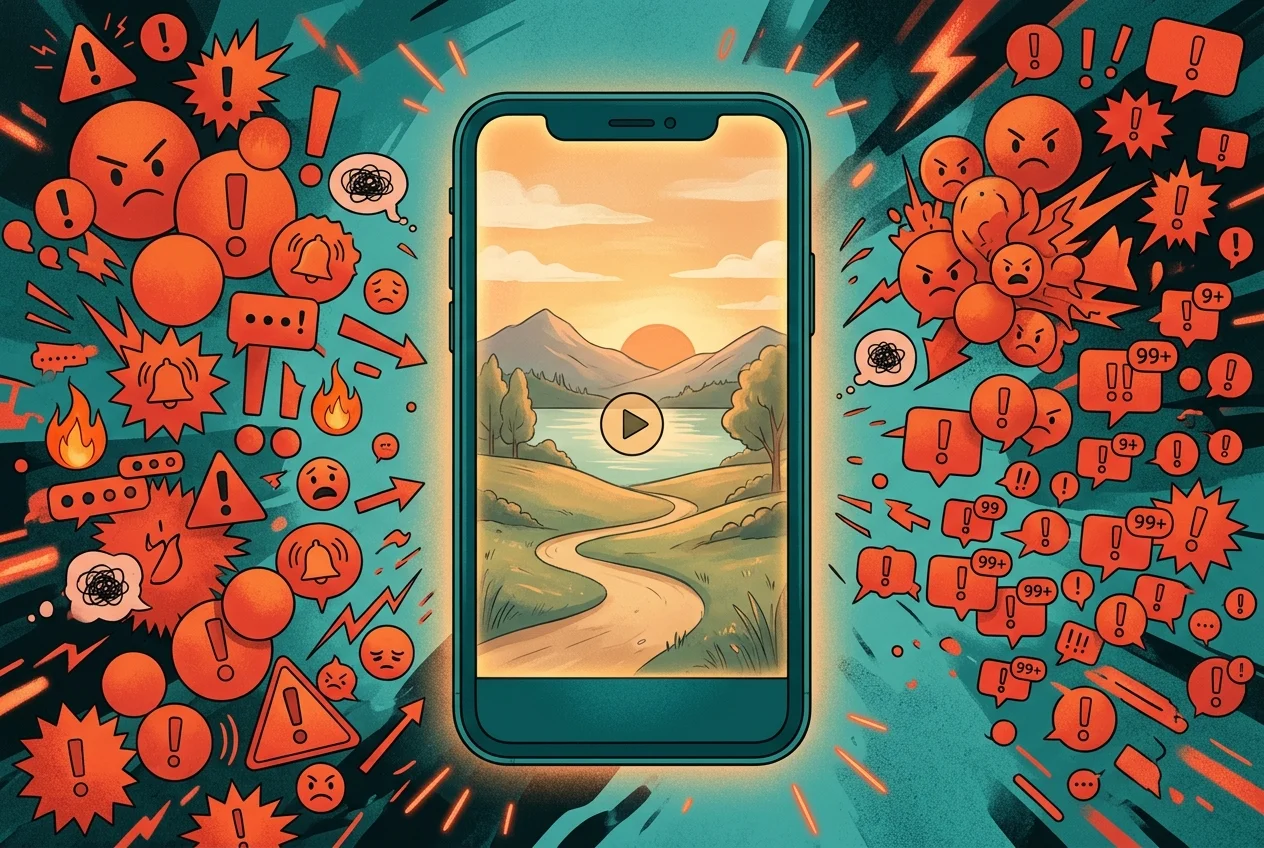
Algorithmically, TikTok, Instagram Reels, and YouTube Shorts all know you respond to satisfying content when you're stressed. They know this because your watch-time on calm, repetitive videos spikes when your recent behavior signals elevated engagement with high-arousal content. The algorithm doesn't know you're anxious. But it can infer the pattern — and it adjusts the feed accordingly.
This creates a loop: anxiety-inducing content raises your arousal, you reach for satisfying content to come down, the satisfying content temporarily works, and then the feed surfaces more activating content because you're still in the app. Variable-ratio reinforcement — the same mechanism behind slot machines — keeps you swiping because you can never predict which clip will deliver the strongest calming hit. The relief and the anxiety live in the same app. The app profits from both.
This is the same dynamic that makes short-form content addiction so difficult to clock in real time: the format feels like rest because some of it genuinely is. But even a session that starts with kinetic sand tends to drift — three minutes of calm, then a jarring video, then another scroll to get back to calm, then another. What started as a nervous system reset becomes an hour of mixed-stimulation passive consumption. You came for the medicine. You stayed for the algorithm.
Taking the Calm Without the Catch
The insight here isn't "stop watching oddly satisfying videos." They work. The insight is that the calm they provide is real — but it's real in a way that a five-minute intentional session captures just as well as a forty-five-minute passive one. Often better. The popcorn brain effect — the gradual erosion of your tolerance for low stimulation — is partly driven by sessions that go longer than your nervous system needed, pulling you past the point of self-regulation into pure habit.
Your nervous system doesn't need forty-five minutes of kinetic sand to reset. Research on the stress-reduction curve suggests it needs roughly three to five. After that, the diminishing-returns slope flattens. You're no longer self-medicating. You're just scrolling. And now you're inside the feed, where the algorithm has different plans for your attention than the ones you arrived with.
The structural fix isn't avoiding the apps. It's inserting a brief, physical pause before you open them — one that converts an unconscious, cortisol-driven reach into a moment of actual choice. That's what Sip & Scroll does: before you open any app you've flagged as a scroll risk, it prompts you to take a sip of water. Eight seconds. Trivial, on its face. But that small physical interruption gives your prefrontal cortex just enough time to register whether you genuinely want to be here — or whether your cortisol is making decisions for you.
Your stressed brain is looking for something real when it reaches for the kinetic sand videos. The question is whether the platform you're using to find it is aligned with what you actually need — or just aligned with keeping you inside it a little longer.
This article is part of our series on phone addiction and doomscrolling. For the full picture, see our guide: What is Doomscrolling?.
Scroll intentionally. Sip first.
Add a gentle pause before opening addictive apps. Stay hydrated, stay in control.
Download Sip & Scroll