How Quitting Instagram Reels Cured My Morning Anxiety
The first hour after waking is when your nervous system is most vulnerable to comparison. Here's what changed when I stopped feeding it Instagram before breakfast.
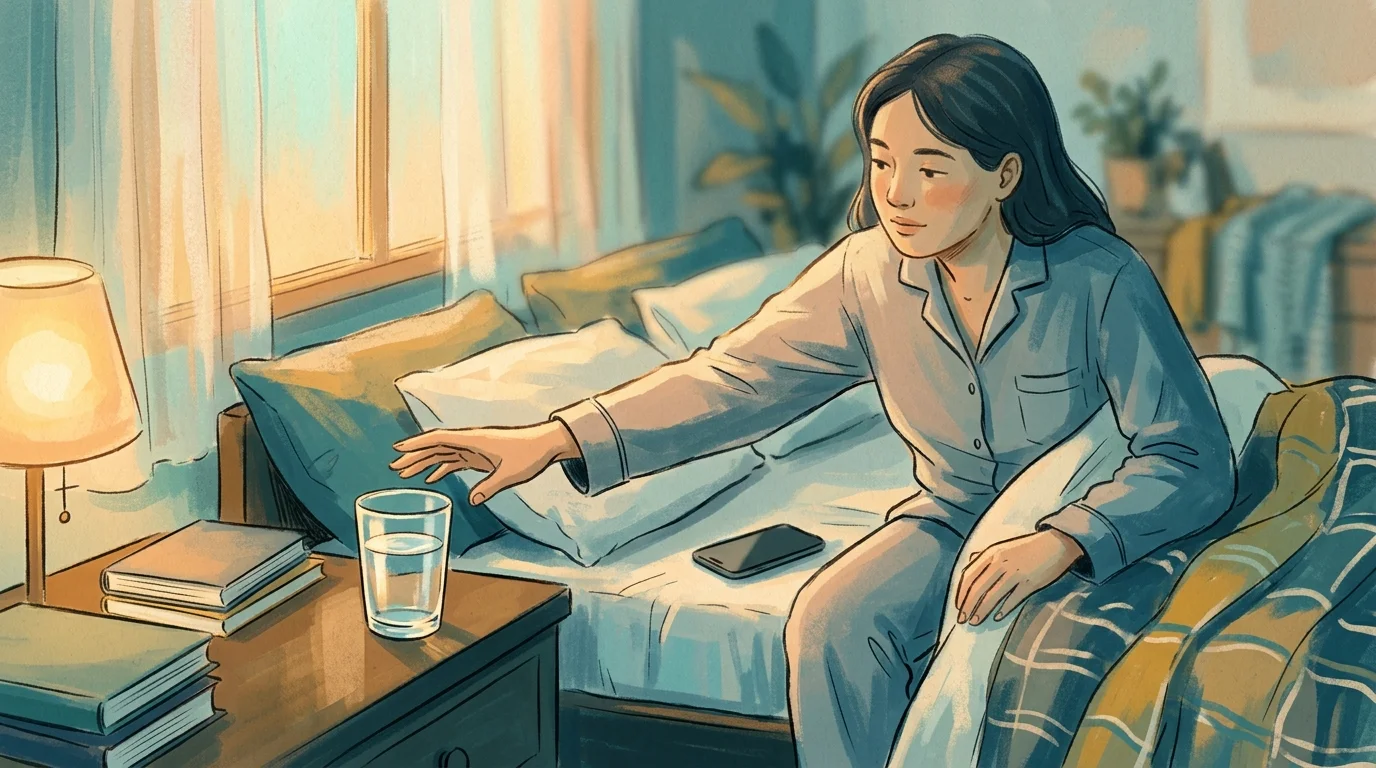
Suppose you designed a perfect morning anxiety machine. You'd time the activation carefully — in those first groggy minutes when your brain hasn't fully assembled itself yet, when you're not quite awake but not quite asleep, when your nervous system is most malleable and most impressionable. You'd fill it with images specifically chosen to make your own life look smaller by comparison: curated highlight reels, bodies that are better, vacations you can't afford, relationships that appear frictionless, careers that look effortless. You'd give it no ending, no resolution — just another input arriving before you've finished processing the last one.
That's Instagram Reels at 7 a.m.
It took me three years and one particularly bad Tuesday morning — lying in bed feeling behind before I'd spoken a single word — to connect those two things.
Quitting Instagram Reels in the morning turned out to be the single most effective change I made for my morning anxiety in 2026. Not a new supplement. Not a new app. Not better sleep hygiene, though that helped too. Just removing one input during the window when my nervous system is least equipped to handle it.
The Biology of the First Hour
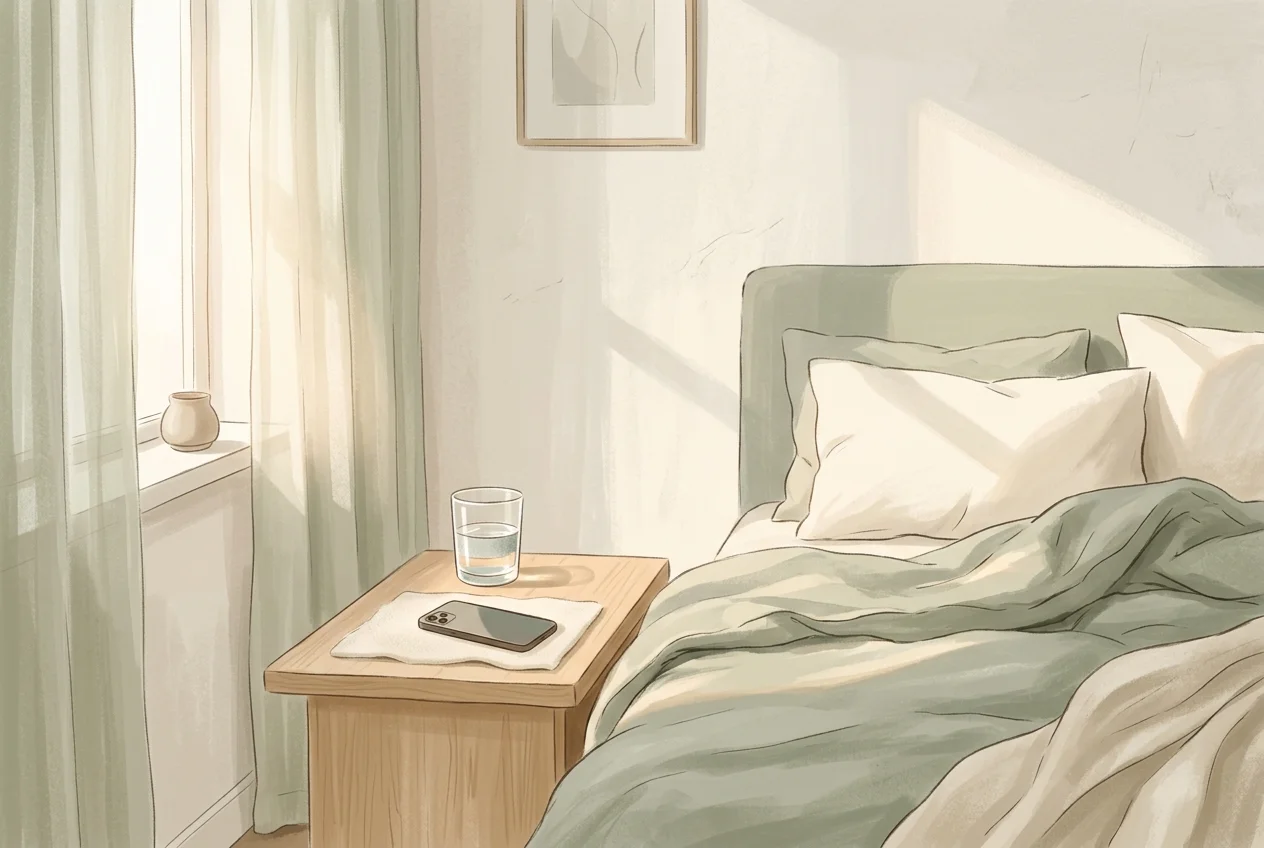
Your body doesn't ease into the day — it jerks awake via a specific biological mechanism. In the first 30 to 45 minutes after your eyes open, cortisol spikes by 50 to 100 percent above your sleeping baseline. Scientists call this the cortisol awakening response — a daily calibration routine where your nervous system scans for threats, sets its alertness level, and establishes the stress baseline you'll carry into every hour that follows.
Think of it as your brain's morning briefing. Whatever you feed it during that window gets absorbed differently than at any other moment of the day.
When the first thing you feed it is a feed full of comparison — other people's bodies, relationships, achievements, vacations — your cortisol-primed brain processes those images through a specific psychological filter called upward social comparison. You're evaluating your own life against people who appear to be doing better. Research consistently shows that upward social comparison on social media increases anxiety and reduces self-esteem — leaving you feeling behind even when nothing has objectively changed in your life. Your job is fine. Your relationships are intact. But you've already absorbed the message that you're falling short, before you've had coffee.
That's the anxiety machine. And it runs on Instagram Reels.
Why Reels Hit Different Than Regular Posts
Regular Instagram posts at least resolve. You see a photo, you react or don't, and it ends. Reels are architecturally different — each one is a micro-bet, structured around the same mechanism that makes slot machines so hard to walk away from. Psychologists call it variable-ratio reinforcement: you don't know if the next video will be a throwaway or something so good you send it to three people before it finishes. That uncertainty is the actual hook. Your dopamine system doesn't fire in response to pleasure — it fires in response to prediction error, the gap between what you expected and what you got. So you keep scrolling.
This is why Instagram Reels addiction is harder to break than regular Instagram use. The format exploits the exact neurological mechanism that keeps you pulling. The comparison anxiety is the emotional payload; the variable reward is the delivery system. One makes you feel bad. The other keeps you there anyway.
In the morning, your prefrontal cortex — the part of your brain responsible for decision-making and impulse control — is still coming online. You're neurologically the most vulnerable you'll be all day to automatic, habit-driven behavior. This is the worst possible moment to be in a feed designed to override your intentions.
What Actually Changed When I Quit
The first week was uncomfortable in a way I hadn't predicted. My hand reached for my phone constantly — not because I was curious about anything specific, but because the reflex had worn itself so deep it operated without a trigger. I'd reach for it in the kitchen. I'd reach for it waiting for the kettle. I'd catch myself reaching in the three seconds before the shower.
This is what smartphone withdrawal actually looks like — not dramatic, not obvious, just a persistent pull you didn't know you were responding to until you try to stop.
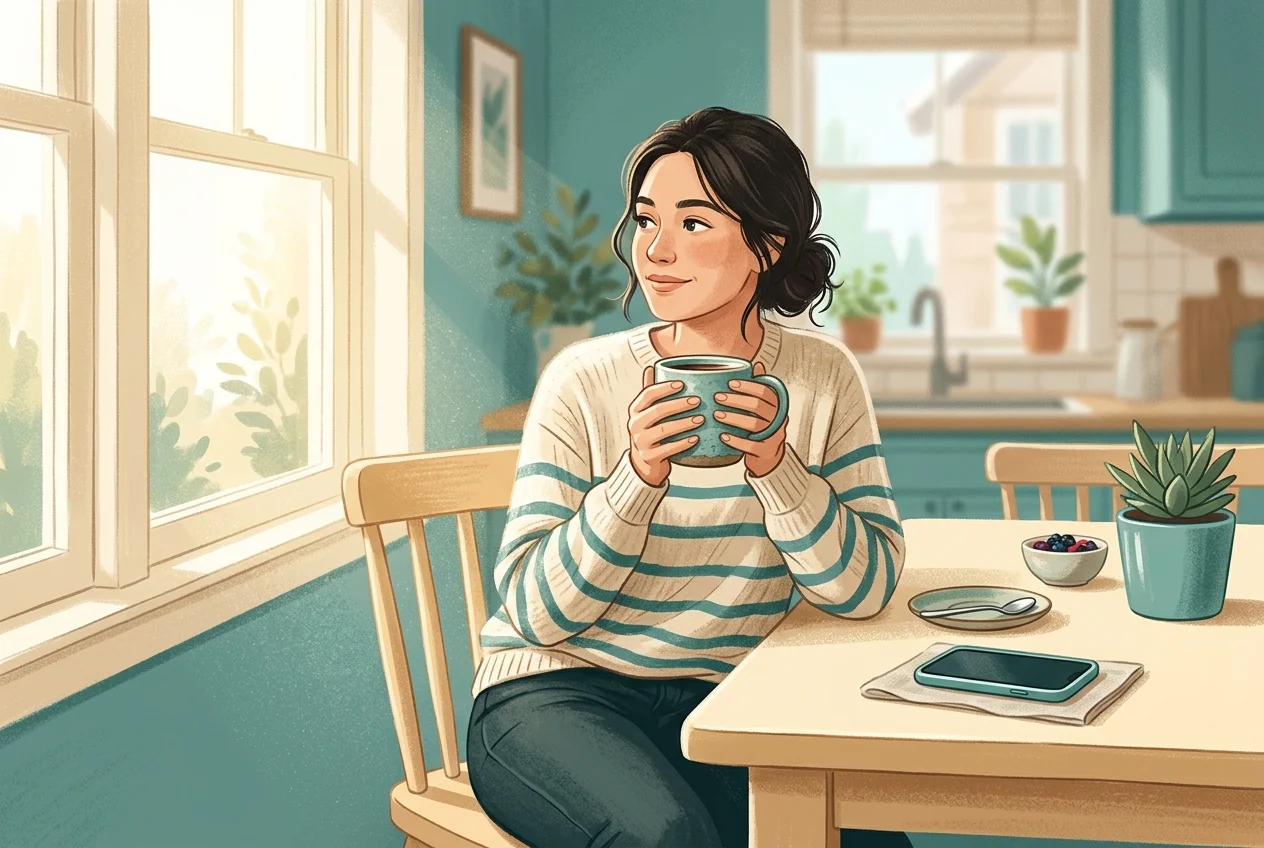
By day eight, something shifted. My mornings had a different texture. There's a low-grade anxious hum I'd gotten so used to that I'd stopped registering it as anxiety — I just thought that was what mornings felt like. Groggy and a little behind. Slightly overwhelmed before anything had happened. Without the feed, the hum quieted.
I started noticing things I'd stopped noticing. The way light moves across the kitchen before the day gets going. The actual taste of coffee instead of the automatic intake of caffeine. A kind of quiet anticipation — the feeling that the day still has open shape, that nothing's been decided yet.
The anxiety didn't disappear. But it stopped arriving pre-loaded.
The Invisible Audit You're Running at 7 a.m.
What I couldn't see while I was inside it: opening Reels first thing was a daily social audit. By 7:15 a.m. I'd absorbed a feed full of data about other people's appearances, relationships, travel, achievements, and apparent ease — and my brain had filed all of it, whether I wanted it to or not.
Upward social comparison doesn't feel like anxiety while it's happening. It feels like scrolling. It feels like entertainment. The anxiety surfaces later, diffuse and sourceless — a sense of flatness you can't quite locate. You just feel vaguely like you're not enough, without being able to point to why.
This is why the research connects morning phone use specifically — not just phone use in general — to higher reported anxiety levels. The morning window is when comparison data has the highest absorption rate. Your brain hasn't built its daily defenses yet. Everything lands harder.
And if you've been doomscrolling before bed too, you're compressing your recovery window to nearly nothing — you're ending the day in a comparison loop and starting the next day in one. There's no neutral ground in between.
The Architecture Change That Made It Stick
Here's what I didn't do: I didn't delete Instagram. I didn't commit to a 30-day phone-free challenge. I didn't download a meditation app to fill the void. All of those require the one resource I definitely don't have at 7 a.m. — willpower.
The fix wasn't discipline. It was friction.
I started using Sip & Scroll before opening Instagram in the morning. The mechanic is simple: take a sip of water, snap a quick selfie proving you did it, then get 45 minutes of unblocked access. That's it. It sounds almost too small to matter. But that brief physical pause — sitting up, reaching for a glass, doing one deliberate act — was enough to interrupt the automatic reflex and hand control back to the part of my brain that could make an actual choice.
Sometimes the choice was still to open Instagram. Fine. But now it was a choice, not a reflex. And more often than I expected, the act of getting up to get water broke whatever momentum was pulling me toward the phone, and I'd end up doing something else instead. The sip became a morning ritual — not a wall, not a punishment, just a small physical signal that I was about to make a decision.
This is what digital minimalism actually looks like in practice — not eliminating technology, but designing the conditions under which you engage with it, so your behavior reflects your intentions instead of your worst autopilot.
Is It Really the Reels? A Simple Test
A fair question — morning anxiety has plenty of sources. Cortisol dysregulation, poor sleep, financial stress, relationship friction. Blaming Reels too confidently would be lazy.
But here's a test worth running: for two weeks, don't check Instagram Reels in the first hour after waking. Just two weeks. Notice whether your mornings change. Notice the texture of those first few hours without the feed.
If nothing changes, Reels probably weren't the driver. If something shifts — even slightly, even just in that vague flatness you carry into the morning — you've found something worth keeping out.
The morning window is not like the rest of your day. It's the narrowest, most sensitive, most consequential hour of your waking life. What you do with it compounds. What you feed it sets the baseline that everything else gets built on.
You cannot willpower your way out of a comparison loop engineered by a billion-dollar recommendation system. But you can make the first moment of engagement cost something small — a sip of water, a breath, a brief physical act that gives your prefrontal cortex time to catch up with your thumb. That's the whole intervention. And for a lot of people, it's enough to change what morning feels like.
This article is part of our series on personal screen time journeys. For the full picture, see our guide: My Journey from 8 Hours of Screen Time to Just 2.
Protect your morning window
Sip & Scroll adds gentle friction before Instagram — a sip of water, a quick selfie, then 45 minutes of unblocked access. Your mornings, on your terms.
Download Sip & Scroll