Zombie Scrolling: Why It's More Insidious Than Doomscrolling
Doomscrolling at least makes you feel something. Zombie scrolling takes your time and gives you nothing back — and that's exactly what makes it so hard to stop.
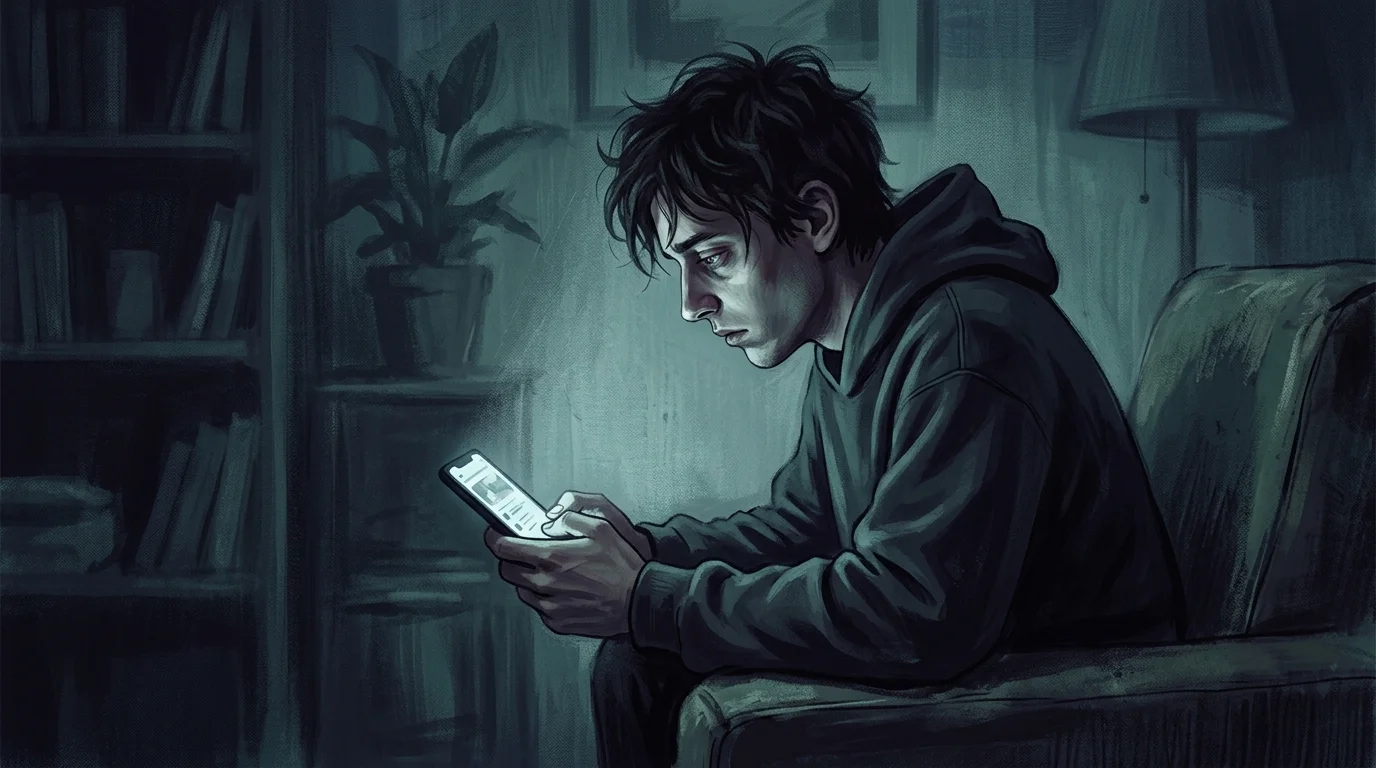
There's a version of scrolling that doesn't make you anxious. It doesn't make you angry. It doesn't make you feel much of anything, actually — and that's the problem. You surface twenty minutes later with no particular emotion and almost no memory of what you just saw. The feed played. You watched. Nothing landed.
Doomscrolling, at least, is a transaction. You trade your time for distress — a bad deal, but a recognizable one. Your nervous system knows something is wrong. Zombie scrolling has no such signal. The cost is invisible on your emotional balance sheet, which means it runs indefinitely without triggering any of the internal alarms that might make you stop.
That's the hidden price buried in something that looks like nothing: not anxiety, not lost productivity, but lost presence — the accumulated erosion of all the moments that slipped by while you were technically looking at your phone but not really anywhere at all.
What Is Zombie Scrolling?
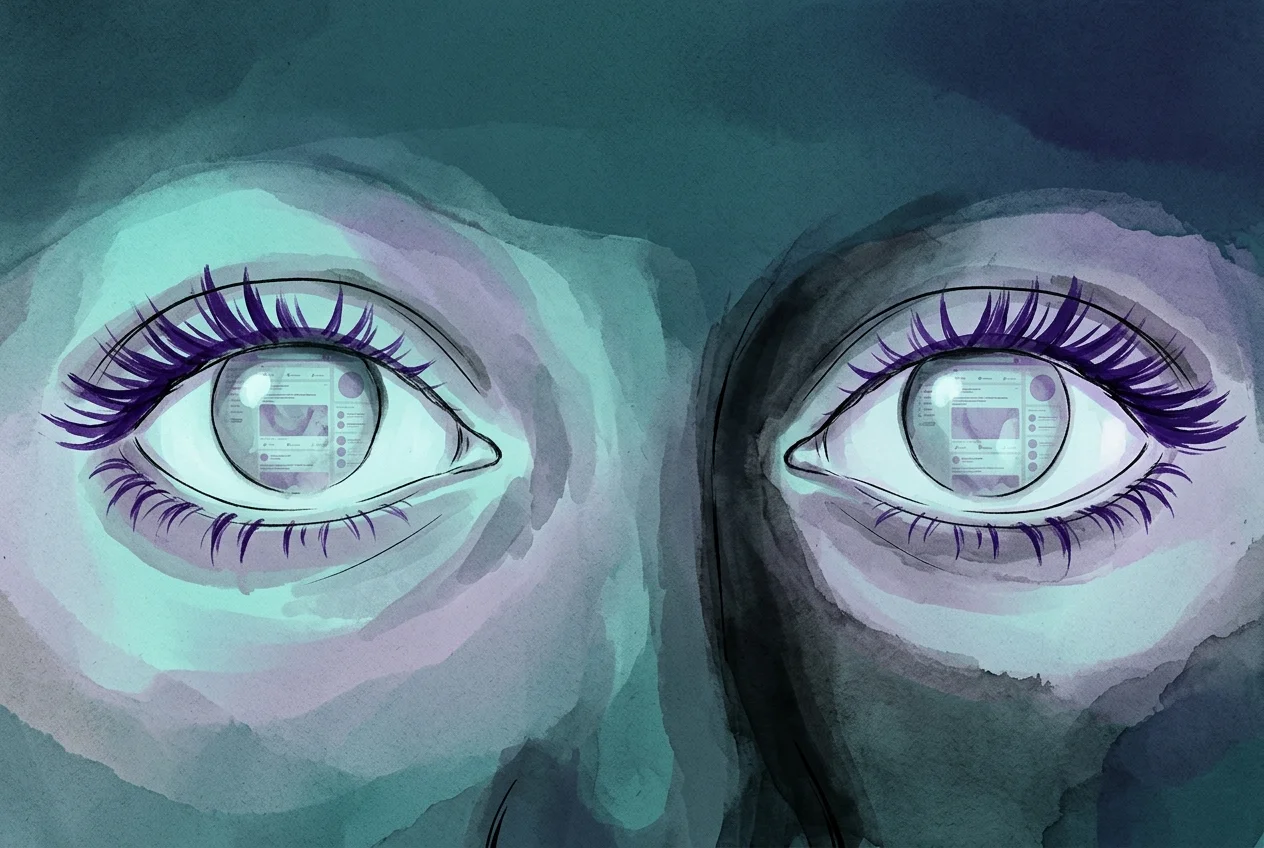
Zombie scrolling is the habit of moving through social media feeds in a dissociated, low-awareness state — eyes tracking, thumb swiping, but with little conscious engagement and little memory of what passed by. It's not curated browsing. It's not compulsive anxiety-watching. It's something quieter and more automatic: a trance that starts before you've decided anything.
It tends to happen in the in-between moments — what researchers call filler moments. Waiting for the elevator. The minute before a meeting starts. Lying in bed not quite asleep. The three seconds between tasks when your brain hasn't committed to the next thing yet. These are low-demand, transitional states — and in those states, the phone appears before you've formed a thought about it, the feed opens, and the trance begins. As Sloww's breakdown of digital minimalism frames it: "you are the product when you are using the Internet." The zombie scroll is what that product looks like when the engineering is working exactly as designed.
Unlike doomscrolling, zombie scrolling doesn't require negative content to sustain it. The algorithm doesn't need to make you anxious. It just needs to keep the stream flowing — an endless succession of images, clips, and captions that are varied enough to hold your eyes without demanding enough to hold your mind.
How It's Different From Doomscrolling
Both involve scrolling past the point of intention. That's where the similarity ends.
Doomscrolling is emotionally charged. It's pulled forward by anxiety — a low-grade need to know what's happening, what's wrong, what you might be missing. News cycles and political feeds are its native habitat. You feel bad while you're doing it and worse when you stop. The distress is the mechanism: it keeps you vigilant, scanning, unable to look away from the next bad thing. The attention economy has gotten very good at exploiting this pattern, engineering content that makes you feel like stopping would leave you uninformed or unprepared.
Zombie scrolling has no emotional engine. It doesn't need one. It runs on pure habit — on the ten thousand repetitions that have trained your nervous system to fill any moment of stillness with a feed. The content is almost incidental. Funny videos, product ads, strangers' dinner photos, trending audio clips: it all flows past at the same emotional temperature. None of it requires you.
That neutrality is what makes zombie scrolling harder to catch. Doomscrolling leaves fingerprints: elevated heart rate, a residue of low-grade dread, the slightly sick feeling of having consumed too much bad news. Zombie scrolling leaves almost nothing — just a gap where time used to be, and a vague sense that you were somewhere else.
What the Brain Is Actually Doing
Neuroscientists describe the brain's resting state — the mode it enters when you're not actively engaged in a task — as the default mode network (DMN): a set of interconnected regions that activate during mind-wandering, self-reflection, and daydreaming. The DMN is genuinely useful. It's where the brain processes experiences, consolidates memories, and generates creative connections between ideas. Staring out the window and letting your mind drift is, neurologically, meaningful rest.
Zombie scrolling hijacks that rest period without delivering its benefits. Your eyes are occupied. Your thumb is moving. Your brain is receiving a constant micro-drip of visual input — just enough stimulation to prevent the default mode network from doing its actual work, but not enough to constitute real engagement. You're not resting. You're not processing. You're suspended in a low-grade attentional limbo that feels like nothing and costs everything. The broader pattern — why scrolling isn't restful even when it feels passive — runs deeper than zombie mode alone.
The feed is engineered specifically to maintain this state. Infinite scroll removes any natural stopping point. Autoplay eliminates the micro-decision to continue. Variable content keeps the eyes scanning — just enough novelty to prevent disengagement, not enough depth to require real attention. The result is a behavioral trap with no exit condition: you stay because leaving would require an active choice, and in the trance, active choices don't happen.
Why It's Worth Taking Seriously
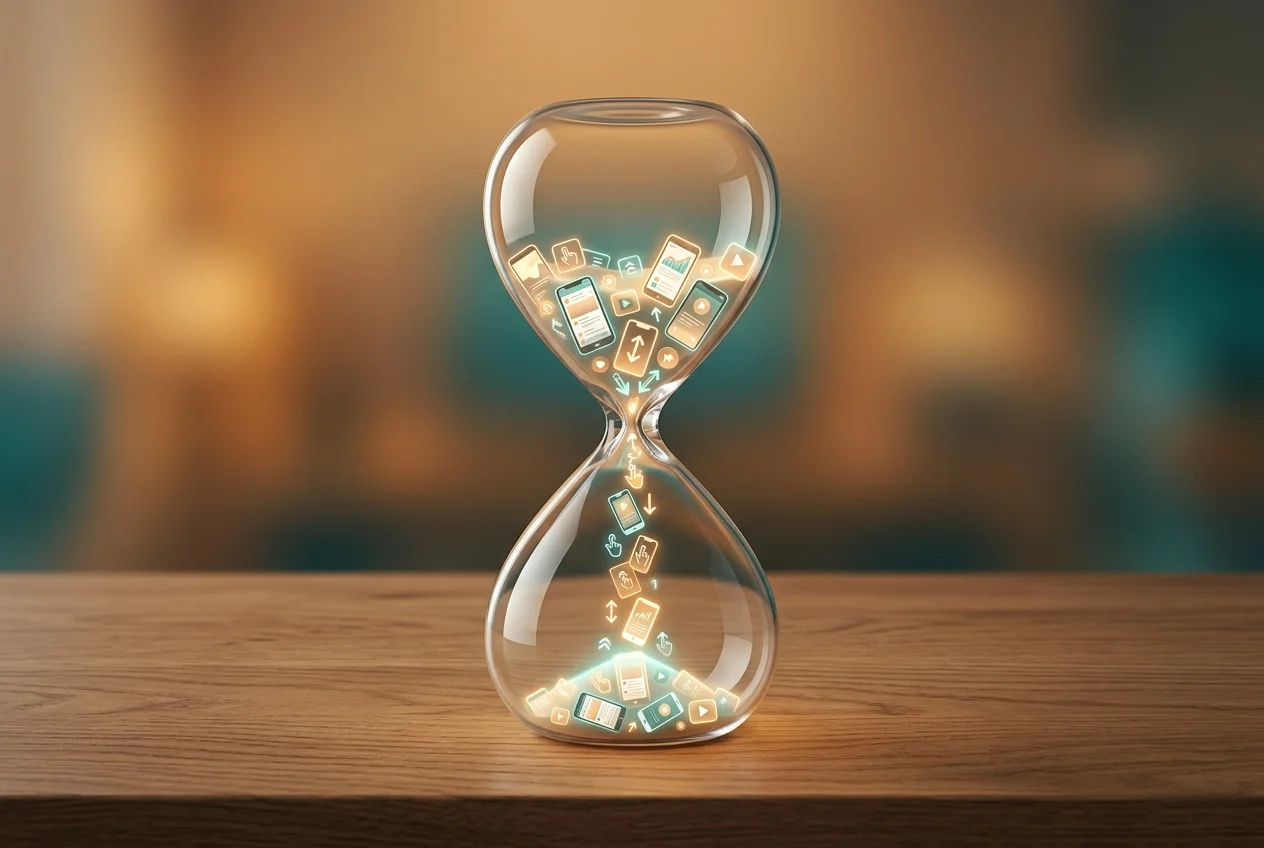
The absence of distress is the whole problem. With doomscrolling, anxiety eventually becomes unbearable enough to force a stop. Zombie scrolling has no such circuit breaker. It can run for as long as the phone is in your hand, because nothing about it feels wrong enough to interrupt. There's no rising dread, no guilt spike — just the quiet passage of time you'll never account for.
Over days, weeks, and months, that accumulates into something significant. Not just time — though the time is real — but the gradual narrowing of your tolerance for stillness. Every time zombie scrolling fills a transitional moment, the brain learns slightly more deeply that stillness needs to be filled. The in-between spaces that used to be available for thought, rest, or simple presence become harder to occupy without a screen. Recalibrating that baseline takes deliberate effort, and zombie scrolling makes the effort less available each time it runs.
There's also a subtler cost. Zombie scrolling doesn't feel like a problem, so it never gets treated as one. Doomscrollers often know they have a problem — the anxiety is a signal, however uncomfortable. Zombie scrollers frequently report that their phone use doesn't feel excessive, even when the screen time data tells a different story. The trance is invisible from inside the trance.
Breaking the Zombie Loop
The challenge with zombie scrolling is that awareness-based interventions mostly don't work. You can't decide to notice a behavior that starts before you've noticed anything. The trance precedes the decision. By the time you register that you're scrolling, you've already been scrolling for several minutes — and at that point, stopping requires an active act of will against an established momentum.
What works better is structural friction: a brief physical interruption inserted before the behavior begins. Not a reminder, not a screen time report, not a motivational notification — those all land after the trance has started. You need something that fires at the door, before the feed opens, when there's still a choice to be made.
This is the mechanism behind Sip & Scroll. When you try to open a tracked app — Instagram, TikTok, YouTube, whatever your particular trance portal is — the app pauses and asks for a sip of water and a quick selfie before access opens. The whole ritual takes about ten seconds. That's enough. Ten seconds of physical action is enough to interrupt a dissociated state, return you briefly to your body, and give your prefrontal cortex enough time to register a choice: do I actually want to be here right now, or did I just end up here?
Sometimes you scroll anyway. That's fine — you made the decision consciously rather than on autopilot. Sometimes you don't. The point isn't to stop scrolling permanently. It's to prevent the zombie state: the version of scrolling where no choice was ever made, where you surfaced twenty minutes later with nothing to show for it and no idea how you got there.
Doomscrolling is driven by anxiety. You can address doomscrolling by managing the anxiety. Zombie scrolling is driven by architecture — by a billion-dollar feed system designed to capture your attention in its lowest, most passive form and hold it there indefinitely. The fix is equally architectural. A pause. A sip. A moment of being in your body before you leave it for the feed. That's the whole thing. It's small, and it works precisely because it's placed at the one moment when it can still matter.
This article is part of our series on digital minimalism and intentional phone use. For the full picture, see our guide: Digital Minimalism: A Practical Guide.
Stop the trance before it starts.
A sip of water before the feed opens. Ten seconds that turn a zombie habit into a conscious choice.
Download Sip & Scroll — Free