Why I Deleted TikTok (And What Happened to My Productivity)
I expected to get my time back. I didn't expect how long my attention would stay broken — and what it actually took to rebuild it.
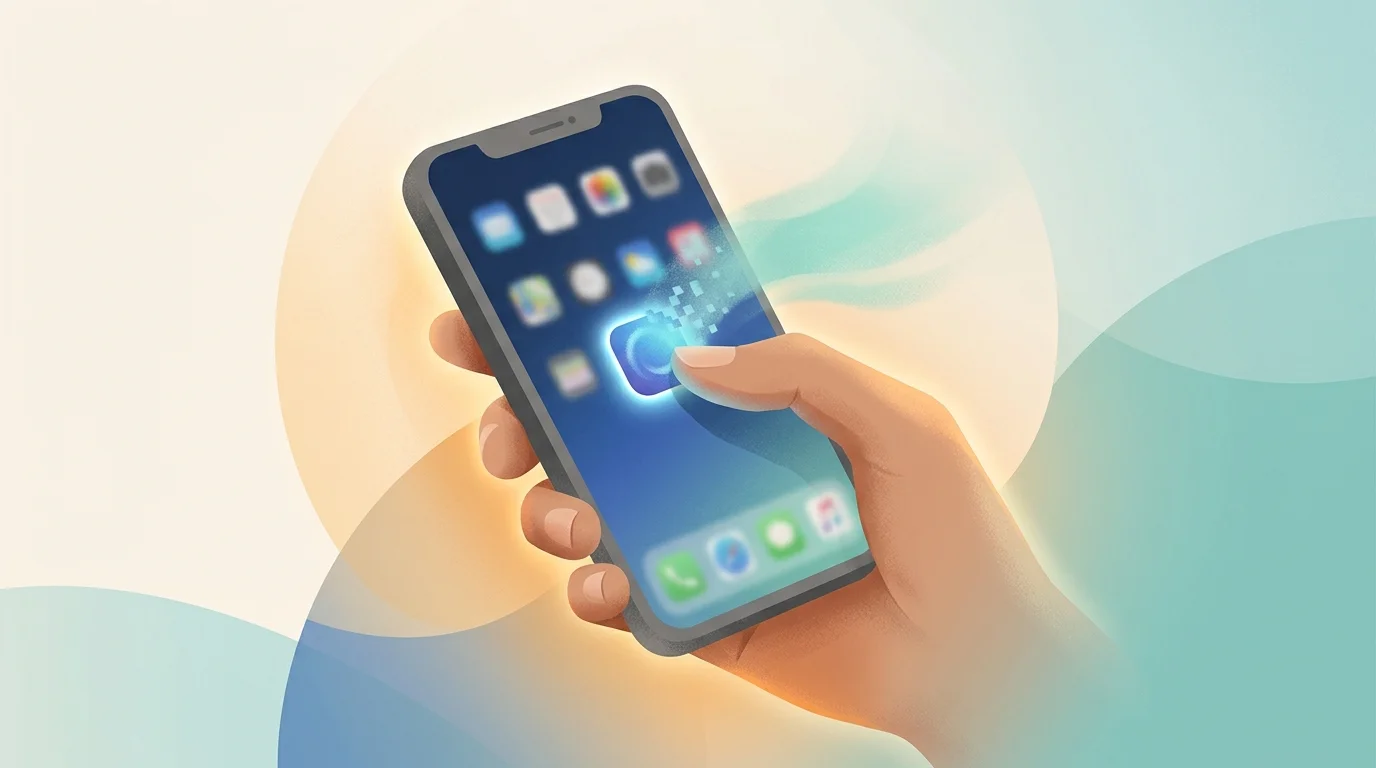
Notice what your attention does when you try to read something long — a real article, a chapter, a document that requires actual thought. There's a moment, usually around the third paragraph, where something in you starts looking for an exit. Not because the material is bad. Because your attention has been trained, through months of short-form video, to expect resolution every fifteen seconds. Anything that doesn't deliver a payoff in that window starts to feel like friction. Like work. Like something to escape.
That's what I noticed before I deleted TikTok. Not the time — I knew TikTok was expensive in time. What I hadn't fully clocked was what it was doing to the quality of my attention when the app was closed.
Deleting TikTok and tracking what changed is a common experiment now — enough people have done it that the pattern is fairly consistent. You get the time back quickly. The attention takes longer. This is my version of that experiment, and the part nobody talks about enough.
The Before Picture: What "Normal" Had Become
According to Pew Research, about 16% of teens report being on TikTok "almost constantly" — a figure that correlates closely with what heavy adult users self-report when they actually check their screen time. My Screen Time app was showing ninety minutes a day. That felt like a lot until I started adding up all the sessions: the morning one in bed, the one at lunch, the one while waiting for something to render, the one that started as a two-minute break and ended forty minutes later with me unsure what I'd just watched.
Ninety minutes is the number. But the number isn't the whole story. The deeper problem was the texture of every hour that wasn't TikTok — the way those hours had quietly become harder. Harder to focus. Harder to sit with a task before reaching for the phone. Harder to feel like anything slow was worth doing. This is what TikTok brain rot actually feels like from the inside: not stupidity, not laziness, but a lowered threshold for stimulation that makes ordinary cognitive work feel unreasonably effortful.
I had read enough about doomscrolling and dopamine loops to understand the mechanism. What I hadn't done was run the experiment on myself. So one Tuesday afternoon, I deleted the app.
Day One: The Itch You Can't Find
The first thing that happens when you delete TikTok isn't relief. It's a low-grade restlessness that doesn't have a clear target. You reach for your phone — that happens immediately — but when you open it and TikTok isn't there, something just keeps running. The habit loop fires, reaches its usual destination, and finds nothing. So it loops again.
I picked up my phone eight times in the first hour. I counted. Not for anything specific — Instagram, then back to the home screen, then a news app I never use, then home again, then the camera. Each check lasted about fifteen seconds. Each one scratched nothing.
This is the part the "just delete it" advice skips: the behavior doesn't go away when the app does. The habit lives below the level of the app. It lives in the motor system, in the automatic reach that fires before you've formed a conscious intention. The target is gone, but the pattern is still looking for somewhere to land. This is exactly what the research on smartphone withdrawal describes — the nervous system doesn't reset in an afternoon.
By day three, the phantom reaching had calmed slightly. Not because the habit was gone, but because the absence was starting to register as information. The loop was firing and finding nothing, repeatedly — and repetition without reward is how habits weaken. It just takes longer than you want.
What Actually Changed (The Productivity Part)
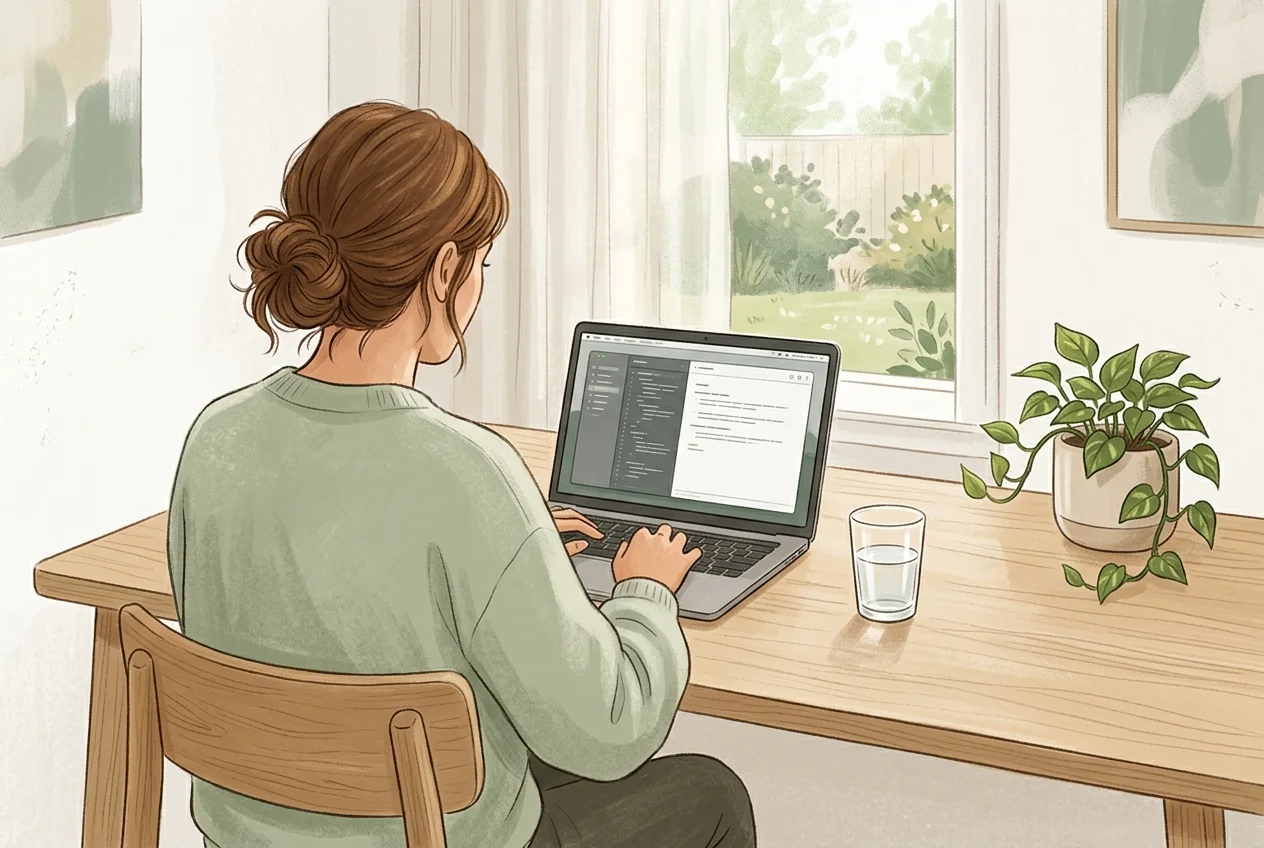
By the end of week one, the time math was obvious. I had somewhere between an hour and ninety minutes back each day. That's not nothing. Spread across a week, it's almost a full workday. But here's the thing about recovered time when your attention is still fragmented: you don't automatically use it well. You can have an extra ninety minutes and still spend it not quite doing the task in front of you, picking up your phone for something other than TikTok, staring at a document and reading the same paragraph three times.
The productivity gains didn't come from having more time. They came — slowly, over about two and a half weeks — from having better attention inside the time I already had. That's the real experiment. Not "did I get ninety minutes back" but "did the ninety minutes I was already spending on work actually start to work."
Week two was when I first noticed something had shifted. I was writing something moderately difficult — the kind of thinking-on-the-page work that requires holding several ideas simultaneously — and I didn't feel the pull to check my phone for about forty-five minutes. Not because I was suppressing it. It just wasn't there with the same insistence. The window between "urge fires" and "hand moves toward phone" had gotten measurably wider. Wide enough to notice. Wide enough to not act on it.
By week three, longer reading felt easier. Articles I would have abandoned at paragraph three were actually interesting again, the way they'd been before short-form video colonized what "content" meant to my brain. I finished a book. That sounds small. It wasn't.
What Nobody Warns You About
There are a few things people don't mention in the "I deleted TikTok" genre of posts, and they're worth naming honestly.
Boredom hits differently. The first week, ordinary downtime — waiting in line, the three minutes before a meeting, the gap between tasks — felt genuinely uncomfortable. Not mildly irritating. Physically uncomfortable, in a way that made me understand why people describe phone dependency as a real anxiety response. The phone had been solving micro-boredom so efficiently, and for so long, that the sensation of sitting with a quiet moment had become unfamiliar. This is what nomophobia research is actually documenting — not fear of the phone, but fear of what surfaces when it's gone.
Other apps will happily take TikTok's place. If you delete TikTok and then spend the reclaimed time on Instagram Reels or YouTube Shorts, you haven't changed anything. The mechanism is identical — variable-ratio reinforcement, infinite scroll, algorithmic content selection tuned for engagement — just with different branding. The behavioral architecture is the same regardless of which platform hosts it. If you're running an honest experiment, you have to be honest about this.
The algorithm doesn't forget you immediately. I reinstalled TikTok once, about ten days in, intending to check one specific thing. Within two minutes the FYP had rebuilt exactly who I was before the deletion — same creators, same content categories, same pull. I closed it. But the speed of the personalization was striking. The platform's memory of you outlasts your memory of why you left.
You will want to reinstall it. The urge is strongest around days five through eight, and again around the two-week mark. Both times correlate with boredom spikes — periods where the phone-less time hasn't yet been filled with anything satisfying, so the old solution looks appealing again. Knowing when to expect the urge makes it easier to not act on it.
What Actually Replaced It
Here's the honest version: nothing replaced TikTok in the same way. Nothing delivers that specific combination of novelty, variety, and frictionlessness. That's not a failure — it's the point. The thing that made TikTok so good at capturing attention is also what made it so corrosive to attention. The replacement isn't supposed to be equally compelling. The replacement is supposed to be less engineered.
What actually happened, over about a month, was a gradual drift back toward things I'd been avoiding without realizing it. Longer reading. Cooking that required actual attention. Conversations that went somewhere. The deep-work sessions I'd always planned but never quite entered. These things didn't feel euphoric. They felt like work, in the neutral sense — effortful but satisfying in a way that short-form content can't replicate, because it requires you to show up, build momentum, and stay long enough for something to actually happen.
This is what people mean by digital minimalism — not an ascetic rejection of technology, but a deliberate choice about which technologies get to set the terms of your attention and which ones don't. TikTok's terms were: constant novelty, fifteen-second resolution, and algorithmic control over what comes next. Those terms were eroding my ability to accept any other terms for how my time got spent.
The Question Worth Sitting With
Deleting TikTok isn't a productivity hack. It's closer to a structural repair — removing a system that had been quietly degrading the machinery of attention, and then waiting for that machinery to recalibrate. The time you get back is almost secondary. What matters more is whether your attention, once freed from constant micro-stimulation, can gradually relearn how to hold something.
Mine could. It took about three weeks to notice. It took another two to trust it. There were two near-reinstalls, one rough weekend, and several days where I wondered if the gains were real or just confirmation bias.
If you're considering the experiment, the honest advice is this: go in knowing the first week is withdrawal, not result. What deleting TikTok does to your productivity doesn't show up until week two or three, after the restlessness settles and the attentional baseline has had time to shift. The time is the easy part. The attention is the point.
If full deletion feels too abrupt — and for many people it does, because TikTok serves real functions beyond pure distraction — the alternative is structural friction rather than structural removal. Something that slows the automatic reach and turns it into a deliberate choice, session by session. That's the principle behind Sip & Scroll: instead of locking yourself out entirely, you introduce a brief physical pause before each session — a sip of water, a quick selfie — that requires just enough intentionality to break the reflex. It won't rebuild your attention span on its own, but it interrupts the automatic behavior that dopamine loops depend on. And it does it without the whiplash of cold-turkey deletion and the inevitable reinstall four days later.
This article is part of our series on personal screen time journeys. For the full picture, see our guide: My Journey from 8 Hours of Screen Time to Just 2.
Try friction before deletion.
A sip of water and a selfie before each session. A pause, not a wall.
Download Sip & Scroll — Free