Hustle Culture Burnout: Why Gen Z Is Choosing the Soft Life Instead
The grind promised everything. It delivered exhaustion, disengagement, and a generation quietly deciding to opt out.
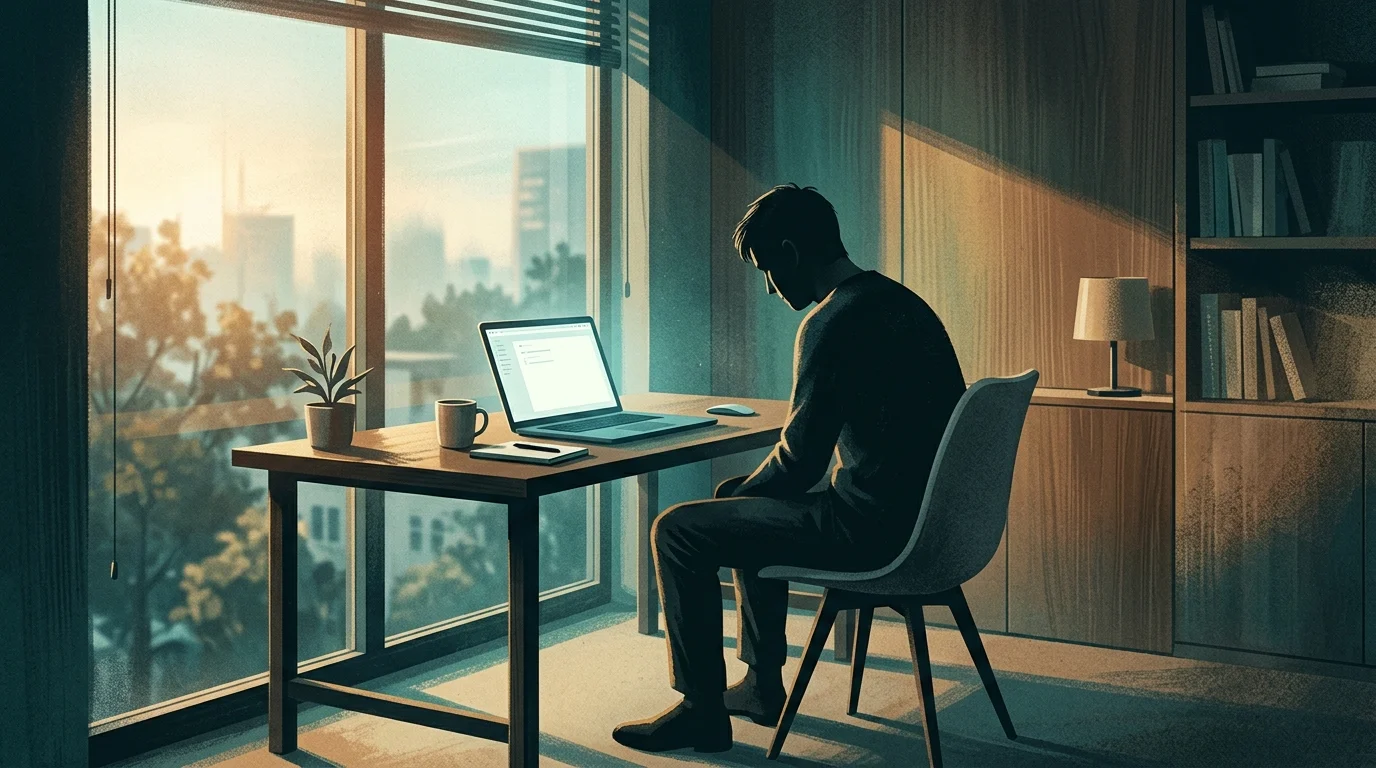
You're not paying for hustle culture with money. The bill shows up somewhere quieter — in the projects you keep putting off, the sleep you keep borrowing against, the Sunday evenings that feel more like dread than rest. The payment is extracted in whatever margin you had left, withdrawn in 5am alarm clocks, side-hustle weekends, and the low hum of guilt that follows you when you sit still.
That's the transaction hustle culture never disclosed upfront. Not on the motivational reels, not in the "rise and grind" captions, not in the endless parade of morning routines designed to make inactivity feel like failure.
Hustle culture burnout is the physical and psychological collapse that follows from treating exhaustion as a virtue for too long — internalizing the belief that your worth is measured by your output, until your output stops coming and your body sends the bill all at once. Gallup's landmark study of nearly 7,500 full-time workers found that 23% experience burnout very often or always, with an additional 44% experiencing it sometimes. That's two-thirds of the workforce running on fumes — not because they're weak, but because the system they've been handed was designed without a recovery mechanism. Ness Labs identifies three dimensions of burnout that explain why it's so disabling: weariness (emotional exhaustion from sustained effort), withdrawal (loss of idealism and detachment from the work itself), and worry (persistent doubt about your own performance). The core cause underlying all three, the research finds, is not the volume of work — it's the absence of control.
How Instagram Sold You the Grind
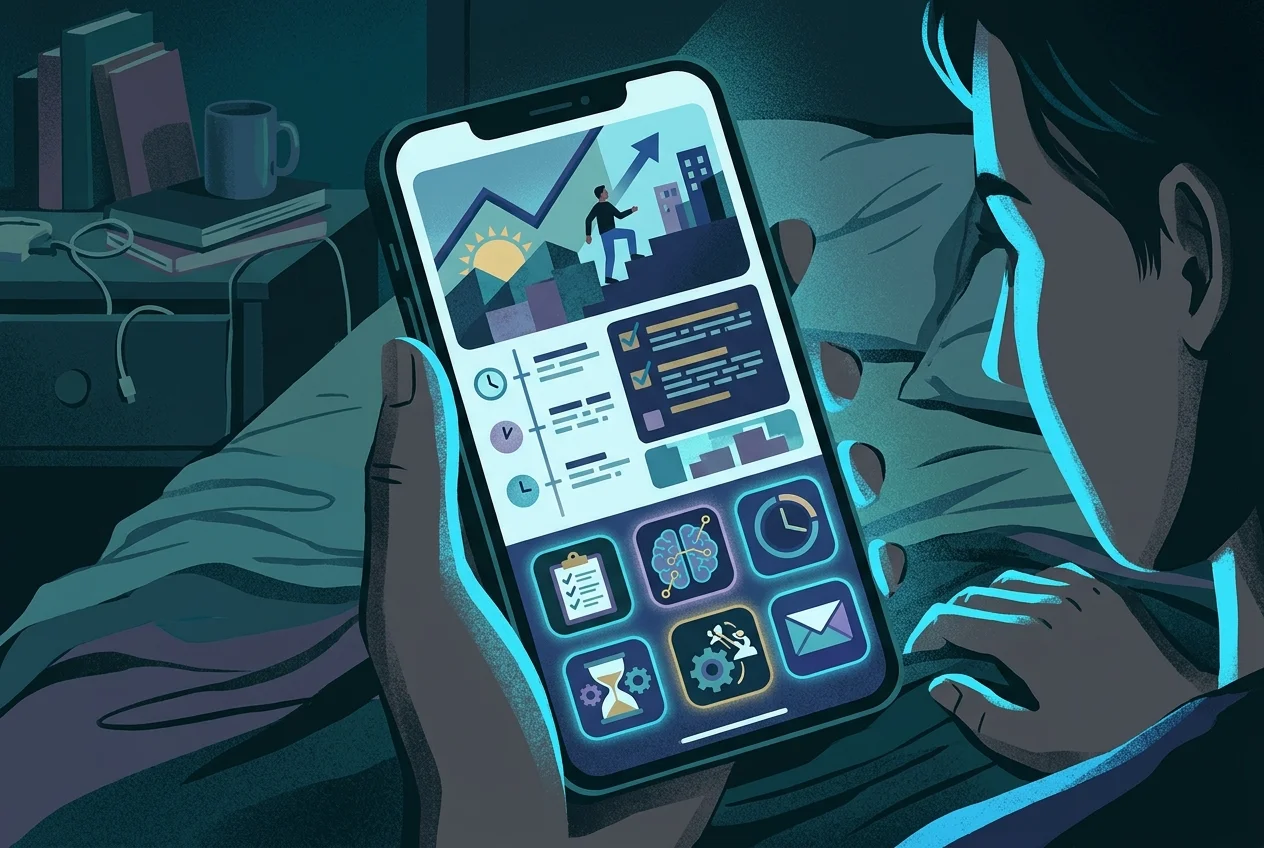
Hustle culture didn't come from your boss. It came from your feed.
Through the 2010s, platforms like Instagram and YouTube were algorithmically rewarding a particular kind of content — the 5am wake-up, the side hustle reveal, the "I built this while working a 9-to-5" origin story. These videos drove enormous engagement, which meant the algorithm surfaced them constantly, which meant a generation of young adults absorbed the implicit message thousands of times: if you're not optimizing every hour, you're falling behind.
This is how the attention economy works at its most subtle. The platform isn't selling you productivity. It's selling advertisers your attention — and aspirational hustle content happens to hold attention exceptionally well. The side effect is a cultural norm that treats rest as laziness and burnout as a badge.
The same platforms that spread the grind ideal also research consistently links to declining mental health — students using social media more than two hours daily are considerably more likely to report fair or poor mental health. The double bind is almost elegant: social media tells you to grind harder, then eats the recovery time you needed to survive the grind.
The Numbers Behind the Crash
Gen Z entered the workforce as the most digitally connected generation in history — and promptly hit the wall. Psychology Today notes that many young people spend every waking hour working toward ambitious goals "only to find themselves exhausted, frustrated, and unfulfilled." The data bears that out in specifics: 91% of Gen Z workers have experienced at least one mental health challenge or burnout, and only 36% feel very engaged at work — a full 13 points behind the rest of the US workforce.
Let that land for a moment. The generation raised on hustle culture content is the least engaged generation in the workplace.
That's not a coincidence. When work is framed as an identity and productivity is framed as moral worth, every slow day becomes a personal failure. The psychological cost of that framing compounds over years, until what's left is a kind of protective withdrawal — doing less not out of laziness, but out of self-preservation.
Gallup found that burned-out employees are 2.6 times more likely to be actively seeking a new job and 63% more likely to take sick days. The problem isn't attitude. It's architecture. The architecture of hustle culture has no built-in recovery phase — and without recovery, any system eventually crashes.
Enter the Soft Girl Era
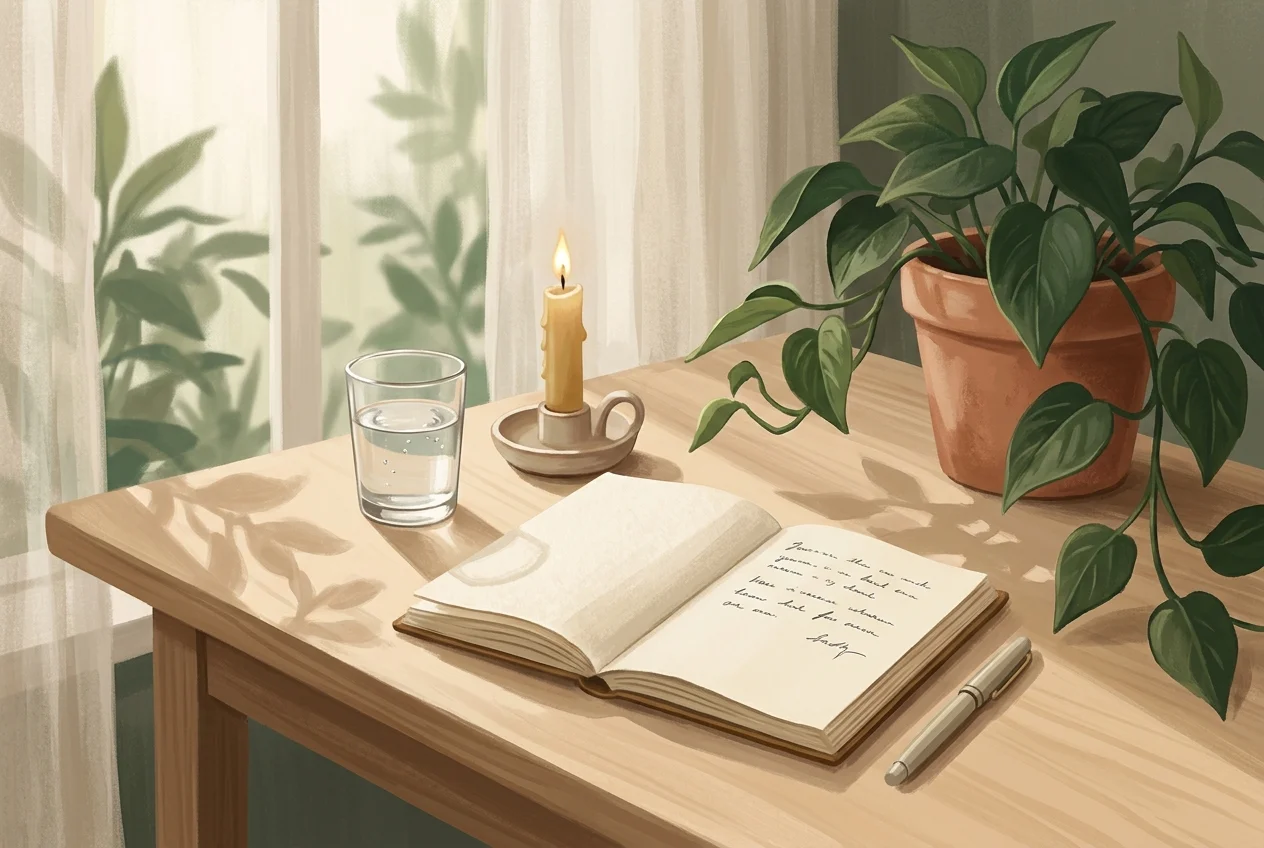
What followed the burnout is interesting. Not a mass exodus from ambition — but a reframing of it.
The "soft girl era" is the cultural counter-response: an aesthetic and philosophical rejection of grinding in favor of rest, leisure, boundaries, and the radical act of enjoying your life while you're still in it. TikTok's "lazy girl jobs" trend — which went viral in 2023 and has held cultural traction since — popularized the idea of seeking roles with genuine flexibility and work-life balance rather than optimizing for status. A quarter of Gen Z respondents now say they chose their jobs based on work-life balance. Only 19% prioritized salary.
This isn't laziness dressed up in aesthetic packaging. It's a generation that watched their predecessors burn out — saw the result of treating rest as weakness — and made a rational adjustment. The soft life isn't anti-ambition. It's anti-unsustainability.
There's a meaningful distinction worth making here: the flip phone revival and the soft girl movement are both expressions of the same underlying impulse — a generation in its twenties and thirties deciding, deliberately, that the default settings of digital life aren't serving them. One involves hardware. One involves identity. Both involve opting out of something that was supposed to be aspirational.
The Scroll That Keeps the Grind Going
There's a cruel irony at the center of hustle culture burnout: the most common way people try to decompress from it is the exact thing that made it worse.
You come home from a depleting day, nervous system frayed, prefrontal cortex offline. You pick up your phone. The feed opens. And for the next forty minutes, you're not recovering — you're consuming more aspirational content, more comparison loops, more low-grade stimulation that keeps cortisol elevated without providing any actual rest. Research on social media's mental health effects is consistent: passive scrolling leaves most people feeling worse, not better, than they did before they opened the app.
Real recovery requires actual disengagement. Not willpower — structure. You cannot out-discipline a system that's engineered specifically to prevent disengagement.
That's where architectural friction becomes the more honest solution. Something that physically interrupts the automatic reach for the phone — not to punish the impulse, but to create the gap where a real choice can happen. A beat of deliberate pause before the feed opens. Enough space for your nervous system to register: do I actually want this right now, or am I just running from stillness?
Sip & Scroll works on exactly this principle. Before you open TikTok or Instagram, you take a sip of water and snap a quick selfie — a brief ritual that converts a reflexive reach into a conscious decision. You still get access. You get 45 minutes of unblocked scrolling. But the pause is real, the hydration is real, and the choice becomes visible to you in a way that automatic behavior never is. It won't fix the structural conditions that created hustle culture burnout. But it can help you stop spending your recovery time in a loop that was designed to keep you in it.
This article is part of our series on digital culture and screen time trends. For the full picture, see our guide: The Impact of Infinite Scroll on Gen Z Mental Health.
Scroll with intention, not out of habit.
Sip & Scroll adds one small pause before you open addictive apps — a sip of water, a moment to choose. Free on the App Store.
Download Sip & Scroll