Right to Disconnect: What US Workers Need to Know
France made it law in 2017. Australia followed in 2024. The US hasn't moved — but that doesn't mean you're powerless.
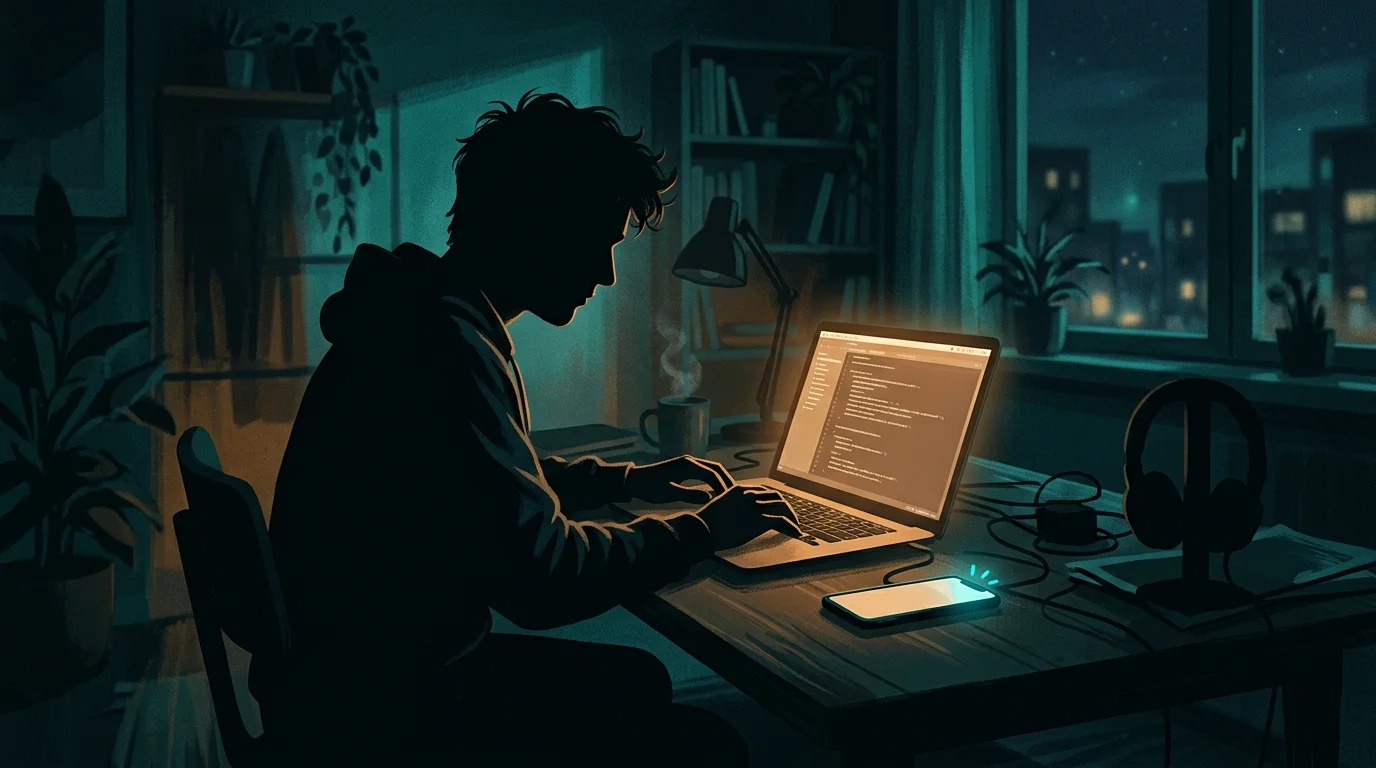
It starts before you decide not to check it. You're eating dinner — actually eating dinner, phone not in hand — and somewhere in the back of your mind, the awareness of an unread Slack notification is already sitting there. Not demanding attention, exactly. Just present. A background hum of obligation that follows you from the table to the couch to the bedroom.
By the time you give in — or don't, but lie awake reviewing the thread in your head — the workday hasn't ended. It just changed format.
The right to disconnect law is a legal framework that protects employees' right to ignore work-related messages outside their designated working hours without fear of repercussions. No retaliation. No penalized performance reviews. No implicit pressure to respond to a 10pm email at 10:05pm. Several countries have made this a statutory right. The United States, as of 2026, has not — and the gap matters more than most workers realize.
The Countries That Got There First
France moved first. In 2017, French labor law was amended to require companies with 50 or more employees to negotiate a formal charter specifying when staff could not be expected to send or receive work emails. The law didn't prohibit after-hours messages — it established the right to ignore them without consequence. That distinction is subtle but important: it shifts the burden from employee willpower to employer architecture. Pew Research found that seven in ten American adults actively use at least one social media platform — and the same devices that carry social feeds also carry work email, collapsing any separation between the two.
Spain followed in 2018 with a remote working law that required employers and employees to agree on specific hours for communication cutoffs. Portugal went further in 2022, introducing fines for employers who contact workers outside regular hours — one of the first countries to attach financial penalties to the violation. Belgium and Germany have each implemented their own versions; Australia passed legislation in 2024 giving workers the explicit right to refuse unreasonable after-hours contact without repercussion.
Ontario, Canada introduced a requirement in 2021 that employers with 25 or more staff publish a formal written policy on disconnecting from work. The pattern across every jurisdiction is the same: legislation works not because it immediately transforms every workplace, but because it normalizes the expectation. When the law says you have the right to disconnect, the implicit default of "always available" gets renegotiated at scale.
Why the US Is Still Waiting
California came the closest. Assembly Bill 2751, introduced in 2024, would have required California employers to establish written policies giving workers the right to disconnect during non-working hours — with fines for violations. It applied to companies with 50 or more employees. It stalled in the appropriations committee before becoming law.
New York and New Jersey have explored similar proposals. None have passed. The US remains one of the few developed economies without any legal framework protecting workers from after-hours digital contact — a fact that has grown harder to defend as smartphone penetration has erased the boundary between professional and personal time for most knowledge workers.
Consider what that erasure costs the body. Research on digital technology and cognitive health documents that constant connectivity degrades the very attention systems workers depend on to perform — not just while they're answering late-night emails, but throughout the following workday. The worker who responds to messages at 11pm isn't being more productive. They're borrowing from a cognitive recovery account with no overnight deposit cycle.
The WHO notes that sedentary, screen-based behavior compounds health risks across multiple dimensions. After-hours work culture creates exactly the conditions where recovery time collapses into more screen time — the workday doesn't end; it just becomes uncompensated.
And research on screen exposure and mental health outcomes consistently shows the harm comes not just from volume but from the inability to fully disengage. Partial attention is cognitively expensive. An evening spent with your phone nearby, knowing work messages might arrive, doesn't provide the same recovery as one where the device is genuinely inaccessible. Your brain stays on call even when your hands aren't on the phone.
What You Can Do Right Now — Without Waiting for a Law
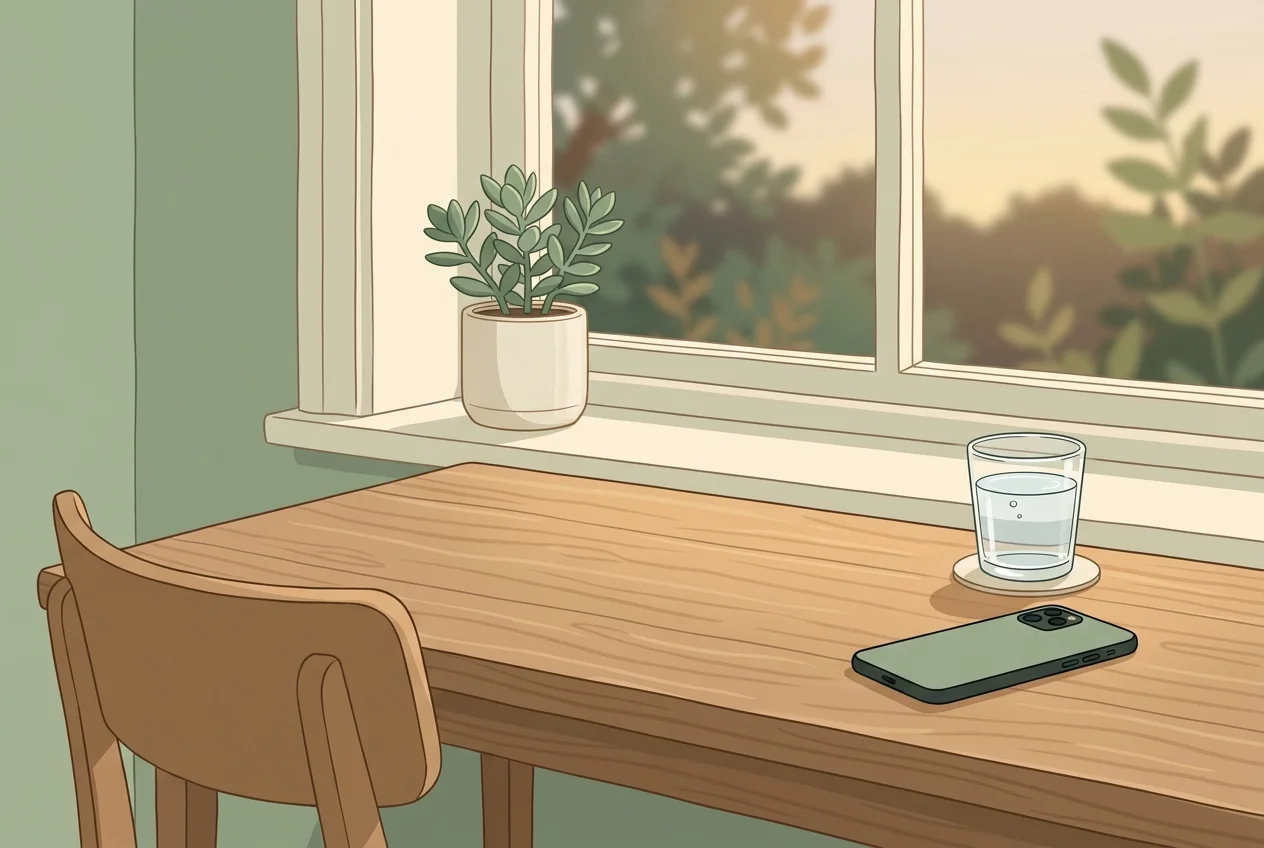
Legislation changes the default expectation at a social level. But you don't need a law to change your own.
The most effective personal disconnect policy isn't willpower — it's architecture. The reason "I'll just check one more message" reliably becomes three more messages has nothing to do with your character and everything to do with how your phone is configured. Notifications are designed to be checked. The open mental tab stays running whether or not you act on it. So the fix isn't to try harder at ignoring your phone — it's to change what your phone does when work hours end.
A few structural changes that replicate the spirit of right-to-disconnect legislation at the individual level:
- Set a notification schedule. iOS Focus modes allow you to silence specific apps on a schedule automatically. Your work apps can go quiet at 6pm and return at 8am without any in-the-moment decision required. The choice gets made once; the architecture handles the rest.
- Create a physical transition ritual. Putting your phone on a charger in another room, face-down on a dedicated surface, or in a drawer signals your nervous system that the context has shifted — the same way leaving a physical office used to. The phone foyer method formalizes this into a daily routine with strong supporting evidence.
- Have the conversation explicitly. In the absence of law, the most effective protection is a clear manager conversation. Many managers send late-night messages because it's when things occur to them — not because they expect an immediate response. Saying "I respond to messages during working hours and catch up first thing in the morning" is a boundary, not an ultimatum. Most reasonable managers will respect it. Knowing where your manager lands is better than guessing.
- Treat your evenings as belonging to you by default. Countries with right-to-disconnect laws didn't introduce the concept of personal time — they changed who has to justify the deviation. Right now in the US, you have to justify not responding. The internal reframe that helps: your non-working hours are yours by default, and responding after-hours is the exception you choose to make, not the obligation you've failed to honor.
This same architecture problem shows up in personal screen time. The difficulty of stopping a doomscrolling session isn't about willpower any more than ignoring a late-night work ping is — both live in a device that was engineered to stay open. The solution in both cases is structural friction before the loop starts, not white-knuckling through it once you're already in.
That's the logic behind tools like Sip & Scroll. Before opening any app you've designated as a distraction — Instagram, TikTok, Reddit, the thing you reach for when your brain needs to wind down — you're prompted to take a sip of water and snap a quick selfie. No hard block. No punishment. Just the one thing the always-on culture systematically removes: a moment of friction where a real choice can happen. That pause is the personal equivalent of the right-to-disconnect principle — a structural interruption before the reflex takes over, giving your intention enough time to register. After the pause, you get 45 minutes of intentional access. On your terms.
You don't need a law to decide your evenings belong to you. You need a structure that makes that decision easy to actually keep.
This article is part of our series on digital culture and screen time trends. For the full picture, see our guide: The Impact of Infinite Scroll on Gen Z Mental Health.
Take back your off-hours.
Add a sip of water before scrolling. Build the boundary your phone won't build for you.
Download Sip & Scroll