Everybody's Traumatized Now: The Therapy Speak Problem Nobody's Talking About
Psychological vocabulary escaped the therapy room and colonized TikTok. That's both the best and worst thing that's happened to mental health awareness online.
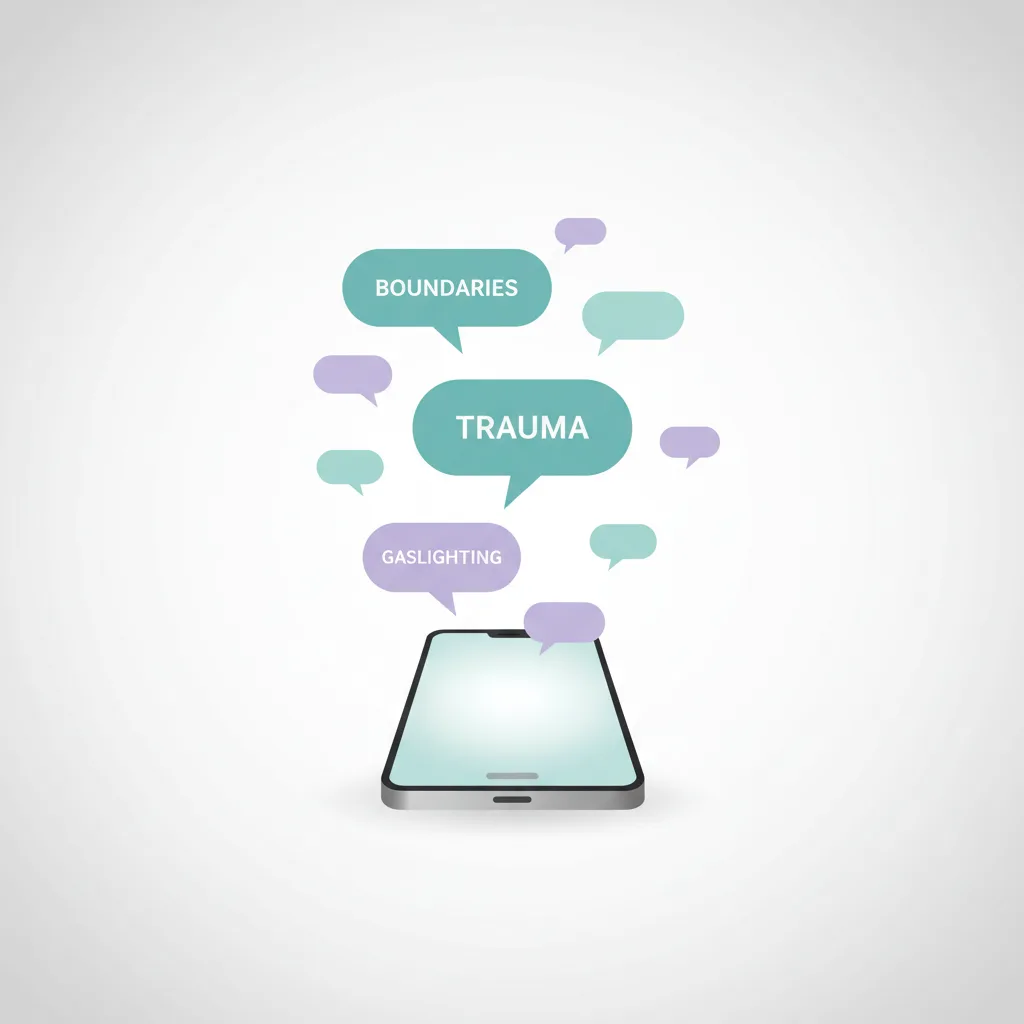
"She's literally gaslighting me." You've said it. Or heard it. Or typed it in a group chat at 11pm about something that happened at work — a manager who kept moving the deadline, a friend who remembered a conversation differently, a partner who said they never agreed to the plan you both made.
You had the word. It fit the feeling. And using it felt like being understood — like you weren't just frustrated, you were clinically validated.
That's what therapy speak does. It borrows the authority of clinical psychology and makes it available to everyone, everywhere, all the time — mostly on TikTok, where mental health content generates billions of views annually. Therapy speak online refers to the spread of psychological terminology — gaslighting, narcissist, trauma, triggered, boundaries, love bombing, emotional labor — from clinical settings into ordinary social media conversation. It's both a genuine advance in public mental health awareness and a slow erosion of the concepts it claims to represent.
How Psychological Vocabulary Escaped the Therapy Room
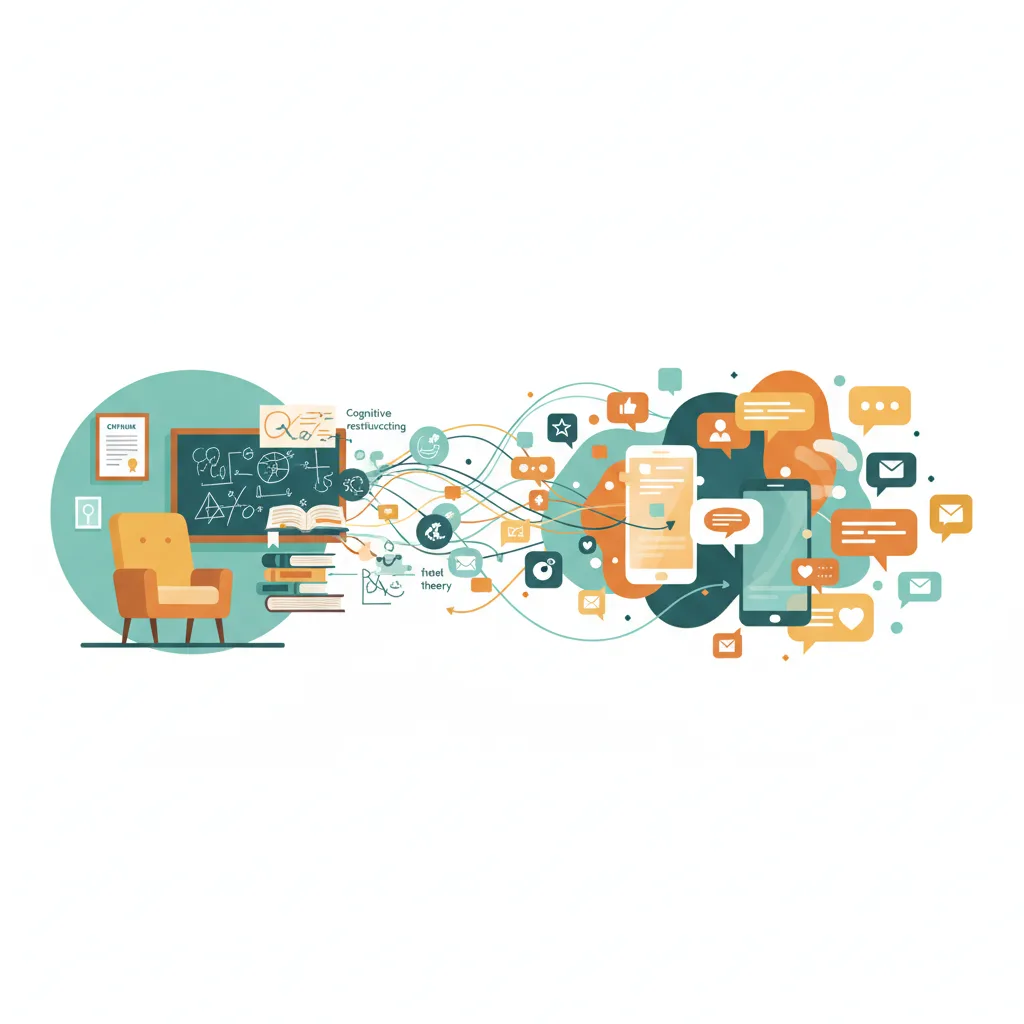
For most of the 20th century, words like "narcissist" and "trauma" lived inside DSM diagnostic criteria, graduate psychology programs, and licensed clinical settings. You encountered them if you were in therapy, if you studied psychology, or if you read a very specific kind of self-help book.
Then social media happened. And then, specifically, TikTok happened. By 2022, 67% of U.S. teens were using TikTok, and the platform's algorithm was optimizing for emotional engagement with a precision that no previous media had matched. Mental health content — emotional, relatable, often confessional — performed extraordinarily well. Videos explaining attachment styles, identifying "red flags," and naming toxic relationship patterns were racking up tens of millions of views.
The vocabulary moved fast. Faster than the clinical context it came from could travel with it.
TikTok as the World's Biggest (Unlicensed) Therapy Group
There's a reason this happened on TikTok and not in a library. The platform's algorithm rewards emotional charge — content that creates a strong reaction, positive or negative, spreads furthest. Mental health vocabulary, when applied to personal experience, is almost always emotionally charged. A video explaining that your childhood experiences shaped your adult attachment patterns generates far more engagement than one explaining cognitive behavioral therapy's evidence base.
So the algorithm surfaced the emotional. The dramatic. The most vivid application of a clinical term to a recognizable interpersonal situation. And because digital platforms measurably affect how we process information and emotion, the repetition of these framings — watching hundreds of videos applying the same lens — genuinely changes how people interpret their own experiences.
That's not nothing. For someone who grew up in a household where psychological abuse was never named, discovering the word "gaslighting" can be genuinely clarifying. Recognizing a pattern as "trauma response" rather than personal weakness is often the first step toward seeking actual help. The democratization of mental health language has real value. Millions of people who felt alone in their experiences now have words — and communities.
The problem isn't that the vocabulary spread. The problem is what happened to it in transit.
When "Narcissist" Becomes a Synonym for "Person I Dislike"
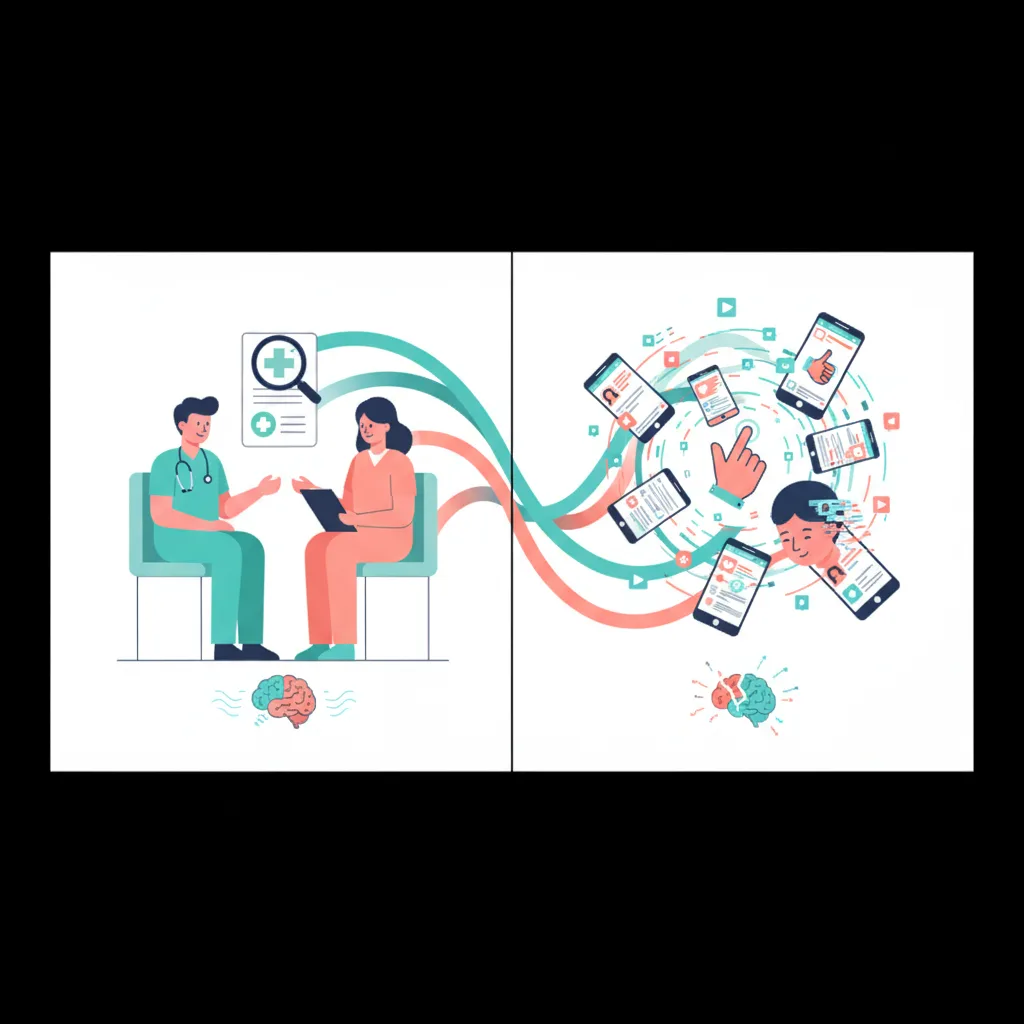
Clinical narcissistic personality disorder affects roughly 1% of the population. It involves a pervasive pattern of grandiosity, a severe lack of empathy, and an inability to recognize others as independent people with their own inner lives — typically causing significant functional impairment across domains of life.
On social media, "narcissist" has come to mean something closer to: person who is selfish, self-involved, difficult, or who talked about themselves too much at dinner.
The gap between those two definitions is enormous. And it matters — not because we should protect clinical terminology for its own sake, but because the conflation causes real harm in two directions at once. People with genuine NPD, PTSD, or complex trauma have their experiences trivialized when those labels are applied to anyone who behaved badly. And people who are simply selfish or inconsiderate get pathologized when they don't meet any clinical threshold — which, oddly, can let them off the hook. "He's a narcissist" positions bad behavior as a disorder rather than a choice.
Watch what happens when "gaslighting" drifts the same way. The clinical definition describes a sustained, systematic campaign in which one person causes another to doubt their own memory and perception over time — often a defining feature of psychologically abusive relationships. The social media version often means: "they denied something, or remembered it differently, or made me feel like I was overreacting." That's a collapse. It flattens months of coercive psychological manipulation into a synonym for "they were wrong and I was right."
The Accountability Problem Nobody Wants to Name
There's a subtler issue underneath the vocabulary drift, and it's the one that's generated the loudest backlash — from therapists, writers, and people who find themselves on the receiving end of a therapy-speak accusation they can't seem to argue with.
Psychological vocabulary, when it spreads without the clinical literacy that should accompany it, can become a way of ending rather than advancing conversations. "I can't engage with this because it's triggering me." "I'm setting a boundary." "That's emotional manipulation." These statements, in a clinical context, describe real psychological phenomena. In everyday conflict, they can function as conversation-stoppers — unimpeachable, difficult to question without appearing to dismiss someone's mental health, and occasionally used to avoid any accountability at all.
The backlash is real. Therapists have written about clients who arrive pre-diagnosed with their own conditions and those of every significant person in their life, having self-assessed entirely via TikTok. Workplaces report colleagues weaponizing mental health language in professional disputes. Relationships fracture when one person's attempt to name a dynamic becomes an accusation the other can't respond to. The evidence connecting social media use to worsening mental health outcomes is now substantial — and the irony is that the same platform spreading mental health awareness may be generating the conditions that make it necessary.
None of this means the vocabulary is wrong. It means language without understanding is a sharp tool in an untrained hand.
What Mental Health Literacy Actually Looks Like
Actual therapy doesn't work by applying labels. It works by sitting with discomfort long enough to understand a pattern, then gradually building the capacity to respond to it differently. A clinical assessment of narcissistic traits involves structured interviews, longitudinal observation, and careful distinction from adjacent disorders. A TikTok video takes ninety seconds.
The distinction isn't a knock on people who learned from social media — it's worth knowing these concepts exist. The issue is the confidence that comes with a vocabulary without the humility that should accompany real psychological understanding. Knowing what "disorganized attachment" is called isn't the same as understanding what produced it, or what untangling it actually requires.
True mental health literacy looks like: holding the language lightly. Recognizing that a word points toward something, not that it explains everything. Treating a self-identified pattern as a starting point for curiosity, not a verdict on another person's character. And, critically, knowing that the understanding you built in 45 minutes of doom-scrolling through psychology content after a difficult day is probably incomplete.
The viral format is the problem as much as the content. A term stripped of context, applied to a compelling personal story, wrapped in the emotional charge that makes the algorithm happy — that's a different thing than the concept it claims to represent. TikTok rewards the vivid application. It has no mechanism for the nuance.
The Architecture That Makes This Worse
Here's the part that doesn't get said enough: the same system that spread therapy speak is the one generating the anxiety that makes people reach for it. The burnout, the boundary violations, the relationship strain — these are real. The emotional distress people are trying to name with psychological vocabulary is genuine. But the tool they're using to understand it is also the tool that's partly responsible for producing it.
You cannot out-analyze a system that's designed to keep you emotionally activated. The algorithm that surfaced the video that taught you about anxious attachment is also the one feeding you content calibrated to trigger your anxious attachment. Therapy speak tells you what's happening to you. It doesn't change the architecture that's doing it.
That requires a structural response — a pause before you open the apps that are both your source of understanding and your source of exposure. Sip & Scroll does exactly that: before you enter TikTok or Instagram, you take a sip of water and snap a quick selfie. Forty-five seconds of physical, present-moment friction that gives your prefrontal cortex enough time to register a choice instead of a reflex. You can still go in. You just go in with slightly more of yourself intact. That's not therapy. But it might be the precondition for it.
This article is part of our series on digital culture and screen time trends. For the full picture, see our guide: The Impact of Infinite Scroll on Gen Z Mental Health.
Scroll more intentionally.
A sip of water before you open addictive apps. That's the whole intervention. Try it.
Download Sip & Scroll